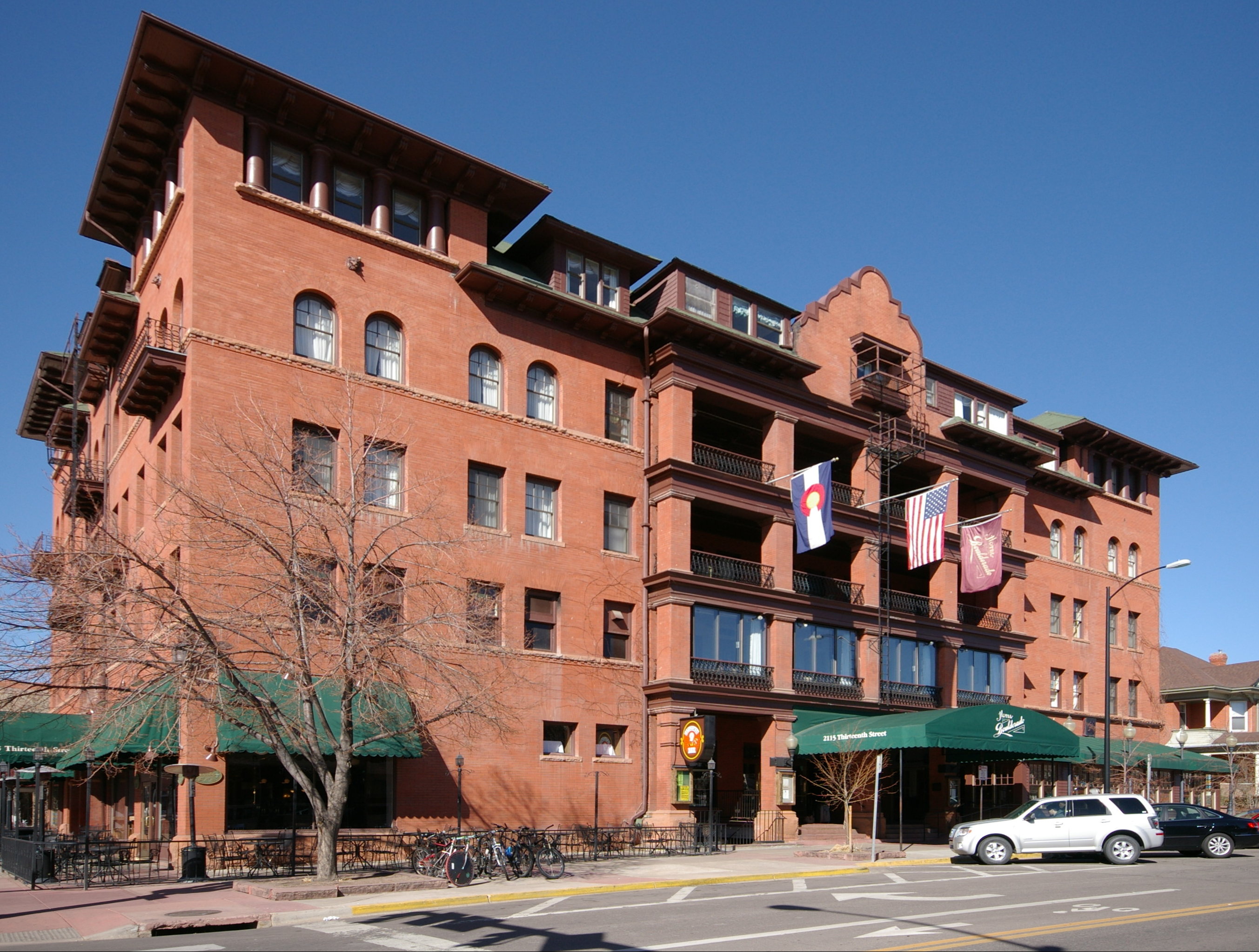
At the Hotel Boulderado in Boulder, Colorado, guests in rooms 302 and 304 report TVs flicking on, windows that won't stay shut, and voices in the dark. A woman in a white Victorian dress drifts the top floor. The hotel doesn't advertise any of it.
At the Hotel Boulderado in Boulder, Colorado, two third-floor rooms have a reputation. Guests in 302 and 304 report TVs flicking on and off, windows that open and close on their own and won't stay shut, voices with no one speaking, and the weight of someone sitting down on the edge of the bed.
Up on the top floor, people say they see a woman. She wears a flowing white Victorian dress, and she drifts the hallways. Sometimes she's seen rocking in an old rocking chair. No one has a name for her.
The hotel itself is real and grand. It opened to its first guests on New Year's Day, 1909, the morning after a Gala Ball on New Year's Eve, a tradition it still keeps every year. The local firm Redding & Sons built it around a central court, under a stained-glass ceiling of glass imported from Italy. The original Otis elevator still runs. Theodore Roosevelt stayed here. So did Louis Armstrong, Helen Keller, and Robert Frost.
What ties rooms 302 and 304 to the haunting is a story no one can prove. The legend is a suicide pact, said to have unfolded in one or both rooms sometime in the hotel's early decades. The tellers don't even agree on what happened. Most say a married couple died together. One version says a man chloroformed himself while the woman survived. No newspaper, no death record, no coroner's report confirms any of it. "Though this claim could not be verified," one account admits, "the tale of the Hotel Boulderado's suicides has become local folklore."
So the story stands on the rooms themselves, and on what guests keep reporting in them. The hotel could lean into all of it. Other historic Colorado hotels do. As one local guide puts it, the Boulderado "doesn't actively advertise its ghosts."
It just rents out 302 and 304, and lets whoever sleeps there find out.