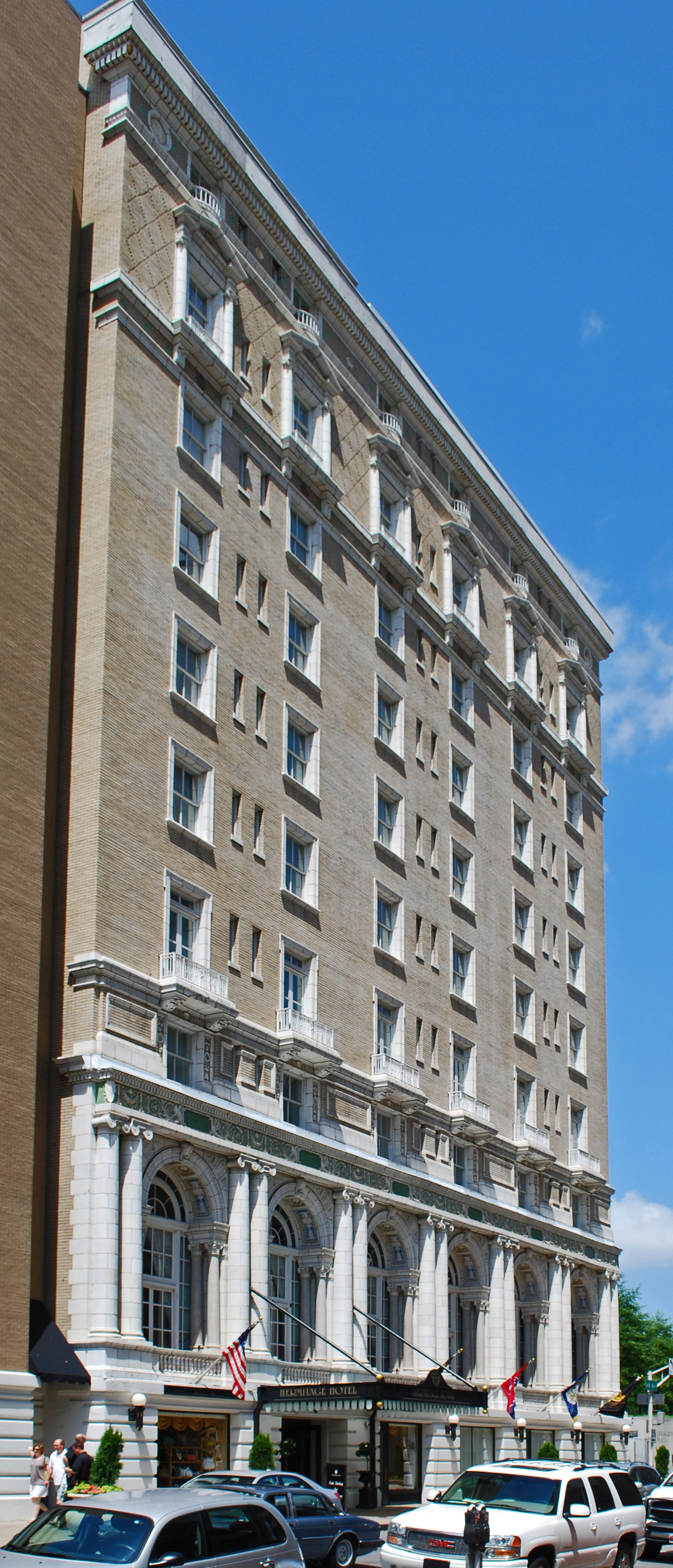
Guests in Room 912 of Nashville's Hermitage Hotel wake at 3 a.m. to a baby crying through the wall, then hear at breakfast the next room was empty. Ghost tours blame a child who fell from the window, a death no newspaper ever recorded, in a hotel that once decided a nation's vote.
A guest in Room 912 wakes around 3 a.m. to a baby crying on the other side of the wall. At breakfast the front desk explains that the room next door sat empty all night. It happens often enough that guests at Nashville's Hermitage Hotel have started requesting 912 for exactly that reason, and the city's ghost tours plan their night around it.
The story the guides tell is that a child fell from that window and died on the sidewalk below, and that the crying belongs to him. It is a clean and terrible detail, and it is the one part no one can source. Ghost City Tours, whose own guides repeat the legend, allows that the period newspapers, when searched, hold no record of any such fall.
What the building can prove is stranger than the ghost. In the summer of 1920, the Hermitage was headquarters to both sides of the fight over the Nineteenth Amendment. Tennessee had come down to the 36th and deciding state: ratify, and American women could vote. Carrie Chapman Catt ran the pro-suffrage campaign out of a third-floor suite and stayed roughly six weeks. The anti-suffrage leader Josephine Pearson lodged in the same building, tracking lawmakers and her rivals. The opposition worked the eighth floor, where they kept a Prohibition-era speakeasy called the Jack Daniel's Suite and poured free whiskey for the legislators they wanted voting no.
They called it the War of the Roses, red roses pinned to the antis and yellow to the suffragists, and in the end it came down to one man. A young representative named Harry Burn, wearing an anti's red rose, switched his vote to "aye" after a letter from his mother told him to "be a good boy and help Mrs. Catt." His was the vote that carried it, and the amendment passed on August 18, 1920.
The suffragists are a century gone, but the hotel keeps a woman who dresses like them. Guides working the halls know her as the Lady in White, a red-haired figure in Edwardian gowns who moves through the corridors and slips off before anyone can reach her, and the doors that open on their own and the elevators that stop at no floor all get laid at her feet. In the lobby, beneath the stained-glass ceiling, guests have watched cracks spread across the big ornate mirror and flagged down staff, who find the glass unmarked.
She has no name and no death record. But the halls she walks really were crowded with women in exactly that dress once, in the summer weeks a country spent under this roof deciding whether its women could vote.