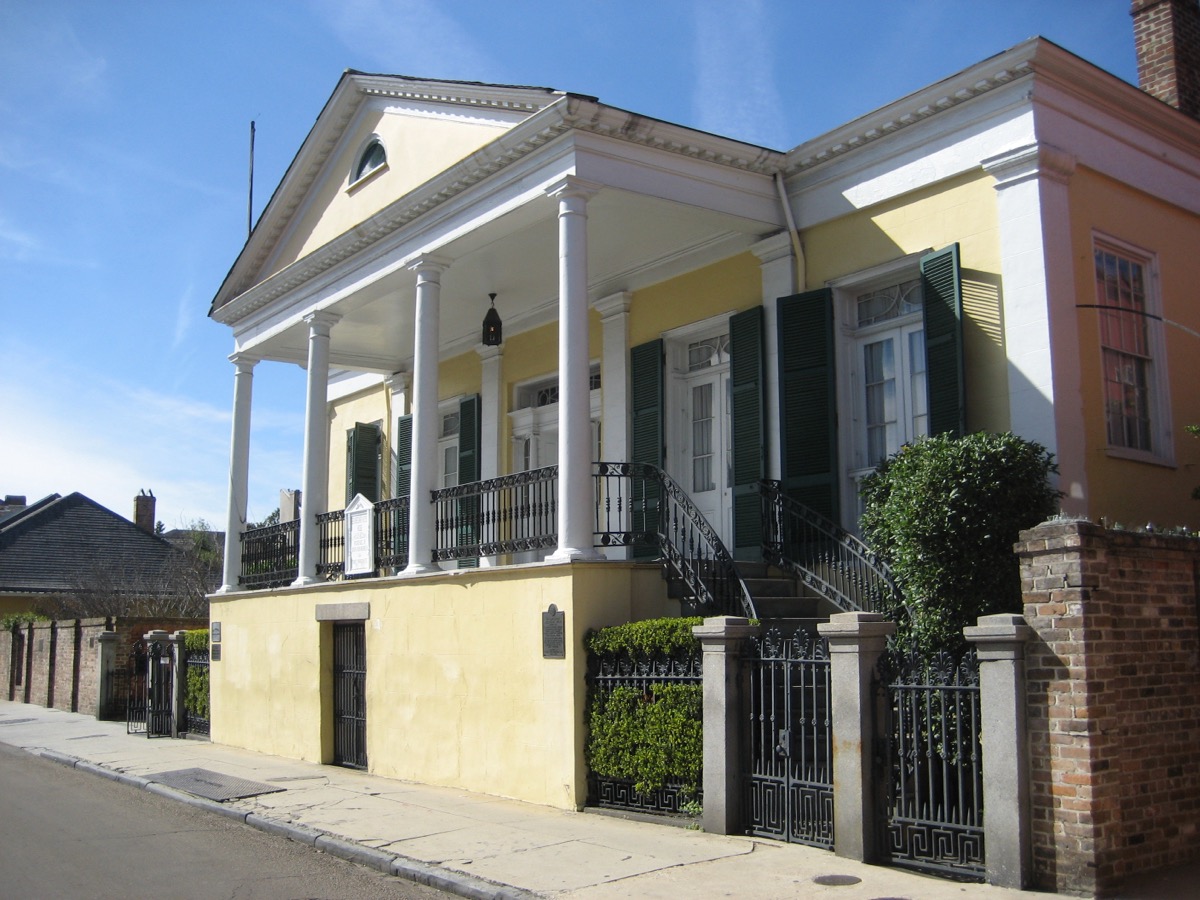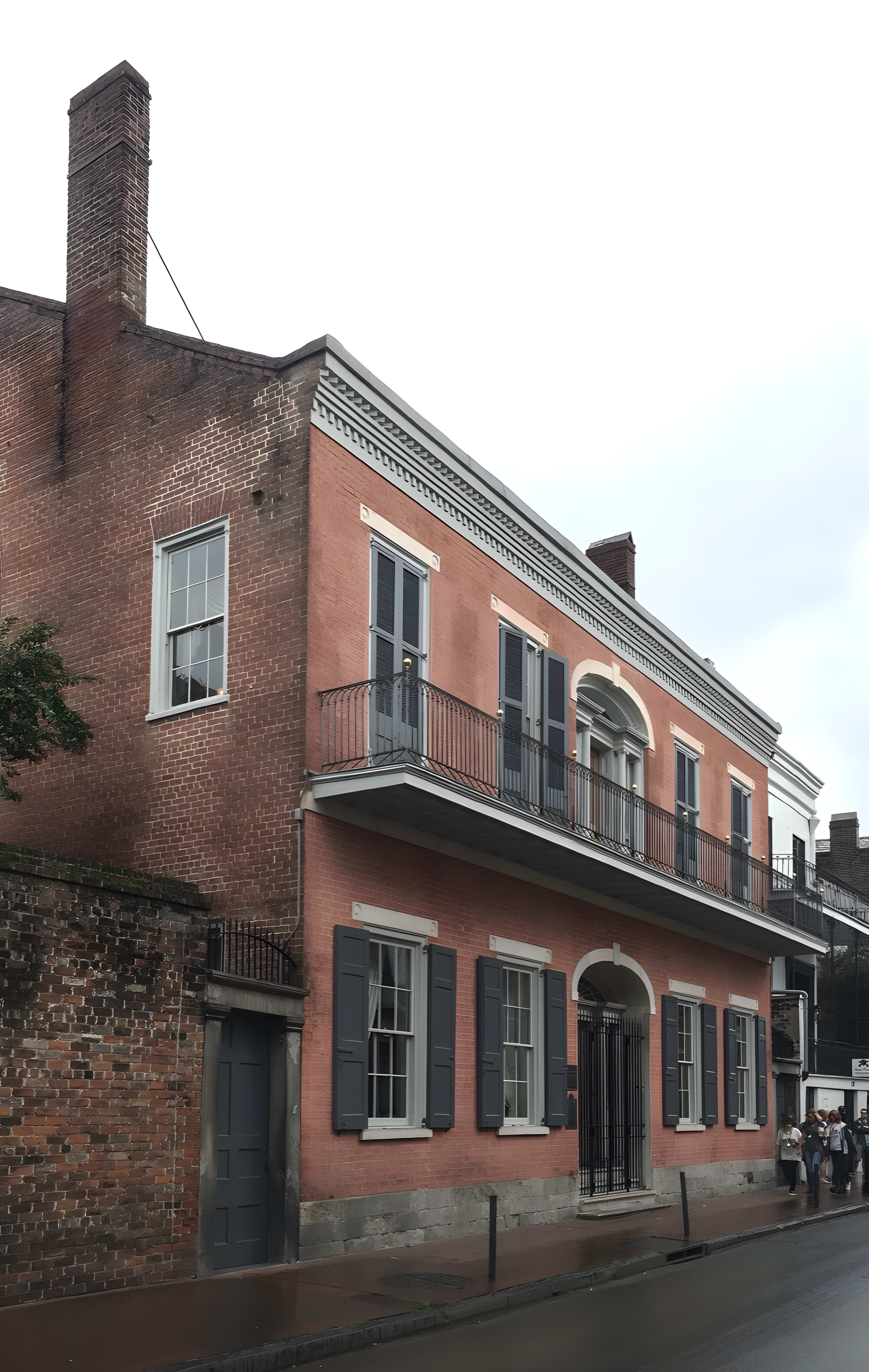
The Hermann-Grima House in New Orleans has a ghost who lights the fireplaces on cold mornings and leaves the smell of roses in rooms with no flowers. Staff call her the gentlest spirit in the French Quarter. The rough one waits down in the cellar.
The Hermann-Grima House at 820 St. Louis Street, in the New Orleans French Quarter, has a ghost who tidies up after the living. Staff have walked into rooms on cold mornings to find the fireplaces already lit, with no one on the schedule who lit them and no guest who'll admit to it. The docents folded it into the house's lore long ago: it's the widow, looking after the place.
They mean Anne Marie Filiosa Grima, known in the lore as the Widow Grima. She was the mother of Judge Felix Grima, whose family moved into the Federal-style mansion in 1844 and stayed until 1921. The house was built in 1831 for Samuel Hermann, a German-born cotton broker who lost his fortune in the 1837 market crash and sold it. The widow died here on October 15, 1850, at the age of 96. Every October the museum reenacts a 19th-century Creole mourning: portraits and mirrors draped in black, the clocks stopped, a coffin laid out in the living room.
People report her doing nice things. Roses in rooms with no flowers, the favorite scent of the women who lived here. "They never do unpleasant things," a former director, Charles Mackie, told a reporter in 1991. "They do nice things, like heating up the rooms for us on cold winter mornings." After one function, he said, every guest remarked on how lovely the roses smelled, and there wasn't a single rose in any of the centerpieces.
According to the docents, visitors mistake her for one of the costumed interpreters, and now and then someone asks the front desk who the woman in mourning dress upstairs is.
The rough part is the part the staff don't volunteer. During the Civil War, a Union general gave Felix Grima 24 hours to clear out, and his family fled to Augusta, Georgia. The soldiers who moved in held target practice indoors. Bullets are still lodged in the walls and under the stairwell.
Whatever they left behind isn't gentle. The heavier presence, the one that swats at guests, keeps to the wine cellar and the grand staircase.
The house plays its part well. When American Horror Story: Coven needed an interior for Madame LaLaurie's mansion, they shot it here, a few blocks from where the real LaLaurie did her work. The rooms looked the part. One ghost lights your fire. The other one is still down there with the bullet holes.