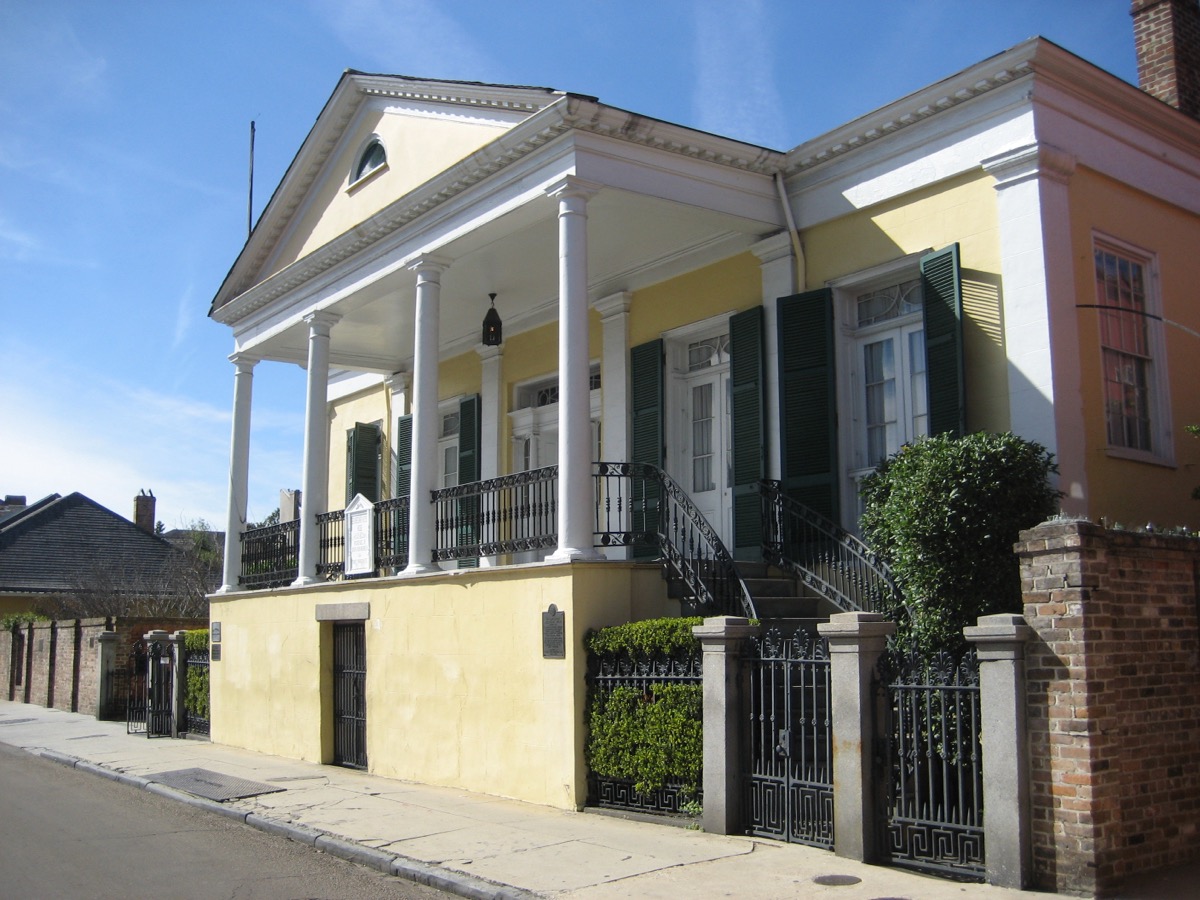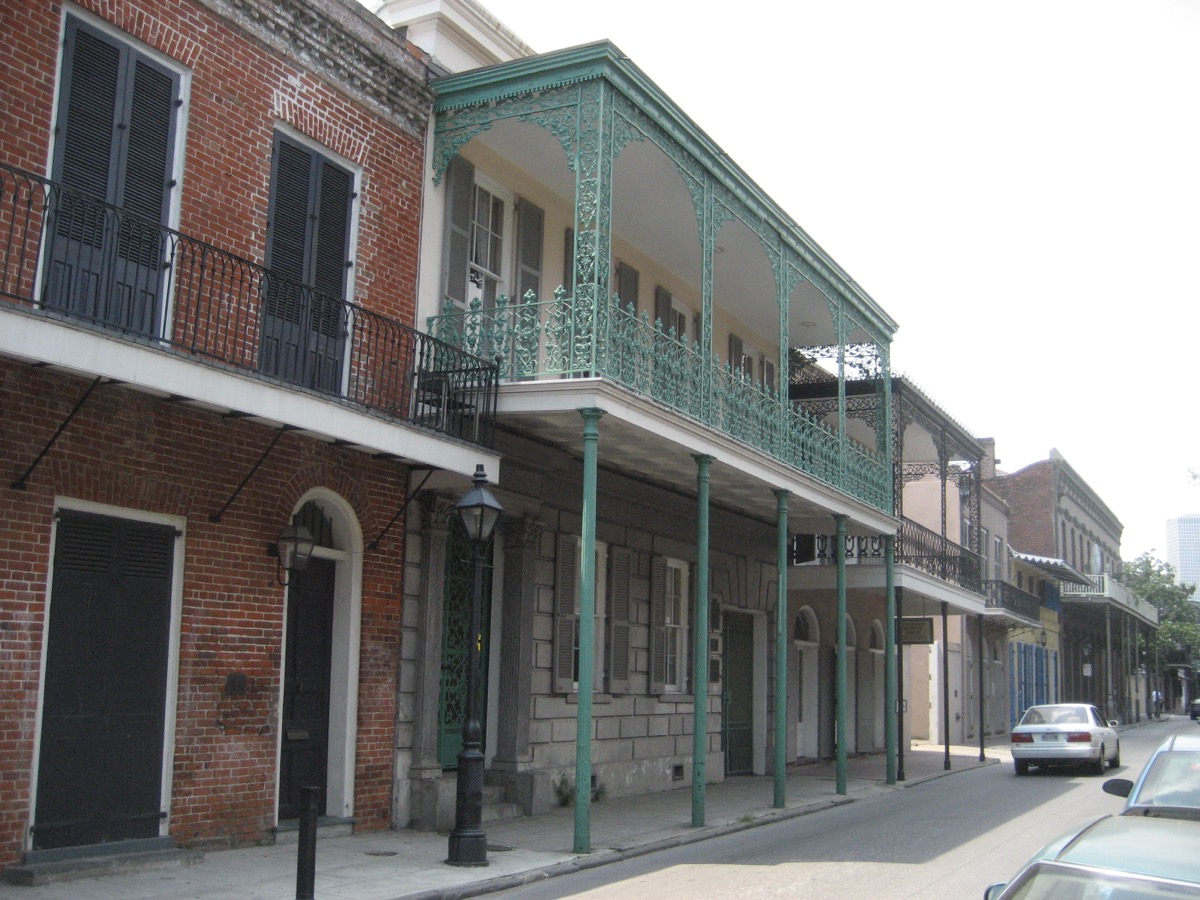
Gallier House at 1132 Royal Street, New Orleans, is one of the French Quarter's most famous haunted addresses. Trouble is, no staff have ever reported a ghost. The dread here is all documented: a family that lost four people in under two years.
Gallier House sits at 1132 Royal Street in the French Quarter, behind a run of Paris-green cast-iron galleries, and it is one of the most famous haunted addresses in New Orleans. The ghost tours stop out front and tell you the architect who built it never left. Here is the strange part: nobody who works there has ever reported him.
The haunted reputation is borrowed. The LaLaurie Mansion, the city's most notorious house of horrors, stands one door away. *American Horror Story: Coven* filmed Gallier's exterior as the fictional LaLaurie place. Anne Rice said in 2014 that she had toured the house "many a time thinking, ah, this is where Louis and Lestat and Claudia live." Three borrowed hauntings, and not one documented sighting of its own.
The real darkness is on the record, and it is worse.
James Gallier Jr. finished the house in 1860 as the most advanced home in the city, with running hot and cold water, a flush toilet, and a skylight that pulled daylight into the inner rooms. The comfort was built on enslaved labor, and later on domestic servants, whose lives the museum now works back into the tour. Then his family began to die. On October 3, 1866, his father and stepmother went down with the steamer Evening Star in a hurricane off Savannah; only about half of roughly 250 aboard survived, and the father's body was never recovered. His wife Aglae lost her mother in October 1867 and her sister the next month. In May 1868, James Gallier Jr. died in the house himself, age 41. He was laid to rest in St. Louis Cemetery No. 3, in a tomb first designed as a monument to the father the sea never gave back.
Four deaths in under two years.
Every October the museum stages it. The Creole Death and Mourning exhibition dresses the parlor for the 1868 funeral: a coffin in the front room, black crepe draped over the gilded mirrors, a mourning wreath on the door, the clocks stopped, the piano lid shut. "When we talk about the idea of death and mourning during this time period, it's pervasive," a docent told a local journal. "It permeates every part of everyday life."
Three of Gallier's unmarried daughters stayed in the house until it was sold in 1917, living on in the rooms where all of it happened. The ghost tours want you to picture their father pacing the halls. The museum, every fall, just sets out a casket where one actually sat.