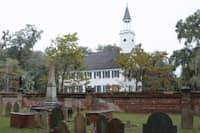
Maj. John B. Gallie was killed at Fort McAllister in 1863, and since its 1930s restoration people have reported a headless soldier on its walls. A month after he died, the fort lost its mascot, Tom Cat. Visitors say a black cat still runs along the ramparts.
On a February morning in the 1960s, some groundskeepers were cutting the grass at Fort McAllister, an earthwork fort on the Ogeechee River near what's now Richmond Hill, Georgia. The sun was out and there wasn't a cloud in the sky, but an icy chill seemed to come over them. They were already nervous when they saw it, and they watched it for several minutes: the headless body of a man in a Civil War officer's uniform, standing where Maj. John B. Gallie was said to have died. Dave Goodwin wrote the account down for a military ghosts website in 2003.
Gallie was the fort's commander. On the morning of February 1, 1863, the Union ironclad Montauk came in close and opened fire. Early in the fight a shell fragment cut him badly in the face, and he refused to be relieved, saying he'd be able to attend to duty in a few minutes. At 8:30 a shot from the ironclad disabled one of the fort's guns, and the state's marker says Gallie was beside it, going from gun to gun and encouraging his men to calmness of aim. Capt. George W. Anderson Jr. wrote in his report the next day that Gallie fell "pierced through the head," and that "it was this shot which killed the heroic Major Gallie."
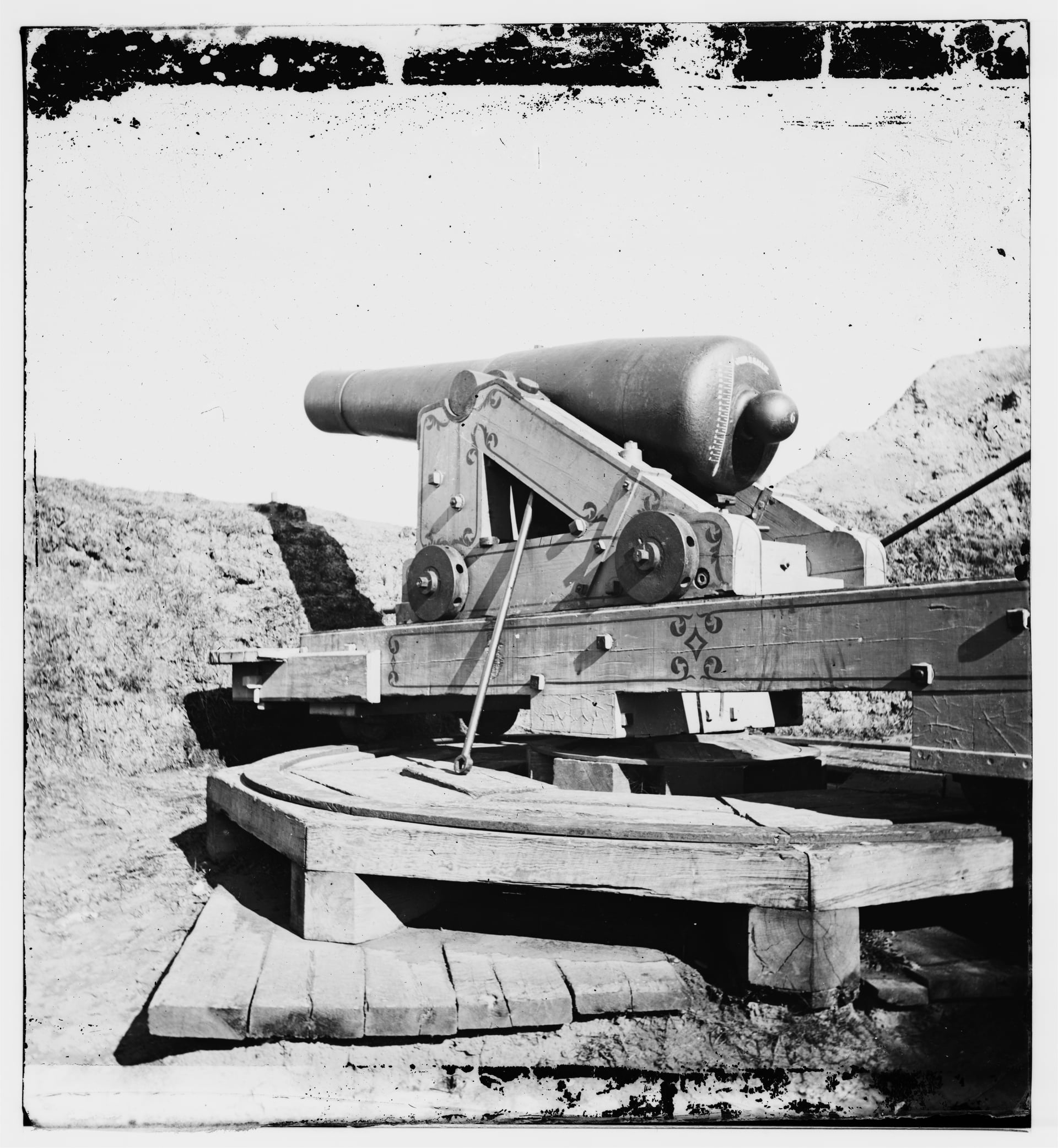
The fort sat in ruin after the war until the 1930s, when Henry Ford, who owned the land as part of a plantation of nearly 5,000 acres, paid to have it rebuilt. The Savannah ghost tours say park employees have seen a headless soldier standing on the earthworks, near the cannon where the major is said to have lost his head, with icy cold air around him.
The legend says a Union shell ricocheted off one of the fort's cannon and took his head off in front of his men. Anderson's report doesn't say that. It says he was pierced through the head, and no record from the time says Gallie was beheaded.
The ghost tours have a story about Ford's restoration, too. They say he asked his workers to spend the nights in the fort to keep looters out, and that they heard shouted military commands, cannon fire and moaning, and felt like someone was watching them. None of them is said to have lasted a whole night. The oldest telling anyone has traced, Goodwin's from 2003, is plainer. The workers just refused to stay the night, because of noises from the grounds that nobody could ever explain.
A month after Gallie's death, on March 3, 1863, the ironclads Passaic, Patapsco and Nahant shelled the fort for hours. Only one Confederate died, and it was the garrison's mascot, Tom Cat. His death went into the official report to Gen. P.G.T. Beauregard, and the soldiers buried him at the fort. A state marker put up in 1963 says, "The death of the cat was deeply regretted by the men."
Visitors and staff say they've seen a black cat running along the earth ramparts and through the bombproof rooms. Re-enactors say they've seen Tom Cat peering out toward the river. He follows people and vanishes when they go after him, and some have felt his arched back rub along their legs.
The Bryan County News has one more cat story. A previous park manager had a cat, also named Tom Cat, and it died on the anniversary of the first Tom Cat's death and was buried under his marker. Danny Brown, the park manager, told the paper there's always been a cat at the park.
"It's weird," he said, "but every time a cat dies or disappears, a new one just mysteriously shows up."