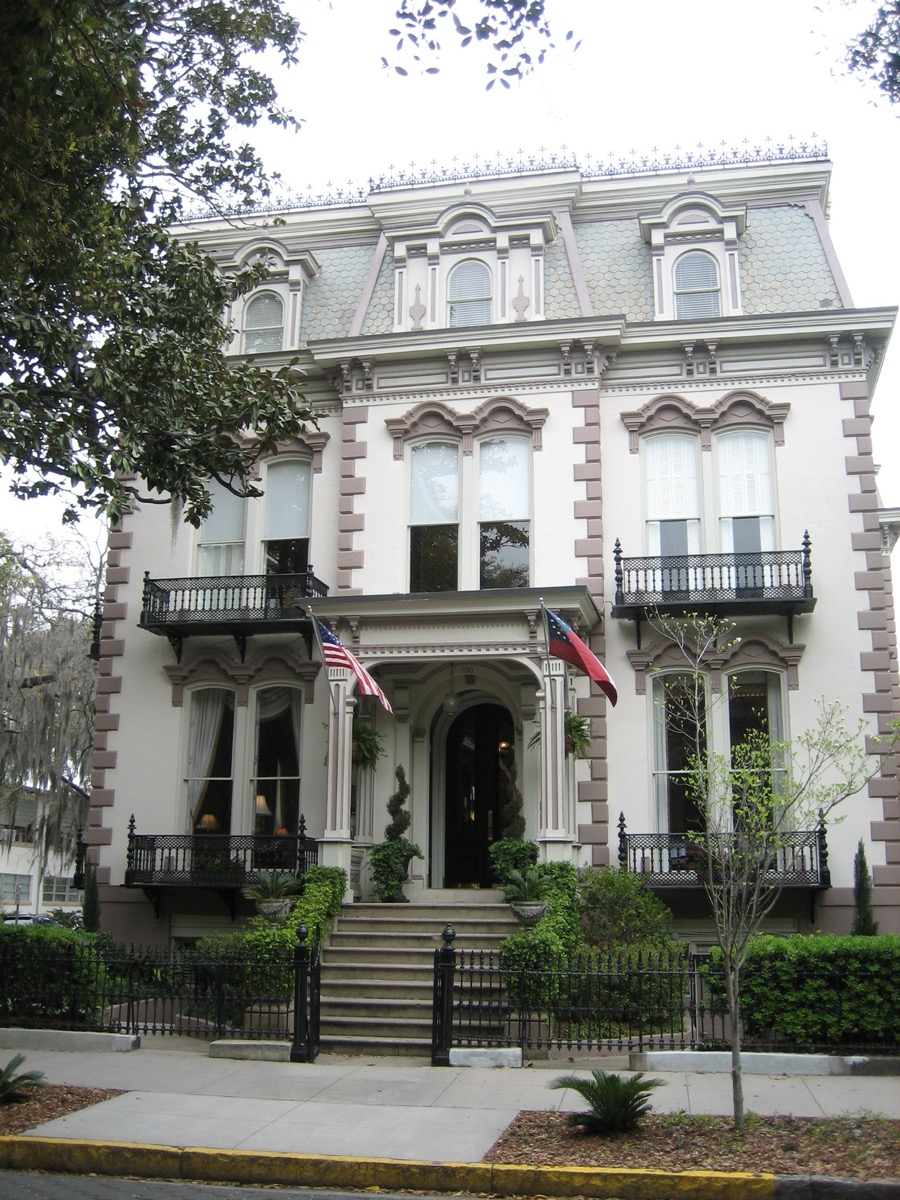
The Forsyth Park Inn in Savannah keeps a guest who never grew up. Staff say a shy 14-year-old named Lottie drifts the halls and helps them find lost things. The story goes she once poisoned a woman with oleander from the garden — and only learned too late who the woman was.
The Forsyth Park Inn sits in a Queen Anne mansion across from Forsyth Park in Savannah, Georgia, and guests there keep seeing a girl. She looks about 14, shy, and she vanishes the moment you turn to look at her. Staff say she helps them find things they've misplaced. They call her Lottie.
The story they tell about her is the reason the inn is on every ghost tour in the city, and it's worth saying plainly: no record proves any of it happened. It's tour lore, passed hand to hand, with no census page, court file, or asylum log to back it. But it goes like this.
The mansion was built around 1893 for Captain Aaron "Rudder" Churchill, a sea captain from Nova Scotia who ran the Churchill Steamship Line. His nautical past is carved into the place — rope motifs around the front door, twisted rope balusters climbing the grand staircase. Lottie, the story goes, was his niece. One day she found the captain in an embrace with a woman she'd been told was a stranger. In a jealous rage she picked oleander from the garden — every part of the plant is poison — and steeped it into the woman's afternoon tea.
The woman died. Only at the funeral did Lottie learn who she'd killed: not a stranger at all, but her own mother. They committed her to an asylum, and she never came out.
The legend ends there. What people actually report is quieter. A shy girl on the staircase landing, in the halls, out in the walled garden. One couple said their television switched on by itself in the night and landed on coverage of a man's trial for killing his pregnant wife. The Savannah ghost-tour author James Caskey called it "the soul of a departed murderess, turning on the television to check the progress of another accused murderer."
And Lottie keeps helping the staff find what's lost — as if she's trying to set one thing right.