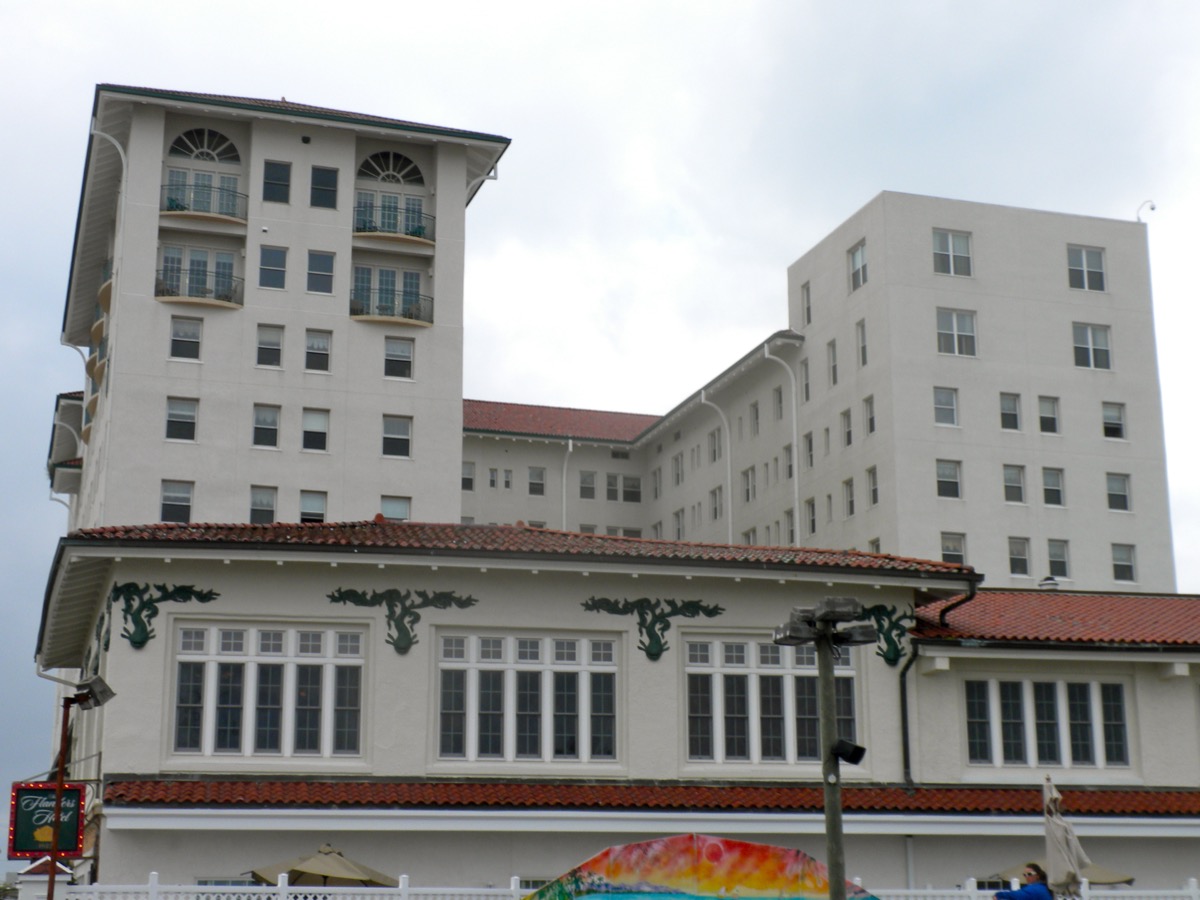
The Flanders Hotel in Ocean City, New Jersey keeps a ghost named Emily — a barefoot young woman in a white gown who unscrews light bulbs, hums in the halls, and vanishes around corners. The staff named the restaurant after her.
At the Flanders Hotel in Ocean City, New Jersey, the ghost everyone tells you about is barefoot. Her name is Emily, and the way the staff describe her, she's a young woman in her early twenties with long brown hair and a long white gown, walking the halls with no shoes.
She isn't the kind that hides. People report her singing and laughing in the hallways, turning doorknobs, unscrewing light bulbs, and swinging doors that no one is standing near. They've seen her on the second and fourth floors, in the lobby, and in the room called the Hall of Mirrors — the train of her white gown disappearing around a corner, or Emily herself stepping through a wall. One sighting placed her in the basement, the early hours of July 7, 1999, in the warren of below-sea-level rooms the hotel calls the Catacombs — seven or eight chambers linked by tunnels, dry only because of a pump system, used over the years for speakeasies during Prohibition and now for storage.
The hotel opened on a rainy day, July 23, 1923, the largest construction project Ocean City had ever seen at $1.5 million. They named it for the Battle of Flanders in Belgium, where Allied troops fell in the First World War, and they painted poppies on the ballroom ceilings to remember them. It was built of steel and concrete and sold as fireproof. In October 1927, a fire tore down the boardwalk and leveled roughly 500 guest rooms across the city. The Flanders survived it intact.
Who Emily actually was, nobody agrees. The ghost tours offer two versions — the fiancee of a soldier killed in the trenches, still waiting at the hotel named for the battle that took him; or a bride-to-be who lost her ring in the pools and searches for it. Both are legend. No one has ever put a real name to her.
What the hotel did instead was make room for her. There's a framed portrait of Emily on the second floor, painted by an artist named Tony Troy from descriptions that guests and staff gave him over the years — a barefoot woman in white, leaning on a piano. The restaurant downstairs is called Emily's.
A century in, after a restoration that turned half the rooms into condominiums, the Flanders still runs as a full hotel and books about 70 weddings a year. The bride no one can name is the one they kept.