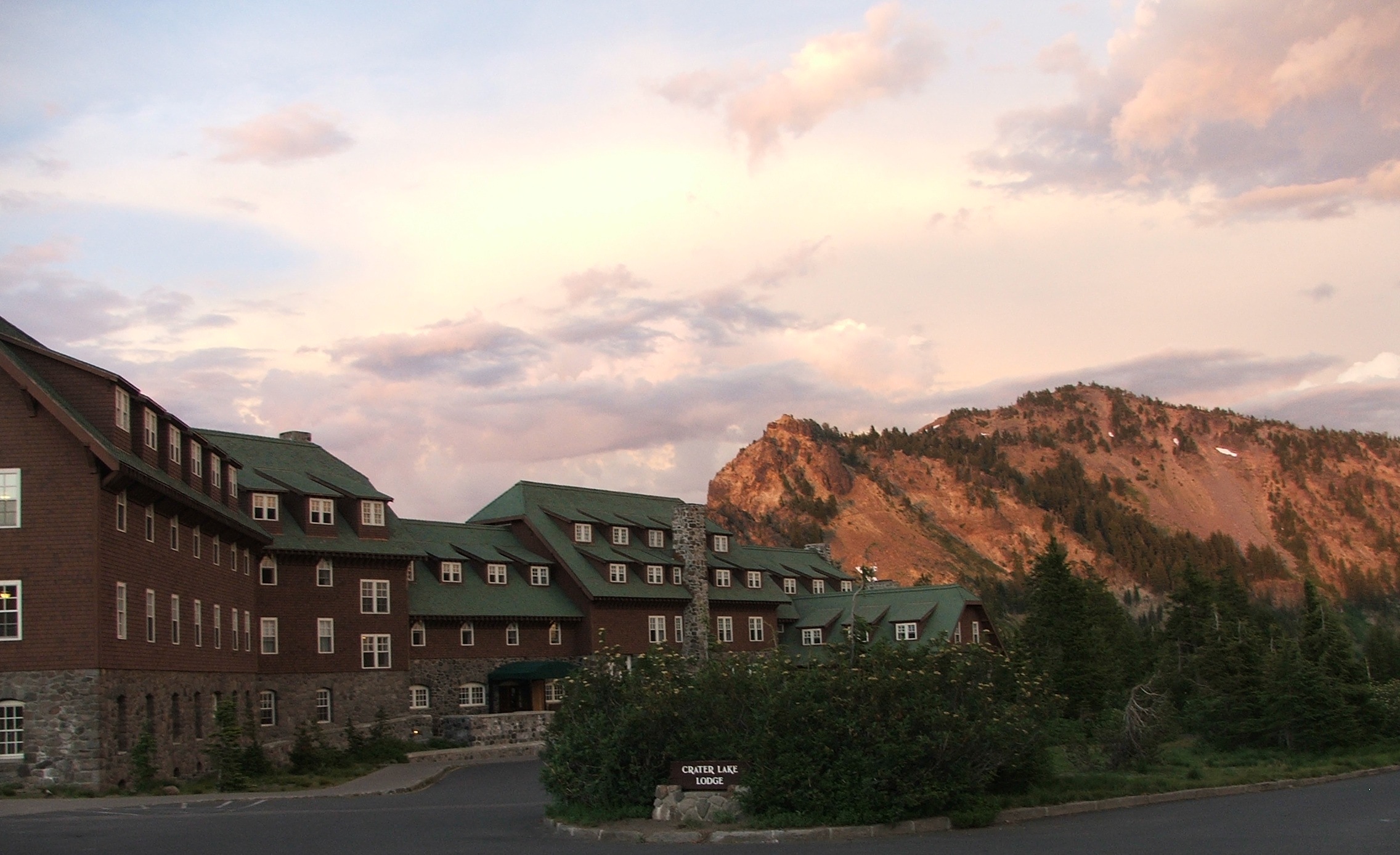
Employees at Crater Lake Lodge in Oregon keep an eye on a rocking chair in the Great Hall that shifts on its own, as if someone just sat down. The lodge was condemned and gutted to a steel frame in the 1990s. The figures people tell of came back anyway.
Employees at Crater Lake Lodge, in Oregon, keep half an eye on a rocking chair in the Great Hall. The story goes that it makes a small forward-and-back motion on its own, a single shift, as if someone has just sat down in it, when no one has been near it for hours.
The lodge sits on the southwest rim of a volcanic caldera, about 1,000 feet above the deepest lake in the United States, in a place that averages 533 inches of snow a year. It opened in 1915, and it was a disaster from the start. To save money the builders wrapped it in tar paper, lined the inside with cardboard-like "beaver board," skipped private bathrooms, and poured the foundation onto uneven volcanic rock during a building season only three summer months long.
Those crews are the ones people tie to the other figure. Guests describe a man in old work clothes at the end of an upstairs hallway, or near the main staircase. He looks solid until you speak to him, and then he is gone. No source records anyone actually dying in the build, so the worker is linked to the danger of it rather than to a name in any ledger. A little girl gets told of too, on the second and third floors, childlike footsteps in the halls at night with no child ever found.
The building spent decades trying to come apart. By the postwar years its floors and ceilings sagged so badly that crews ran steel cables wall to wall to keep it from bowing outward. In 1989 engineers decided the Great Hall could collapse under its own weight, and the lodge closed. The Park Service judged a fix too expensive and approved tearing the whole thing down. Public outcry, tied to the lodge's place on the National Register, reversed the order.
So instead they gutted it. A 15 million dollar rehabilitation ran from 1991 to 1994. The Great Hall was taken apart and rebuilt. Modern steel went in where the cables had been. The lodge reopened on May 20, 1995, almost a new building wearing the old one's stone and timber.
And the figures came back to it. The worker still turns up by the staircase. The footsteps cross the upper floors at night. In a Great Hall that was dismantled board by board and reassembled around a steel frame, the big rocking chair goes on making its small motion, as if someone has just sat down to look out at the lake.