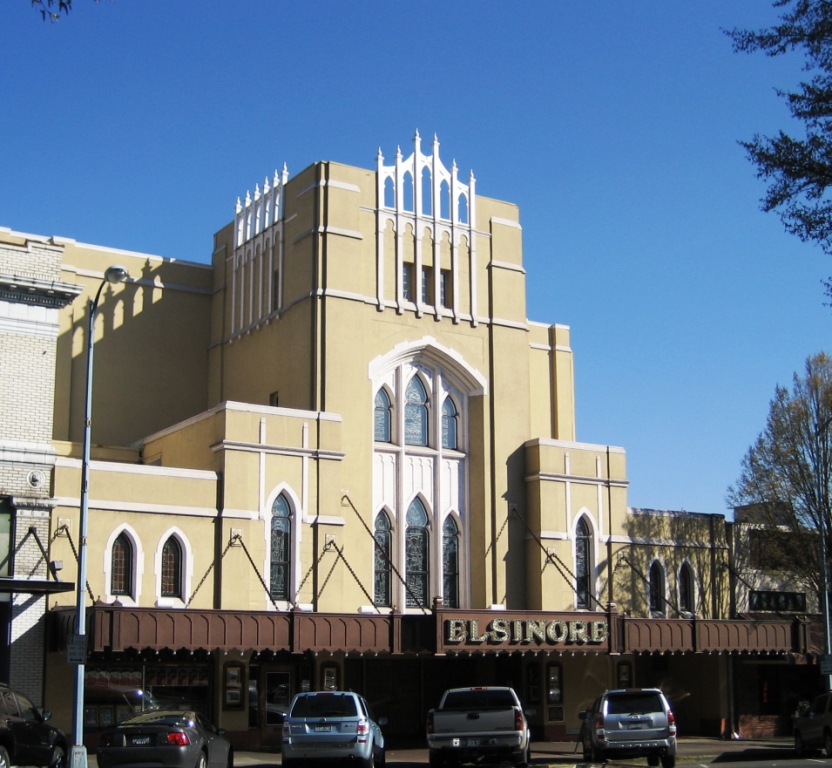
Performers rehearsing on the lit stage of the Elsinore Theatre in Salem, Oregon look out into the dark house and see a man in the seats, watching. They think he's George Guthrie, who built the place in 1926, named it for the castle in Hamlet, and apparently never left it.
Performers rehearsing on the lit stage of the Elsinore Theatre in Salem, Oregon look out into the dark, empty house and see a man sitting in the seats, watching them work. They're fairly sure who he is. George B. Guthrie built the place, opened it on May 28, 1926, and by the accounts of the people who work there, he has never left the seats.
Guthrie spent $250,000 on it, and a newspaper called it the most beautiful theater in America. He named it the Elsinore, after the castle in Shakespeare's Hamlet, and had it built to match: a four-story Gothic facade in downtown Salem with battlements along the roofline, like a castle dropped onto a city block.
Hamlet opens with a dead father pacing the battlements of his own house. Whoever chose the name in 1926 was making a literary joke. The building made it real. The man who built the castle is the one seen sitting in it.
Staff describe his shadow crossing the stage when the only thing burning is the ghost light — the single bare bulb theaters leave on overnight so an empty stage is never fully dark. They blame him for props that move on their own, and for pebbles dropped on actors' heads from somewhere up above. Others report a cold spot on the stage that doesn't shift, figures standing in the lighting grid, dust sifting down from the grid with no one near it, and a man who walks in through the rows of seats instead of down an aisle.
He may not be up there alone. Visitors describe a little girl's shadow in the upper balcony. The story makes her Guthrie's daughter, who fell to her death from the rail, though no one has been able to confirm a daughter ever died there. One visitor wrote about sitting alone in that balcony, photographing friends onstage: "Someone came up behind me. I heard and sensed them. I turned to see who it was, and no one was there. I left the balcony in a hurry."
The Elsinore was nearly demolished in 1980, saved by a grassroots committee, and it runs as a performing-arts center today. Every night, after the seats empty and the doors lock, someone leaves the ghost light burning on the bare stage. It's the light Guthrie is said to cross — the owner walking his own house after closing, the way an owner does.