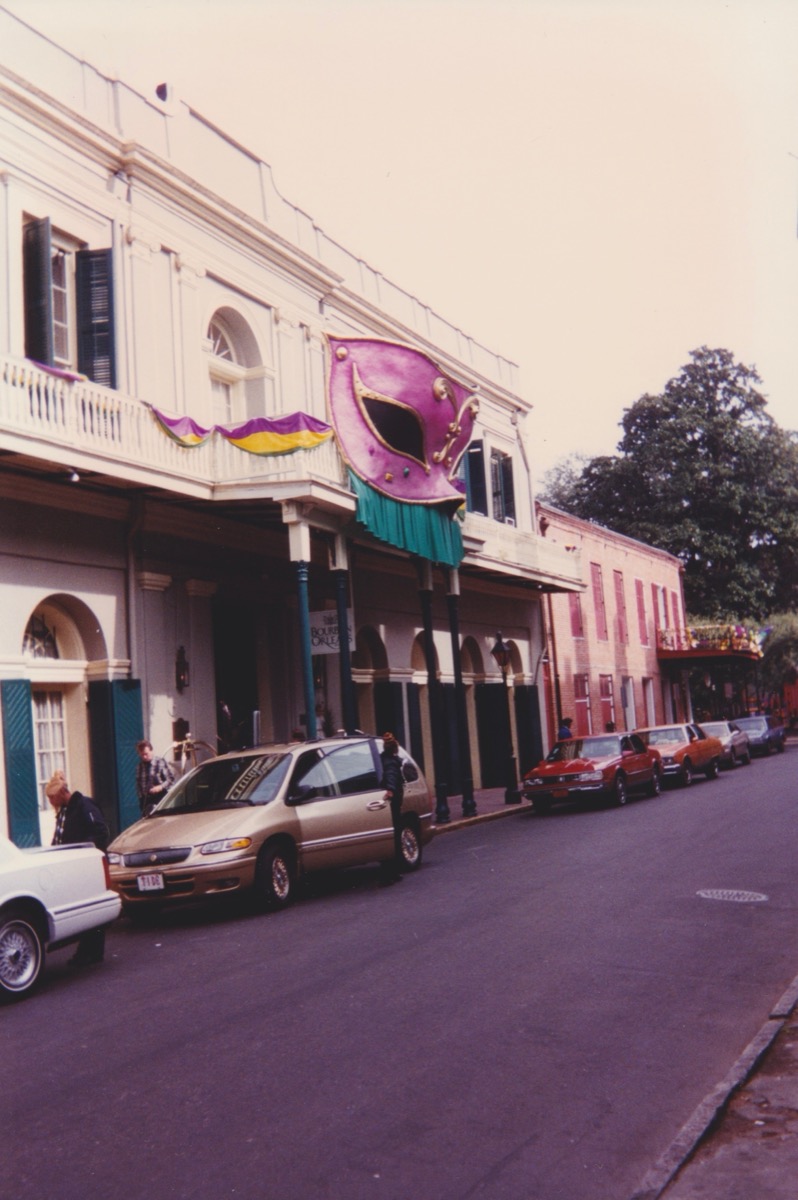
At the Bourbon Orleans Hotel in New Orleans, Room 644 is the room guests ask for by number. The story says a nun took her life there. People who stay report waking to a woman in a habit beside the bed, watching them with a kind, thoughtful face.
At the Bourbon Orleans Hotel in New Orleans, there's a room people request by number. Room 644 is the most-haunted room in the building, and the way it's told, a nun of the Sisters of the Holy Family took her own life there. The order has never confirmed it or denied it.
Guests who stay in 644 report waking to a woman in a habit standing beside the bed. She doesn't lunge or threaten. The accounts describe her watching them with an expression closer to thoughtful and kind. Some report the opposite at night too, anguished cries with no source. It's the room people ask for, and the room people ask to leave. Nothing in the record confirms a nun ever died there. The story has held for close to a century anyway.
The building spent most of two centuries as something other than a hotel, which is most of the explanation. John Davis built the Orleans Theatre and its adjoining ballroom here in 1817, a room for the subscription balls and masquerades of elite New Orleans, and tied in the records to the era of the Quadroon Balls and the plaçage system. A fire took the theater in 1866 but spared the ballroom.
Then the Sisters of the Holy Family moved in. The order, founded in 1842 by Henriette DeLille as the first African-American female-led Catholic order in the country, ran the property as a convent, a school called St. Mary's Academy, and an orphanage for girls. That is where the rest of the spirits come from. People report children building-wide, laughter in the hallways, small hands tugging at a shirt, a little girl chasing a ball down the sixth-floor corridor. They're tied to orphans who died of yellow fever, which swept the city again and again through the 19th century.
The Sisters left in 1964, and the modern hotel opened in 1966. The other ghosts kept their posts. A woman dances alone in the old ballroom, the hem of her gown brushing the floor under chandeliers, turning with a partner no one can see. A bloodstain attributed to a duel more than a century ago is said to return to the carpet after staff clean it away. And a Confederate soldier limps the third and sixth floors in a torn, bloody uniform, the sound of his sword scraping the floor behind his uneven steps.
The hotel doesn't hide any of it. It runs ghost tours and ranks among the country's most haunted hotels. But the soldier and the dancer and the children all came with the building. The nun came with the room. People still ask for the one with the nun in it.