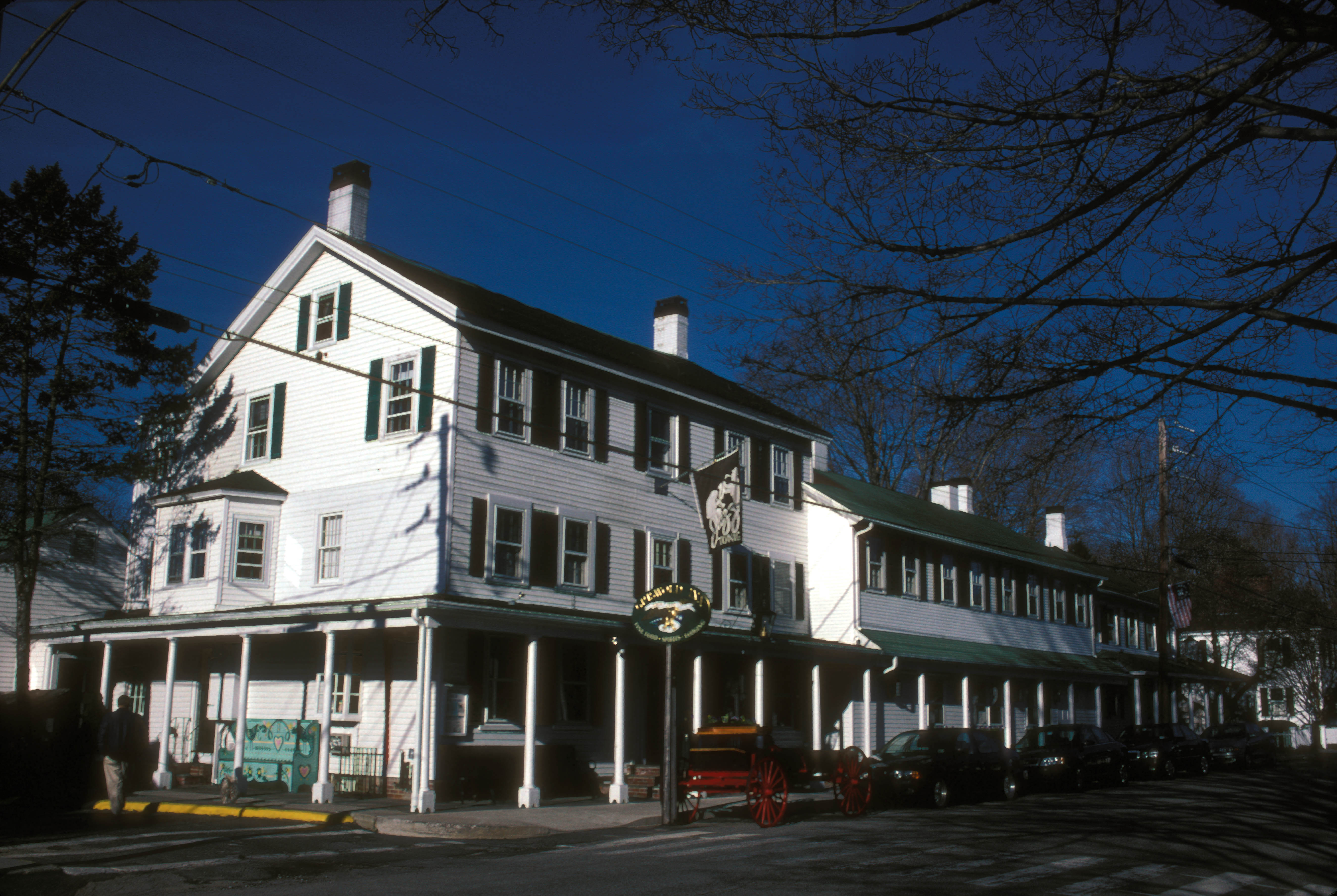
At the Griswold Inn in Essex, Connecticut, glasses slide off the tables and the staff blame a ghost named Clarence. Nobody knows who he was or when he died, so they did the next logical thing: they named a drink after him.
The Griswold Inn in Essex, Connecticut has a ghost, and his name is Clarence. Glasses slide off the tables on their own, the way they have for decades, and the staff have a culprit ready. "Every once in a while, glasses would fall off the table," says Kate Savage of the Essex Historical Society, "and I do know that we would attribute that sometimes to the ghost of Clarence." Who Clarence actually was — his full name, when he died, why he stayed — nobody knows. The story is just that he was a young man who died at the inn at some point across its 250 years. So the staff did the obvious thing with a ghost they can't identify: they named a cocktail after him.
That affection makes sense once you see what the "Gris" actually is. It opened in 1776 and never closed — not for the Depression, not for Prohibition, when it ran as a speakeasy with rum-running nearby. "We've been in business ever since," owner Joan Paul says. Six families have held it in 250 years.
The strangest thing in the building isn't Clarence. It's the barroom. The Historic Tap Room started as the town schoolhouse, built around 1738, and in 1801 it was rolled down Main Street on logs by oxen and bolted onto the inn — a barroom older than the country, arrived on rollers.
Then there are the walls. They hold the largest privately held collection of Antonio Jacobsen, the most prolific maritime painter in America, plus John Bard steamboats found almost nowhere outside museums and a Norman Rockwell sketch of a steamboat race. Appraised past a million dollars, hung over a bar.
And every Sunday, the inn still serves a Hunt Breakfast — a tradition roughly two centuries old. Legend ties it to April 1814, when 136 British sailors and marines rowed up the Connecticut River, burned some 27 ships in the worst American shipping loss of the War of 1812, and were said to have helped themselves to the town's rum on the way out. The inn was called Bushnell's Tavern then. The brunch outlasted the invasion.