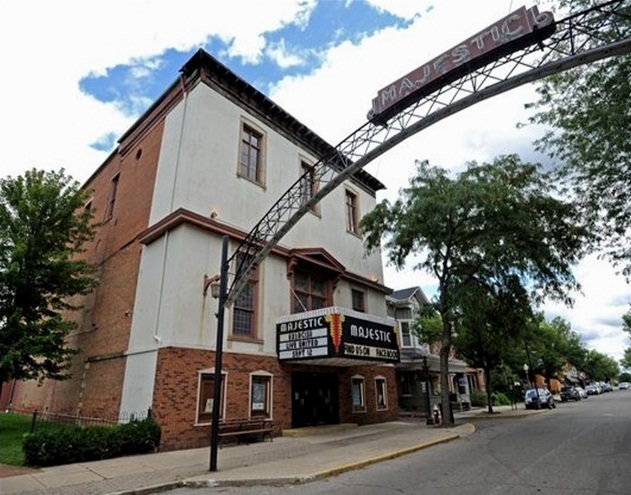
When the Spanish flu overran Camp Sherman in 1918, the Majestic Theatre in Chillicothe, Ohio was pressed into use as a morgue: bodies stacked in the dressing rooms, embalming done on the stage. The soldier now seen lying on those boards has reason to linger.
At the Majestic Theatre in Chillicothe, Ohio, the figure people report most is a soldier, lying motionless on the stage where the boards are now lit for a play. He has good reason to be there. In the fall of 1918, this stage was an embalming table.
The theatre had been running since 1853, when it opened as the Masonic Opera House; the Myers brothers bought it and hung the name Majestic on it in 1915. By 1918 it was a movie house. Then the Spanish flu reached Camp Sherman, one of the largest Army training camps in the country, just outside town, and reached it faster than anyone could bury the dead. The camp had swollen Chillicothe from 16,000 people to 60,000, and the local mortuaries went under in a week.
So they used the theatre. Bodies were stacked like cordwood in the dressing rooms beneath the stage, waiting their turn. The embalming happened up top, on the boards, and the fluid ran off into the alley alongside the building. People in Chillicothe still call that alley Blood Alley.
The hauntings grow straight out of that autumn. A man in a dark suit and top hat is seen drifting down an aisle. A little girl runs through the dressing rooms. A balcony with no one in it claps for a show that isn't playing.
The most-reported spot is the star dressing room, across from the backstage stairs, one of the rooms where the bodies once waited. In August 2006, an eight-person team from the Ohio Exploration Society spent a night in the building with cameras and recorders. Out of that dressing room, they say, came a faint voice on tape: "Help me." In the unused boiler room they logged cold spots and a squeak from the old boiler that went quiet the moment they asked it to. And somewhere in the dark a deeper voice gave a name nobody could place: "Lawrence Baker is who I am." No record in the town ties a Lawrence Baker to the theatre, the morgue, or anything else. The name exists only on that recording.
The Majestic runs as a nonprofit now, with live shows and films and a ghost walk every fall. The soldiers who died in 1918 were carried out of here by wagon, back toward the camp and a train home to their families. Whoever's lying on the boards never made the trip.