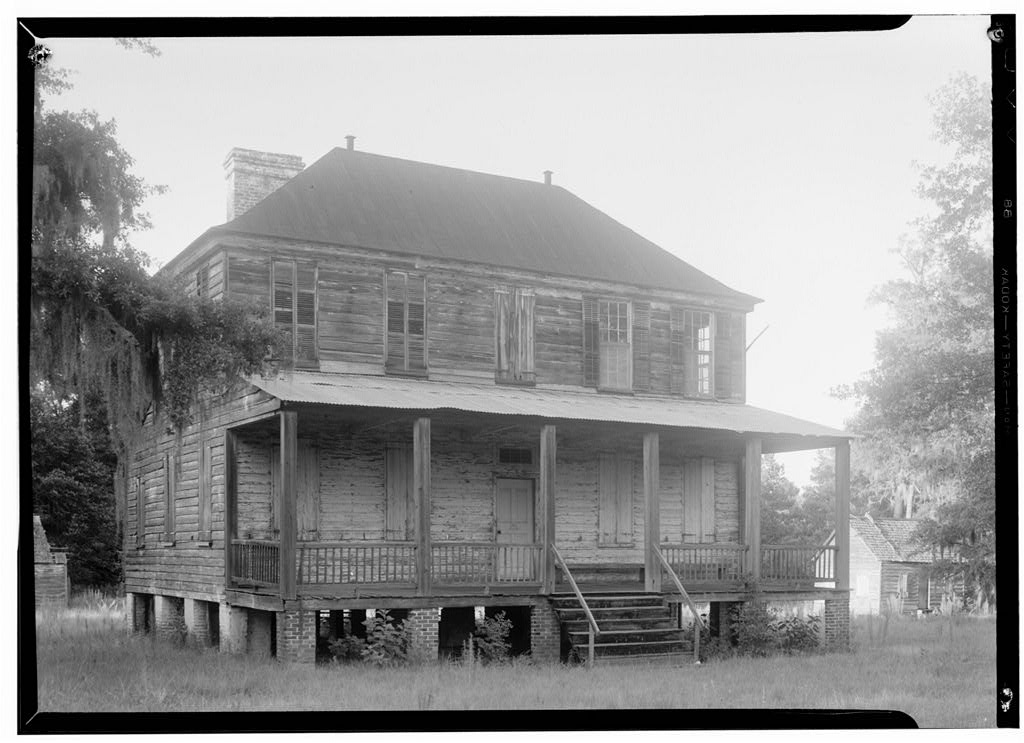
The most-told ghost at the Wampee house near Pinopolis, South Carolina, is a Native American woman with a porcelain face and a gown of blue silk — the same blue as the pickerelweed flower that gave the plantation its name.
The most-told ghost at the Wampee house, a plantation home near Pinopolis, South Carolina, is a Native American woman with a porcelain face. One old account gives her a complexion "as exquisite and delicate as a blush of early dawn upon the morning dew." She turns up in a gown of flowing blue silk, and one caretaker watched her stand outside in buckskin and ribbons, looking in through a window, until she faded with the setting sun.
The blue is the point. Wampee is a Native word for pickerelweed, a blue-flowering water plant that once grew thick across the property and drew the birds the indigenous people hunted here. The flower named the place, and the woman's silk is the same blue, as if it were woven from the blossoms. The land, the name, and the apparition are one image.
Native American burial mounds are still visible on the grounds. During an excavation for the Charleston Museum, workers opened one of them and found a woman's skeleton buried in a crouching position, the old burial posture. No record fixes the date of the dig, and nothing but the telling links the buried woman to the figure at the glass. Many make the connection anyway.
Charleston Magazine calls Wampee the most haunted place in Berkeley County, and the house earns it in more ways than the one figure. There is an upstairs bedroom the caretaker's dog refuses to enter, where a cold spot sits. Tiny white lights drift across the porch after dark. Doors open and close for hours on their own, and one night they kept a group of Santee Cooper board members awake until morning. Sandy Gibson, who kept the property for 26 years, will not spend a night in it, and has answered early-morning phone calls from overnight guests begging to leave.
Even the famous ones balk. Asked to stay the night alone, NFL Hall-of-Famer Terry Bradshaw said, "oh no, I'm not staying in this house by myself." Steve Mott, a former Detroit Lions center, was just as rattled. A reporter recording inside heard something say "don't go" through his headphones. In 2009 a team of ghost hunters measured readings they called more intense than anything they had found anywhere else, and came back to the house twice more.
When Santee Cooper dammed the basin in the 1940s for its hydroelectric project, Lake Moultrie rose over the plantations around Wampee and left them underwater. Wampee it left alone, standing dry on the bank while its own fields went under. The blue water that drowned everything nearby stopped short of the house with the blue-gowned woman in the window.