Guests at The Shaker Inn in Enfield, New Hampshire say they hear a gunshot outside that no one fired, then watch a man stumble across the grounds clutching his middle before he's gone. The story ties him to the only Shaker ever murdered.
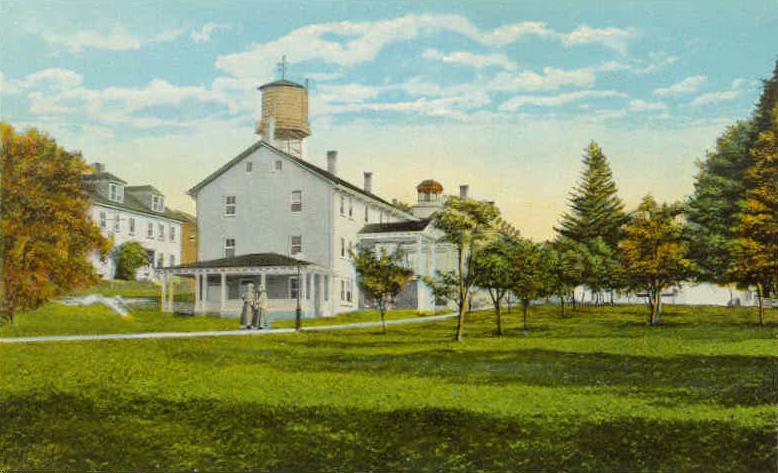
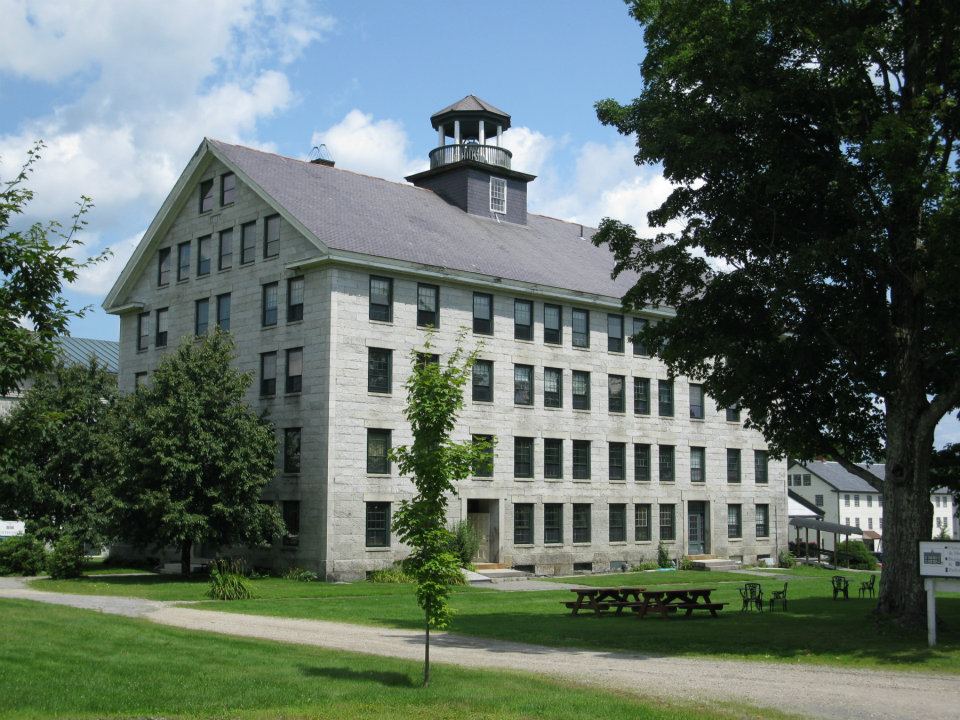
The Shaker Inn sits inside the Great Stone Dwelling in Enfield, New Hampshire, and the story guests bring back starts outside, with a sound. A gunshot, sharp and close, that no one fired. Then a man stumbles across the grounds near the building, clutching at his middle as if he'd just been hit, and before anyone can reach him he's gone.
The shot people say they hear has a date. On the afternoon of Saturday, July 18, 1863, a Civil War veteran named Thomas Weir walked into the Shaker village and asked to see his two daughters. He'd left Sarah and Ellen with the Enfield Shakers in 1861, both of them under twelve, signing an indenture that gave the community custody while he marched off with the 5th New Hampshire Volunteers. Now he wanted them back. The man who told him no was Caleb Dyer.
Dyer had run the community for the better part of forty years. He'd arrived at Enfield as a boy of twelve in 1812 and risen to trustee, the man who oversaw the construction of the very granite building that holds the inn today — the largest Shaker dwelling ever built, the largest house north of Boston when it went up around 1840. When Dyer refused, Weir drew a Colt revolver and shot him in the body at close range. A second shot misfired. Weir fled. Dyer held on for three days and died on July 21, 1863. Some five hundred people came to the funeral.
He holds, the museum's own history says, "the unhappy distinction of being the only Shaker to be murdered" — the one killing in the long, peaceable life of the community the Shakers called Chosen Vale, the ninth of eighteen Shaker settlements in America.
Weir was charged with premeditated murder, pleaded down to second-degree, and walked free after about seventeen years.
There's a turn the Shakers would have appreciated, if not enjoyed. They were ardent spiritualists who, in their fervent years, fully expected the dead to come back and speak. The community closed in 1923, the last members moving on to Canterbury, and the great granite house opened to overnight guests in June 1998 — its old retiring rooms, where the celibate Brothers and Sisters once slept behind separate entrances, are bedrooms now, up on the third and fourth floors. People still report it: the shot outside, the stumbling man, and inside, the plain, unshakable feeling that someone else is in the room with them.