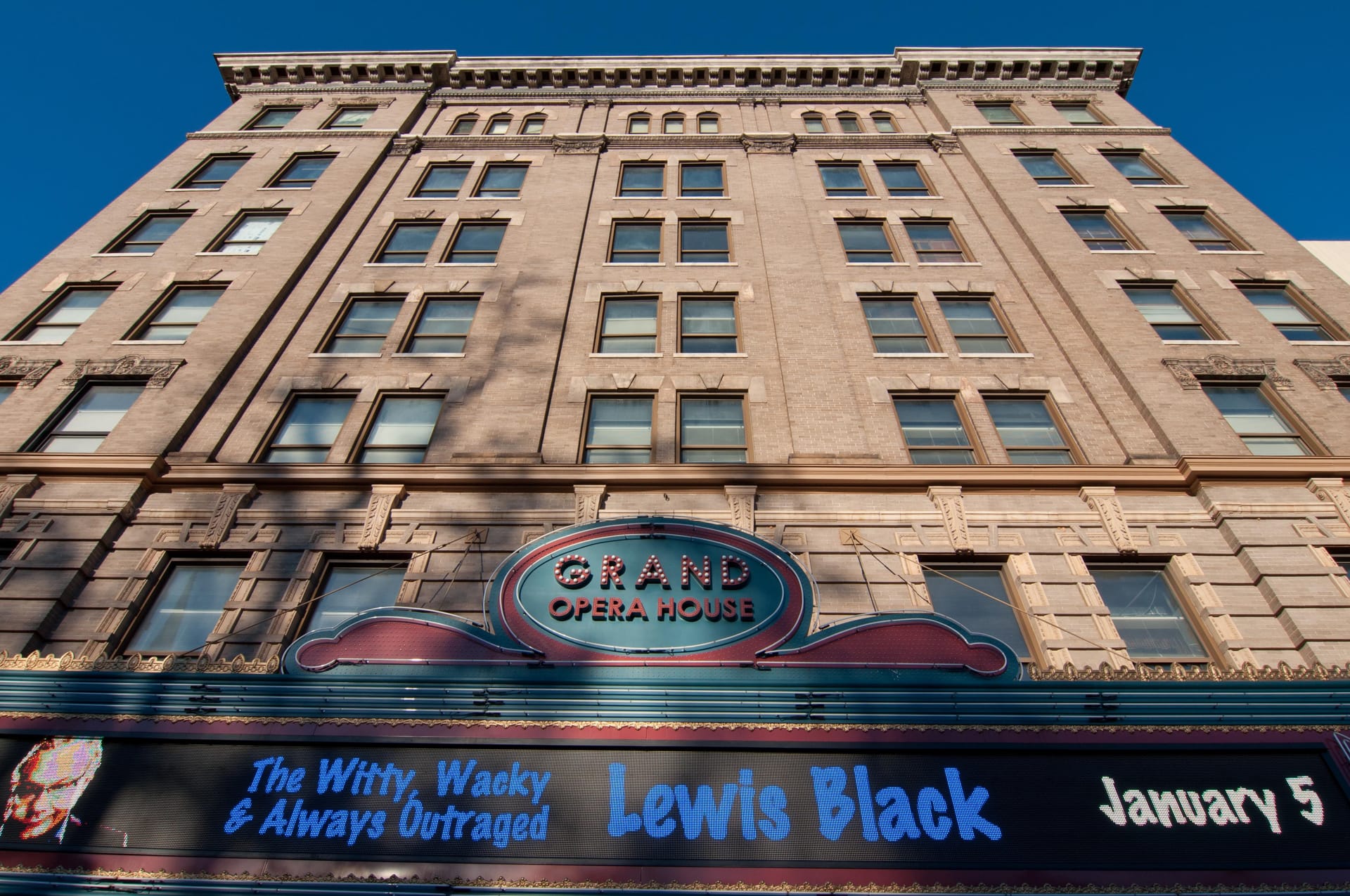
Piano music plays at night in the locked Piedmont Grand Opera House in Macon, Georgia. The staff blame Randall Widner, who died in the room high above the stage in 1971. They keep a seat for him. A Lady in White sings from the balcony boxes.
Bob Mavity says that more than once he has sealed up the theater for the night and then heard piano music, and he couldn't tell where it was coming from. Mavity is the senior technical director at the Piedmont Grand Opera House in Macon, Georgia, and the house piano there is a black Steinway grand. These days he doesn't always go looking. "Sometimes, I don't come out of my office," he says. He just tells the ghost to enjoy the piano, and he calls him by his first name.
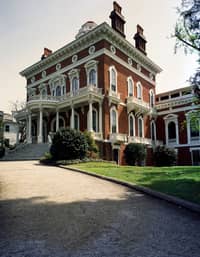
The building on Mulberry Street opened in 1884 as the Academy of Music, with the largest stage in the Southeast, and in 1905 it got a seven-story front and a new name, the Grand Opera House. In 1908 a production of Ben-Hur raced live horses and chariots across that stage. By the 1960s the Grand had become a movie house, then it was marked unfit for occupancy and nearly torn down for a parking lot. "It was down to the wrecking ball," Mavity says. The Macon Arts Council stopped the demolition in 1967, and the theater reopened in April 1970.
Randall Widner ran the Grand while it was being restored. He was a theater director and a classical pianist, and he'd come to Macon to direct the Macon Little Theatre. Every day he sat in one chair with his sack lunch and watched the work.
At the very top of the theater, up a spiral staircase, there's a space called the Thunder Room. It got the name because lead balls were rolled across its wooden floor to make the sound of thunder. In September 1971, after an arts council meeting, Widner went up there with sleeping pills, whiskey and a pistol. The gun was never fired. He apparently took the pills and was overcome by the heat, and the Macon Melody reported that his body wasn't found for four days and had to be taken out in pieces, with ropes lowered from the upper windows. The death was first ruled a suicide and later an accidental overdose. Mavity calls it the theater's only recorded death, and he has never been easy about it. "His death has always been suspicious to me," he says. "There are a lot of gaps in the story."
Mavity still takes Nutcracker cast members up that spiral staircase to hear about Widner, and he shows them a greasy spot on the Thunder Room floor that he says never collects dust.
The staff call Widner the house ghost. They blame him for bumps backstage, taps on the shoulder and wisps of air nobody can account for, and they keep a seat for him, the end chair 11 rows back on the left. Mavity says he has watched light racks float 10 feet above the stage, and that he has seen washes of light on the surveillance video, sweeping out from the corners of the stage and seeping from the side doors on the west wall. He thinks Widner is watching over the place. "He has been my constant companion for 31 years," he says.
Widner isn't the only one. Stories of a Lady in White go back to the 1950s, and fire marshals and security guards are said to have reported her, so that some fire marshals wouldn't inspect the building alone. She sings soprano, and she's been seen briefly in the boxes and on the back landings. Mavity has met her 3 times, late at night. Twice he heard a woman singing, and the singing faded as he crossed the stage. The third time, he saw a woman's silhouette walk through a curtain in the balcony boxes.
He was told she was a performer who died at the theater, or else a longtime patron who sat in the second box. "I've never been able to find her name or a date," he says.