At Andersonville in Georgia, where nearly 13,000 Union prisoners died, the figure people report most isn't an inmate. It's the warden, Henry Wirz, in his gray uniform, pacing the stockade he ran. He was hanged for it in Washington. The story says he came back here.
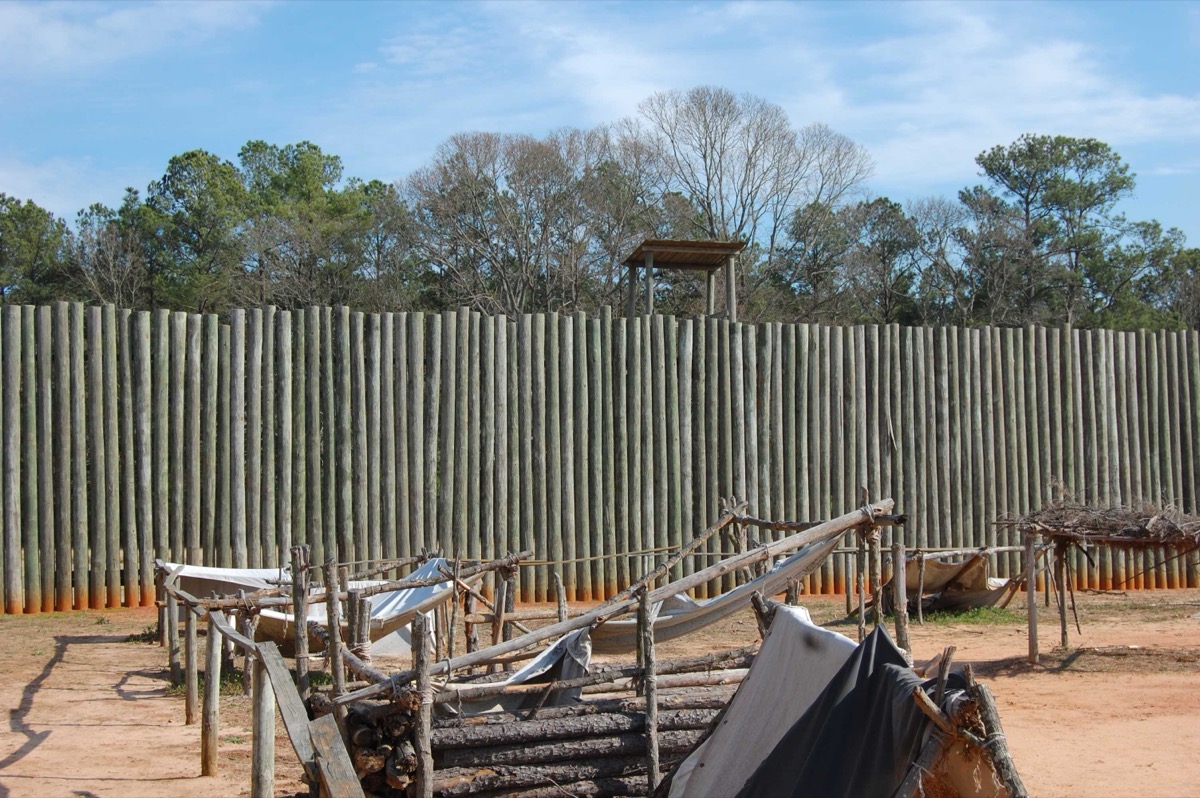
The ghost people report most often at Andersonville, Georgia, isn't one of the prisoners who died here. It's the man who ran the place. Henry Wirz, the warden, is described in his gray uniform with his short beard and the hat he always wore, pacing the old stockade grounds — restless, talking silently to himself, looking, by the accounts that have followed, both anguished and angry.
That ambiguity is the whole of Andersonville. Camp Sumter opened in February 1864 and ran about fourteen months. It was built for 10,000 men; by August it held more than 30,000, each one with roughly five by six feet of bare ground. About 45,000 Union prisoners passed through. Nearly 13,000 of them died — of diarrhea, scurvy, dysentery, of water from a creek the guards had already fouled upstream.
A light fence ran 19 feet inside the wall. They called it the deadline. Cross it and the guards in their sentry boxes shot you. That is where the word comes from.
Wirz took command of the stockade in March 1864. When the war ended he was arrested, tried by a military tribunal, and convicted of conspiracy and cruelty. On November 10, 1865, he was hanged — the only Confederate officer executed as a war criminal. His reported last words: "I know what orders are, Major. I am being hanged for obeying them."
He was hanged in Washington, not here. He's buried in a Washington cemetery. But the figure people describe keeps coming back to Andersonville — pacing the stockade, walking the road that leads in. Popular tellings put him on the highway, vanishing when a car slows to offer a ride; the ghost-history writers who recorded the legend phrase it more plainly, just the road.
Troy Taylor, who set the story down, calls the figure "a mute reminder of his possible innocence." History still argues over whether Wirz was a monster or a scapegoat for 13,000 deaths. The ghost, by every account, hasn't decided either.