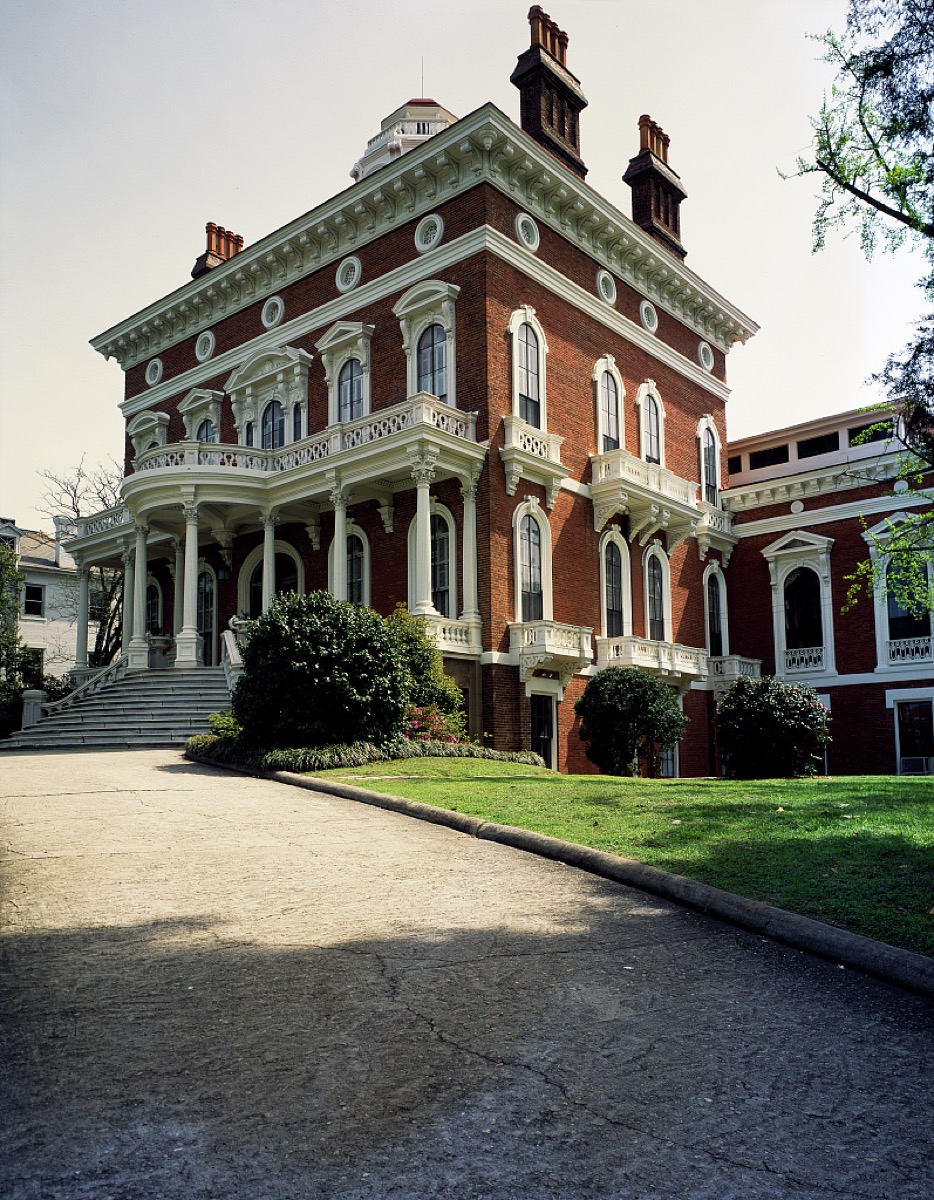
At the Hay House in Macon, Georgia, the staff lock the place with every drawer shut, and come back to find drawers on the second floor pulled open overnight. They blame an elegant old woman in 1800s dress — and the museum that runs it won't discuss her at all.
The Hay House in Macon, Georgia is a museum now, an 18,000-square-foot Italian Renaissance mansion they call the Palace of the South. Every evening the staff lock it up with the drawers shut and everything in its place. And some mornings they come back to find drawers on the second floor pulled open, the contents shifted around — no break-in, no window forced, no explanation. It keeps happening.
They have a guess about who does it. The figure people describe is an elegant elderly woman in an 1800s dress, seen wandering the halls and rifling through an antique chest. The staff's best bet is Mary Ellen Johnston Felton, who grew up in the house and lived there longer than anyone — through childhood, through her marriage, until the house passed to the Hay family in 1926. Nobody can confirm it's her. The sources that tell the story say so plainly: the woman's identity has never been pinned down.
She isn't the only thing reported. Contractors say their tools slide across the floor or go missing mid-job. There's a lady seen at the back door, tapping the glass to get someone's attention. Footsteps in the halls, doors slamming, moaning in the master bedroom, cold spots on the staircases. Visitors describe the feeling of someone breathing over their shoulder in a room they thought was empty.
None of it traces back to a death inside the house. No murder, no fire, no tragedy on record — just Mary Ellen, and a long life lived in these rooms.
Here's the part that doesn't sit right. The Georgia Trust has run the Hay House as a museum since 1977, and by one account it keeps a flat "no ghosts" line, declining to discuss any of this. Yet the house itself runs a walking ghost tour every fall, with a disclaimer admitting it can't "warrant the truth or validity of any of the stories presented."
They won't say she's real. Then they sell tickets to come hear about her.