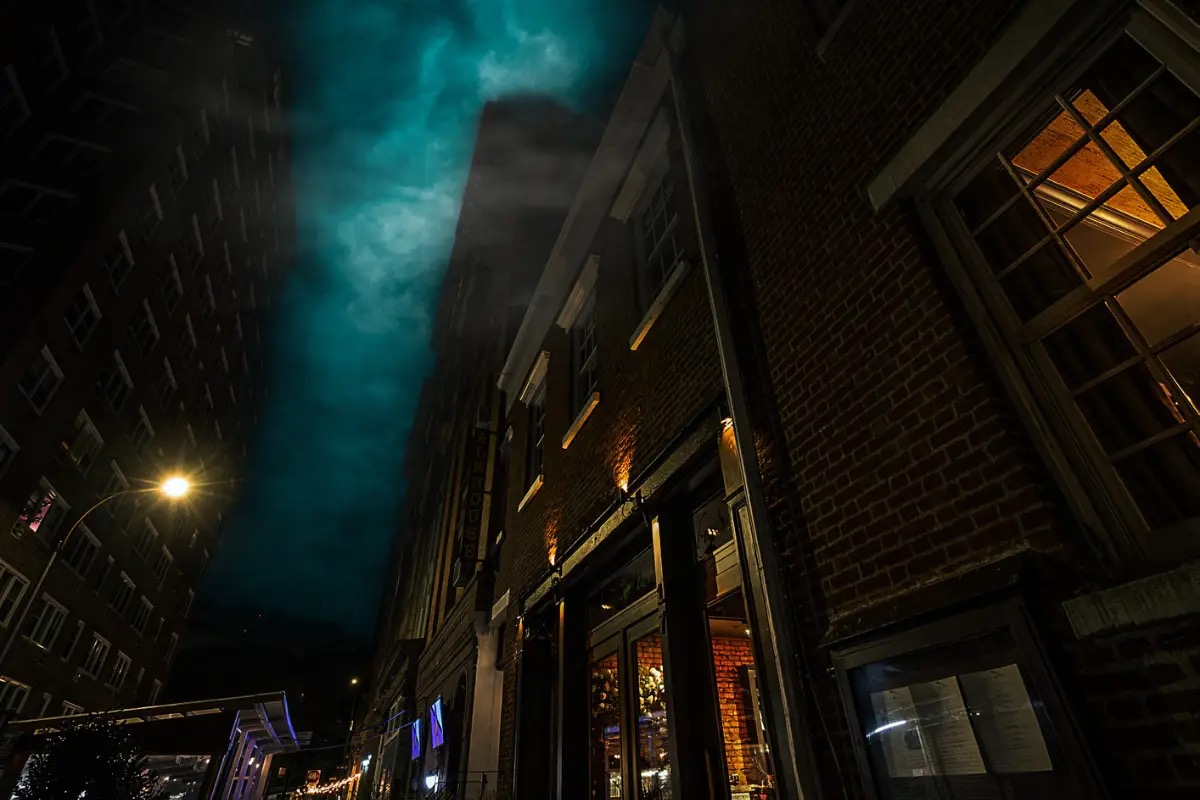
One If by Land, Two If by Sea is a romantic West Village restaurant where women at the bar keep losing a single earring. Staff blame Theodosia Burr, Aaron Burr's daughter, who sailed out in 1812 and was never seen again.
One If by Land, Two If by Sea is a candlelit restaurant at 17 Barrow Street in Manhattan's West Village, a place couples book to get engaged. It is also where women at the bar keep reaching up to find a single earring gone.
Staff blame Theodosia. Theodosia Burr Alston was Aaron Burr's daughter, and on December 31, 1812 she sailed out of Georgetown, South Carolina aboard the schooner Patriot. The ship and everyone on it vanished, most likely lost in a winter storm off Cape Hatteras a few days later. Her body was never found. The earring-snatching ran especially frequent in the late 1990s, and it is hers, the story goes.
She is one of a reported twenty-plus spirits here, and the unsettling part is that they each keep to a habit. Aaron Burr himself is the angry one, a heavy man in period clothing who turns up on the mezzanine, throwing and breaking plates, moving chairs, leaving angry whispers on recordings. A former Ziegfeld Follies performer is theatrical enough that staff still light candles in her honor. By one paranormal investigator's account, a woman in black descends the staircase and never climbs it, vanishing before she reaches the bottom. The list of reported phenomena runs long: flickering lights, machines switching on untouched, pictures falling off the walls, plates and dishes flying or breaking. The kitchen runs hottest of all, and some workers have walked off the job over it. A maître d', the story goes, quit after a face-to-face encounter.
The room has held a lot of lives. The restaurant tells you it was a firehouse, a stable, a house of ill-repute, a silent movie house around 1910, then a string of bars before the current owners restored it and opened in 1973. The private upstairs dining room was once Steve McQueen's apartment. Downstairs, a tunnel runs in a straight line toward Hudson Street, its purpose never settled, sometimes said to be a stop on the Underground Railroad.
The building's own past is a fight. The restaurant sells it as Aaron Burr's 1767 carriage house, lost after the 1804 duel that killed Alexander Hamilton. But title and architectural research identifies it as the 1834 Thomas Cox House, a Federal-style residence built three decades after Burr fled New York. As one building historian put it, the privileged Theodosia "would never have visited a utilitarian structure filled with horses, hay and manure." The dramatic arched doorway you walk through, the one that makes the place read as a carriage house, was cut in 1897 by an Irish blacksmith named Michael Hallanan, almost a century after Burr was gone.
So the ghost of the drowned daughter haunts a house her family likely never owned, in a room built for someone she never met.