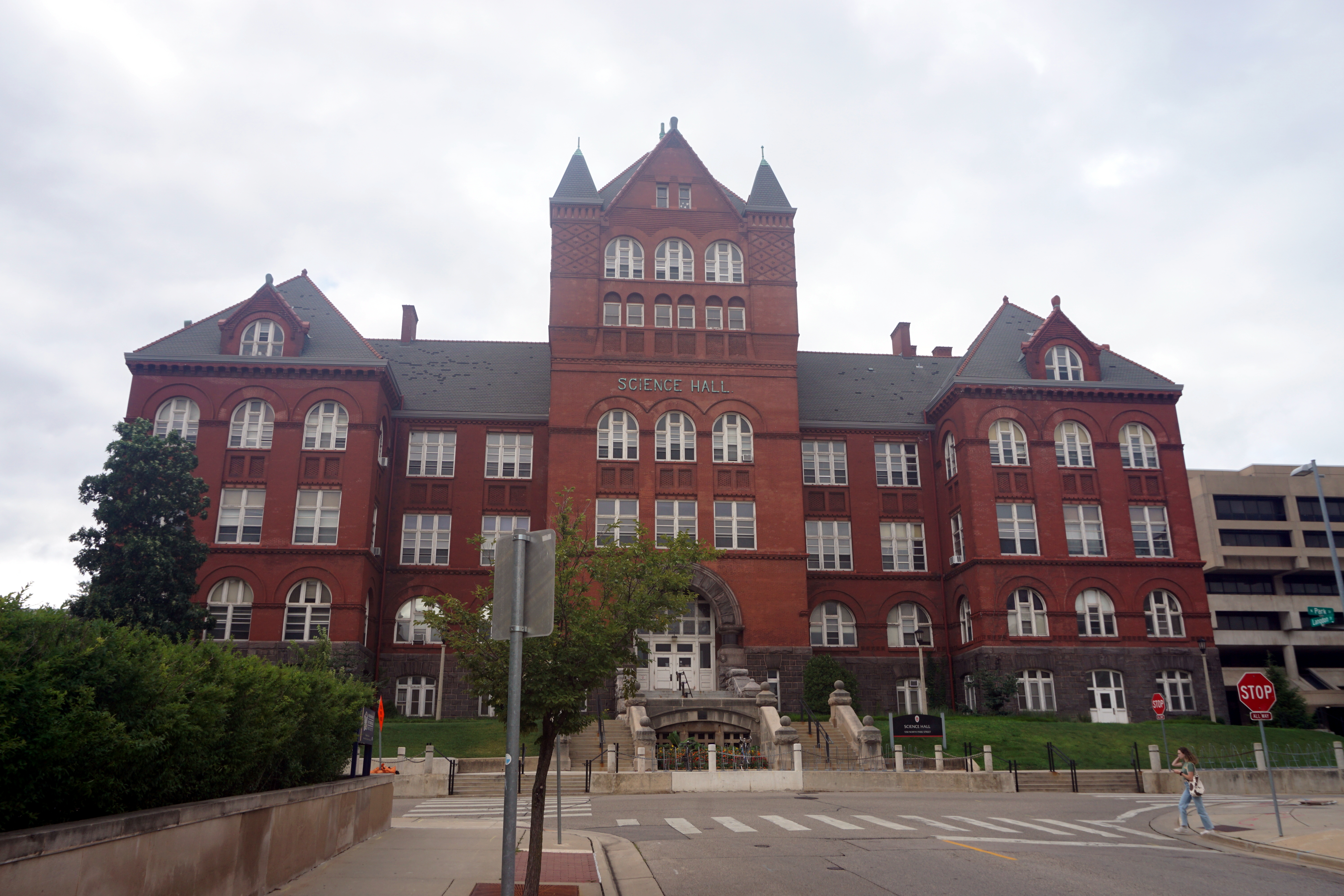
In 1974, graduate students found an embalmed human foot left behind in Science Hall's attic by UW-Madison's Anatomy Department, which had operated a cadaver lift and windowless dissection rooms on the fourth floor from 1904 to 1957. People working in the building report the smell of formaldehyde in hallways where no chemicals are stored.
In 1974, geography graduate students exploring the attic of Science Hall at UW-Madison found a human foot. It was embalmed, tucked into a storage area, and left behind by the Anatomy Department when it moved out in 1957. Nobody had been looking for it. Nobody had noticed it was missing.
Science Hall was built in 1887 and once housed every science department the university offered. The building's north wing, fourth floor, was sectioned off in 1904 into small, windowless rooms where first-year medical students dissected cadavers. The morgue sat in the basement. Getting bodies to the fourth floor required a cadaver lift, a dumbwaiter system built into the walls specifically for transporting the dead. Medical students and faculty loaded bodies at the bottom and hauled them up four stories through the building's interior.
The anatomy department occupied Science Hall's upper floors for over fifty years, from the early 1900s until 1956 or 1957. When the department relocated to a new building, it took the major equipment and most of the specimens. But "most" isn't "all." The stray foot discovered in 1974 was just the most notable leftover. During an attic inspection years later, staff found soil samples from 1978, original curved window panes, office furniture, library cards, and a metal pipe with valves that no one could identify.
People who work in Science Hall report the smell of formaldehyde in hallways where no chemicals are stored. Others describe a feeling of being watched on the upper floors, particularly near the old dissection rooms. The fourth floor is where the stories concentrate. Tom Tews, a campus geography librarian who worked in Science Hall from 1984 to at least the 2010s, said he had "never" experienced anything paranormal himself, only heard the rumors from others.
The "mad professor" legend is the most popular campus version: a crazed scientist conducting twisted experiments in a secret attic lab. University Archives photographs suggest the attic functioned as a temporary anatomy classroom, not a secret anything. The reality, hundreds of cadavers passing through a dumbwaiter system over fifty years, windowless dissection rooms, specimen jars left in storage closets, is already strange enough without embellishment.
Science Hall hosts an annual "Fright Night" every October, organized by student groups who lean into the building's reputation. Julie Walsh, president of the Japanese Student Association and a co-organizer, noted in 2025 that the event was partly a way to "pay homage to that before it gets remodeled." Renovations are scheduled for 2027, which means the windowless fourth-floor rooms, the dumbwaiter shafts, and whatever else the Anatomy Department left behind will finally get cleared out. Fifty years of ghost stories built on a real foundation of formaldehyde, forgotten specimens, and a building that moved the dead through its walls.