Madison's Orpheum Theatre opened in 1927 and was the first air-conditioned building in Wisconsin. Projectionist Pete, who hanged himself in the projection booth, throws plates and moves equipment, while a head usher who fell from the balcony and a ghostly 1930s woman near the bar round out the cast.
The overnight cleaner was in the Orpheum when someone screamed directly into his ear. Then a stack of plates flew across the room. He ran out of the building and didn't look back.
That was Pete. Or at least, that's what everyone at the theater calls him. Projectionist Pete, the ghost who lives in the projection booth, is the Orpheum's most famous resident. According to the story passed down through decades of staff, Pete was a projectionist who hanged himself in the booth. The timeline is fuzzy, but the behavior isn't. Modern projectionists have reported tools and film reels moved behind their backs. Small items get knocked over. For a while, people thought Pete was harmless, just a prankster hiding things and rearranging equipment. The plate-throwing incident with the night cleaner changed that assessment.
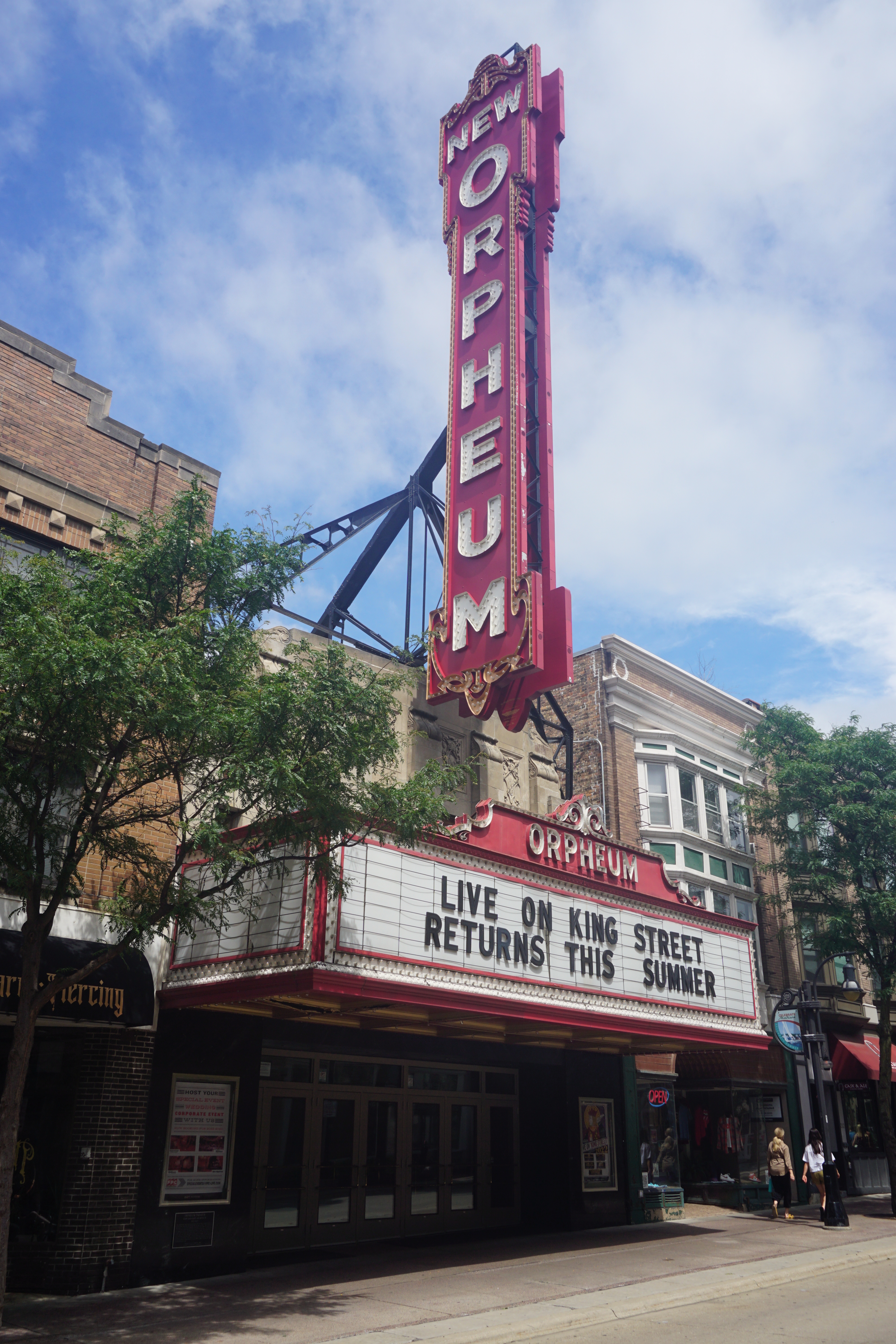
The Orpheum Theatre opened on March 31, 1927, designed by C.W. and George L. Rapp of Chicago, one of the top three theater architecture firms in the country. It cost $750,000 to build, a staggering sum for a city the size of Madison. The opening program featured a newsreel, the silent film "Nobody's Widow" with organ accompaniment, and vaudeville acts. The auditorium held 2,500 seats. It was the first building in Wisconsin to have air conditioning, and the unit takes up an entire room in the basement.
Partially financed by dentist William Beecroft, known around town as "Mr. Theater," the Orpheum featured a limestone Art Deco exterior with a towering vertical marquee that became a State Street landmark. Inside: French Renaissance design, a grand staircase, ornate chandeliers, and a statue of Orpheus watching over the entryway.
Pete isn't the only one who stayed. A former head usher fell from the balcony to the theater floor below and died. His ghost has been spotted in mid-20th century clothing near the soundboard, and a shadowy figure matching his description has been seen cleaning the theater during off-hours. A well-dressed woman from the 1930s appears near the bar by the right-side entrance and vanishes within seconds.
A former night manager's ghost may be the most active after Pete. An overnight housekeeper heard a couple having a conversation at the bar when absolutely no one was in the building. Footsteps and jingling keys echo through the hallways, as if someone is making the rounds exactly the way a night manager would.
In the dressing room hallway, a voice whispered "Shhhh... He's coming." A former manager reported Pete making comments to her from the projection area. Down in the basement near the bathrooms, a tall figure with stringy hair appears and disappears. A red mist in the bar area has been attributed to the spirit of a child.
The theater has a photograph from 1927 hanging in the hallway to the left of the main entrance. In it, there's a ghostly image of a man who, according to staff, was not present when the photo was taken. It's been hanging there for decades, and nobody has taken it down.
The furnace room in the basement produces a feeling of dread in visitors who have no reason to expect it. One couple, Bill and his wife, had a particularly rough experience in the basement area. Bill collapsed with sudden nausea in the octagonal waiting room outside the lavatories, and his wife fled the women's restroom after encountering something she wouldn't describe afterward. The Orpheum was added to the National Register of Historic Places in 2008, recognized as Madison's best surviving movie palace. The ghosts, apparently, came with the listing.