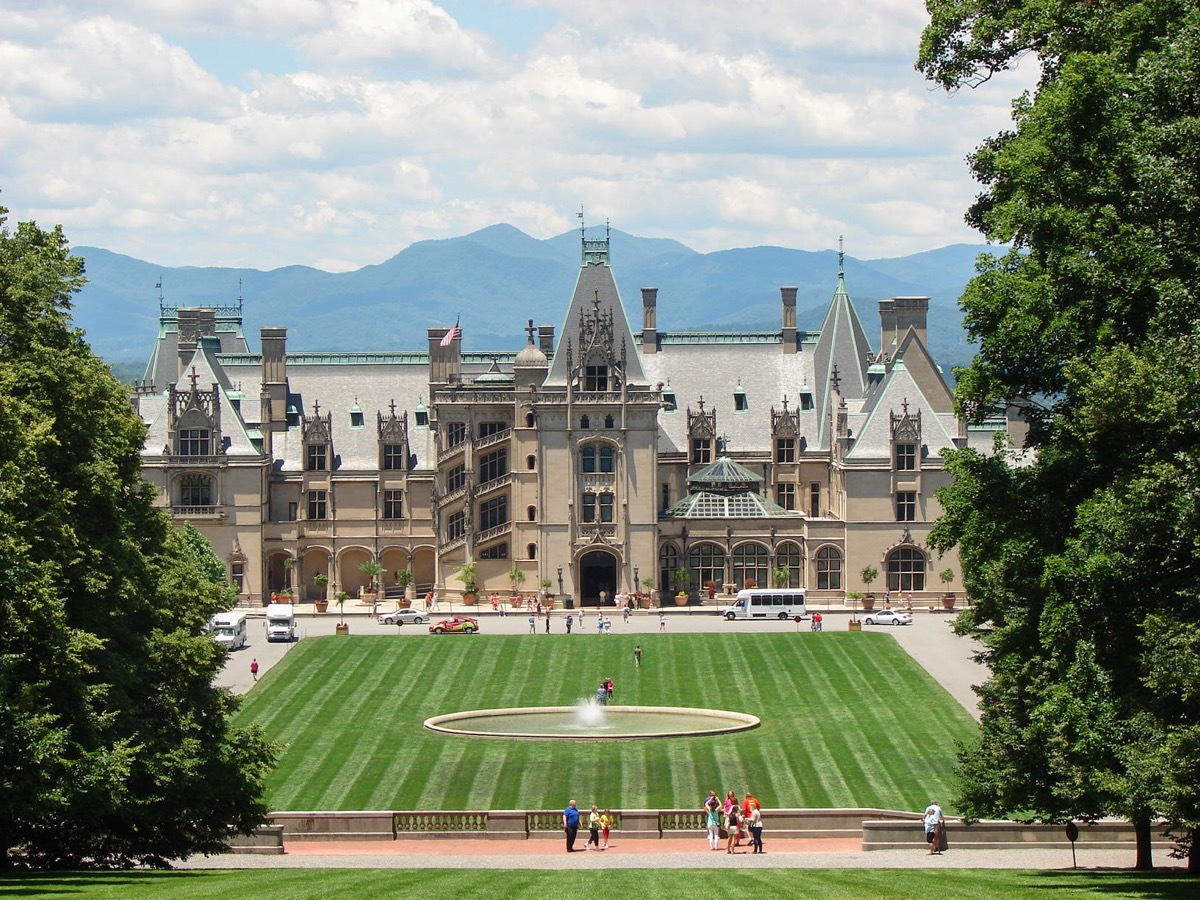
When storms build over Asheville, staff and visitors at the Biltmore Estate say a shadow turns up in the library — the two-story room George Vanderbilt loved most in life, and the one he hid in to wait out the weather. A woman's voice calls his name from the far end.
The Biltmore Estate, the 250-room château George Washington Vanderbilt built outside Asheville, North Carolina, has a habit that follows the weather. When a storm rolls in over the Blue Ridge, staff and visitors say a shadow figure turns up in the library — sometimes browsing the shelves, sometimes seated with a book.
In life, that was exactly what George did. The library was his favorite room out of all 250: two stories of walnut shelves holding more than 10,000 volumes in eight languages. When a storm built over the mountains, he'd shut himself in with a rare edition and wait it out. He died in 1914, at 51, of complications from an emergency appendectomy. By every account, he kept the habit.
There's a second voice in that room. People report a woman calling "George" from the far end of the library, and they attribute it to his wife, Edith. The detail that makes it land is that she did the same thing while alive. When George buried himself in the library and guests were waiting downstairs, Edith would go in and call him out by name to come rejoin them. One regional account says her shadow is still known to move the halls, calling George away from his books to join her.
The library isn't the only room with a reputation. Night workers report the sounds of a party in empty rooms — clinking glasses, music, the murmur of a crowd that isn't there. The grand staircase produces phantom footsteps and abrupt cold spots between the floors, along with sudden strange odors that come and go. Down at the heated indoor pool, the one that held 70,000 gallons under its own underwater lighting, visitors describe a wave of dread, and some report a woman in black standing near the water. Shadowy figures are said to dart through the servants' quarters and the kitchens too.
The estate doesn't lean into any of it. Biltmore is the largest privately owned home in America, still held by Vanderbilt descendants more than a century after George opened it on Christmas Eve in 1895, and it draws about 1.4 million visitors a year to a place that quietly downplays its ghosts.
And then there's the cat. Visitors describe a small orange cat wandering the gardens with no head — the same description, over and over, for years. There's no record the Vanderbilts ever owned a cat like it, and no story anyone tells to explain it. It just keeps showing up.