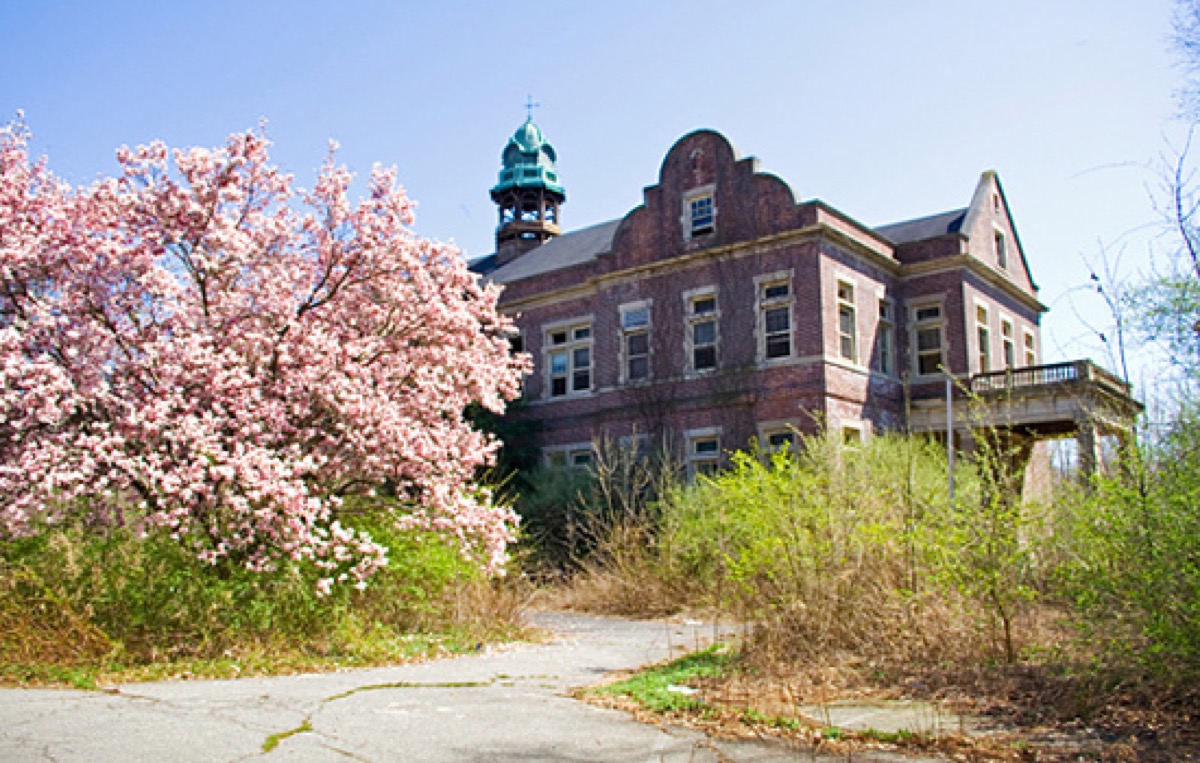
At the old Pennhurst State School in Spring City, Pennsylvania, staff and investigators report children's whispers and laughter in the dormitory halls. The voices belong to a place a 1968 broadcast exposed and the state ran for nineteen more years anyway.
The most haunted building at the old Pennhurst State School in Spring City, Pennsylvania is Mayflower Hall, one of the patient dormitories. Staff and investigators who work there report the same thing in its hallways: whispers, crying, and children's laughter. In the room they call the Playroom, people say they hear children's voices.
Pennhurst was built for children with developmental disabilities. It opened on November 23, 1908, when a single first arrival was logged as "Patient number 1," and over the next seventy-nine years more than 10,000 Pennsylvanians lived there. At its peak it held over 3,000 in a campus that sprawled across roughly 1,400 acres.
Then a reporter went inside. For five evenings, July 1 through 5, 1968, WCAU-TV's Bill Baldini aired a report he called "Suffer the Little Children," the title taken from the Gospel. The footage showed children tied to beds and chairs, one staff member to a ward of sixty, people living in filth. It helped launch the modern disability-rights movement, and a Philadelphia paper later credited it with starting a new style of television journalism. The full broadcast still exists. You can watch it.
The state kept Pennhurst running for nineteen more years. A former resident named Terri Lee Halderman, who came home from visits with bruises no one could explain, became the plaintiff in a lawsuit that reached the U.S. Supreme Court and found the place had violated its residents' constitutional rights. In 1983, nine employees were indicted on charges that included beating patients, some of them in wheelchairs. Pennhurst closed in December 1987.
In 2010 the administration building reopened as a Halloween haunted attraction. Former residents and disability advocates objected that it sells the suffering that actually happened there. The seasonal haunt still runs, and so do overnight investigations from 7 PM to 2 AM, led by an in-house paranormal expert. Down in the flooded service tunnels that link the buildings, people report shadow figures and a young girl in a white dress. A television crew brought equipment into the Quaker Building and came away describing an aggressive presence. Up in Mayflower, some say a piano plays on its own.
The grounds are now an International Site of Conscience, with a small museum to the abuse and the lawsuit a short walk from the seasonal haunt. The children whose voices people keep hearing in the dormitory were real children. What was done to them is on tape.