At the Old White Marsh Church ruins near Trappe, Maryland, people say Hannah Maynadier still walks Manadier Road on moonlit nights, clutching her burial shroud, her hand trailing blood. She was buried here once. The story is that she didn't stay buried.
On moonlit nights, people on Manadier Road near Trappe, Maryland, say they see a woman in a burial shroud walking awkwardly along the shoulder, one hand leaving a trail of blood. They call her Hannah Maynadier, and the road carries a worn-down spelling of her married name. She was buried at the church the road runs past. The story is that she came back the same night.
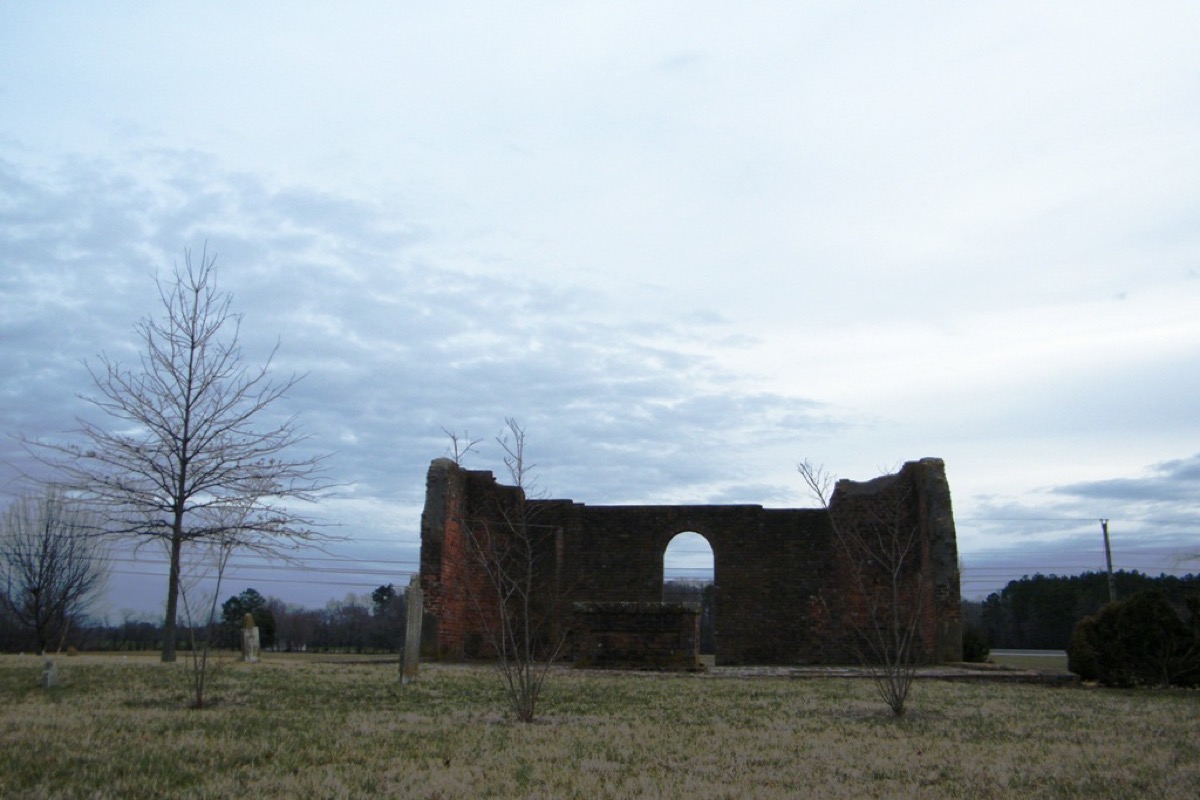
The church is Old White Marsh Episcopal, built around 1662, one of the oldest in Maryland. A brush fire set by a farmer clearing land took the roof on January 12, 1897, and only the brick walls stand now, visible from Route 50. Buried at the southwest corner is Robert Morris Sr., father of the man who financed the American Revolution. He died in 1750 after a ship fired its salute too early and the wadding broke his arm from twenty yards off; the wound turned septic and killed him in days.
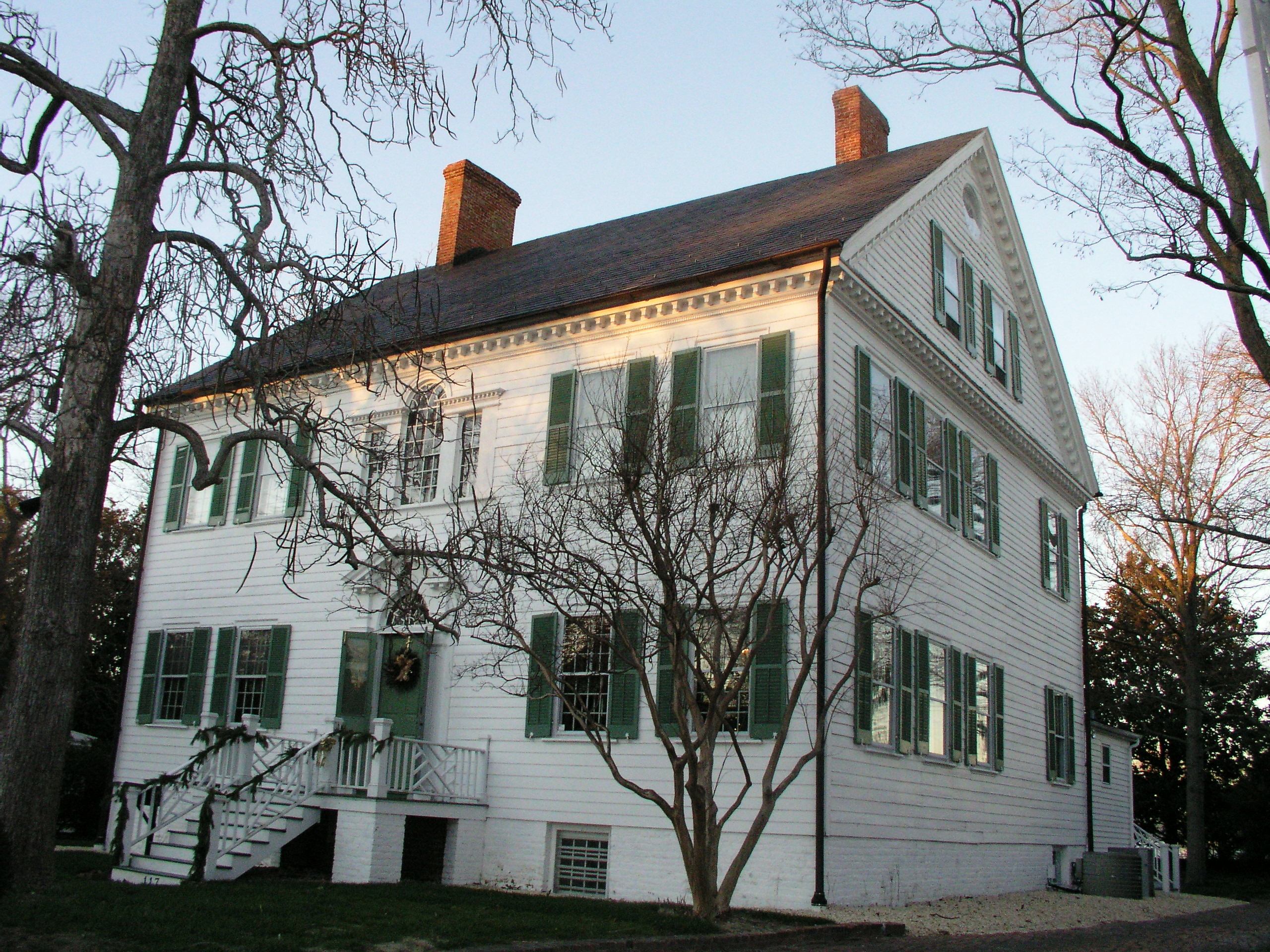
Reverend Daniel Maynadier married a local woman named Hannah Martin in 1720. The way it's told, she fell ill, was declared dead, and was buried in the jewel-studded ring he'd given her. That night, grave robbers dug her up for it. The ring wouldn't slide off her swollen finger, so one of them took a knife to the joint — and the cut, with the cold air, woke her. She had only been in a coma. The thieves ran. She climbed out of the coffin, gathered her shroud, and walked roughly a mile back to the rectory, where Daniel was sitting alone by the fire. Something fell against his door with a low moan. He opened it to the wife he had buried that day. Local tradition holds the bloodmarks on her hand never washed away.
It is a 200-year-old story, and the record argues with it. Historian Dickson Preston noted the parish books show Hannah dying once at most, and outliving her husband, not dying twice before him. A descendant has said the family never held it as true.
Still, the lore holds. Mindie Burgoyne, who wrote a book on the Eastern Shore, called the church grounds "a thin place, where the veil between this world and the next is transparent." People report apparitions in the graveyard, whispers in the wind, strange music. And a woman on the road, shroud clutched tight, walking home from a grave she should have stayed in.