At Naniboujou Lodge on Lake Superior's North Shore, one account describes a wispy woman in a white dress drifting through a dining hall painted floor to dome in patterns untouched since 1929. Staff say they hear footsteps on the stairs through the silent winters.
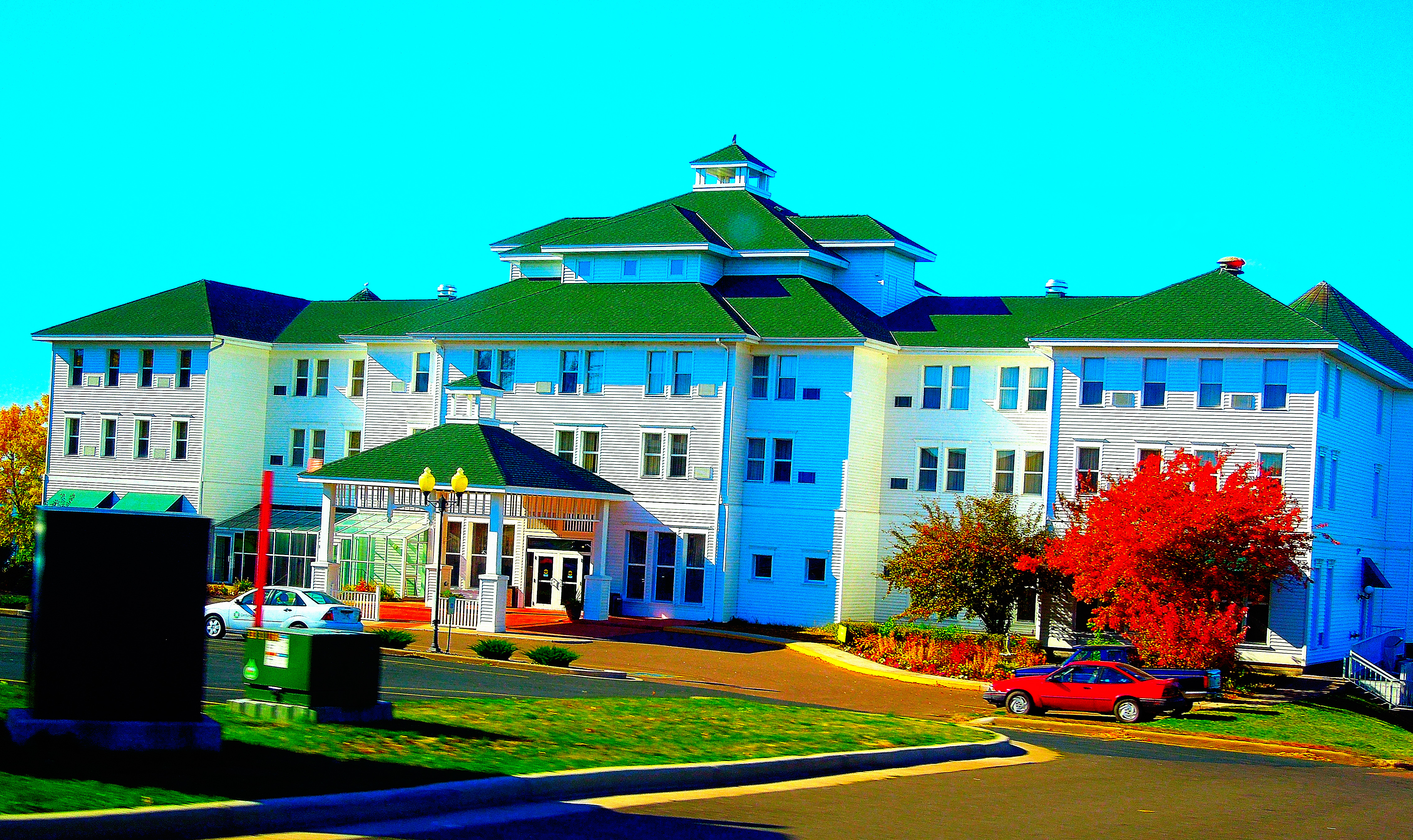
At Naniboujou Lodge, about 15 miles east of Grand Marais on Lake Superior's North Shore, the story people tell is set in the dining hall. According to one account, a guest watched a wispy woman in a white dress drift across the room and gave no sign of who she was. A dinner server told the same columnist that employees hear footsteps on the stairs through the winter, when the lodge sits empty and quiet.
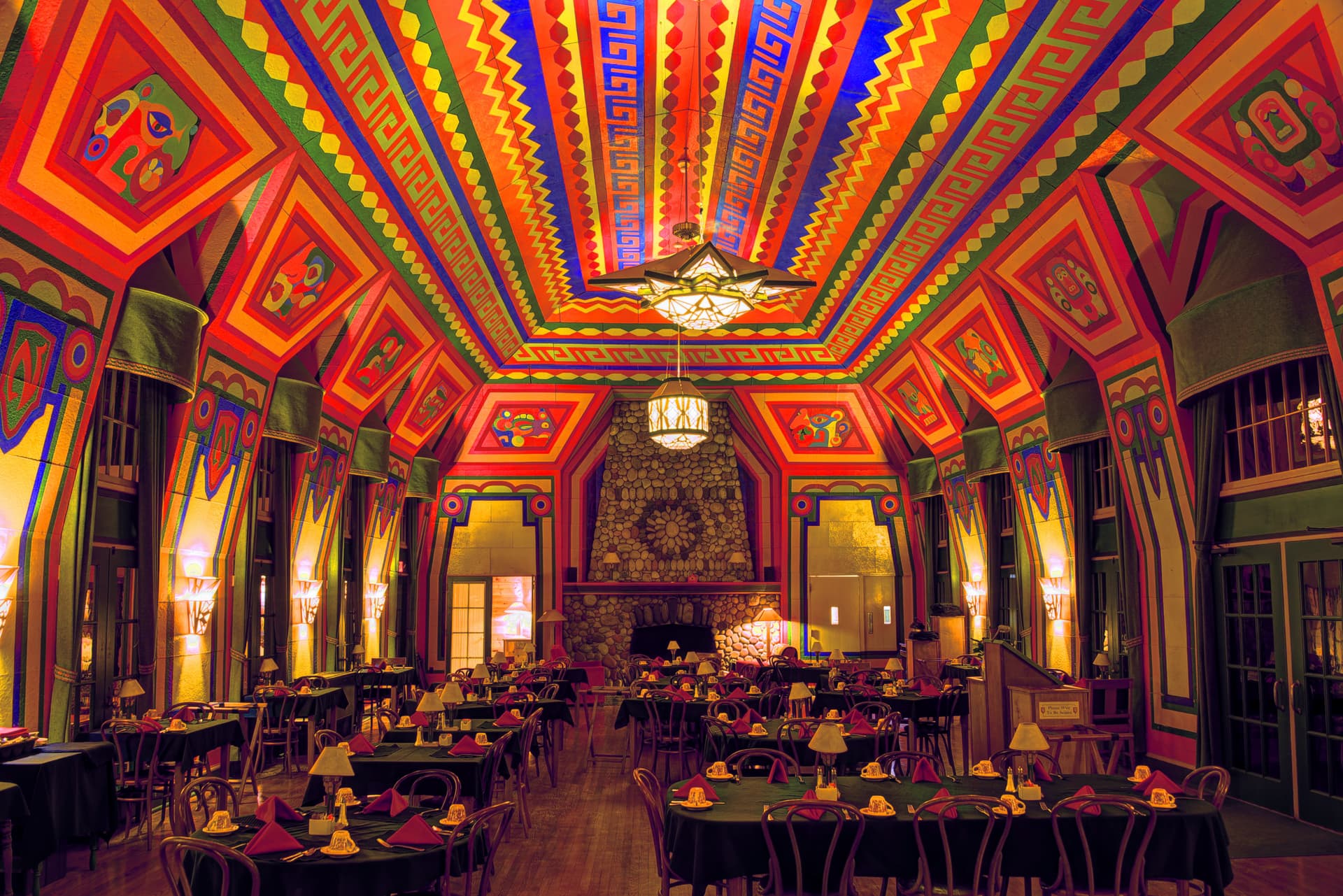
It is a strange room to be haunted by. The dining hall runs 30 by 80 feet under a 20-foot domed ceiling, and every surface is painted in Cree-inspired Art Deco designs that slope inward like the inside of a canoe hull, the murals laid down by a French artist named Antoine Goufee and never repainted since the lodge opened. A Swedish mason named Carlson built the fireplace at one end from native rock, billed as the largest stone fireplace in Minnesota. The place takes its name from Naniboujou, the trickster spirit of Ojibwe and Cree tradition, a culture-hero of the woods.
The room was meant for far more than it ever got. In 1928 a Duluth holding company drew up the Naniboujou Club, an exclusive private retreat aimed at a large membership, with charter names that read like a Jazz Age roster: Babe Ruth, Jack Dempsey, the humorist Ring Lardner. The first drawings showed a 150-room clubhouse, a golf course, tennis courts, a bath house. Governor Theodore Christianson christened the lodge in July 1929. Months later the stock market crashed, and the club went down with it. Foreclosure came in 1935. Of the whole fantasy, only this one painted hall survived. It passed through a hotel chain and a string of private owners, and the National Register added it in 1982 for keeping its original design intact.
Locals tend to connect the haunting to a real loss. On September 26, 1977, during an autumn storm, two grown sons of the owners, Bill and Luke Wallace, drowned when their canoe capsized at the mouth of the Brule River. The lodge sits at that river mouth.
The trouble with tying it up neatly is that the figures don't match. The drowned were two young men. The one people report inside is a woman in white, and no record gives her a name, a date, or a single second witness. The story rests on one columnist's retelling and nothing else.
The hall, meanwhile, is exactly as it was painted in 1929. Whatever moves through it now is the only thing about the place that ever changed.