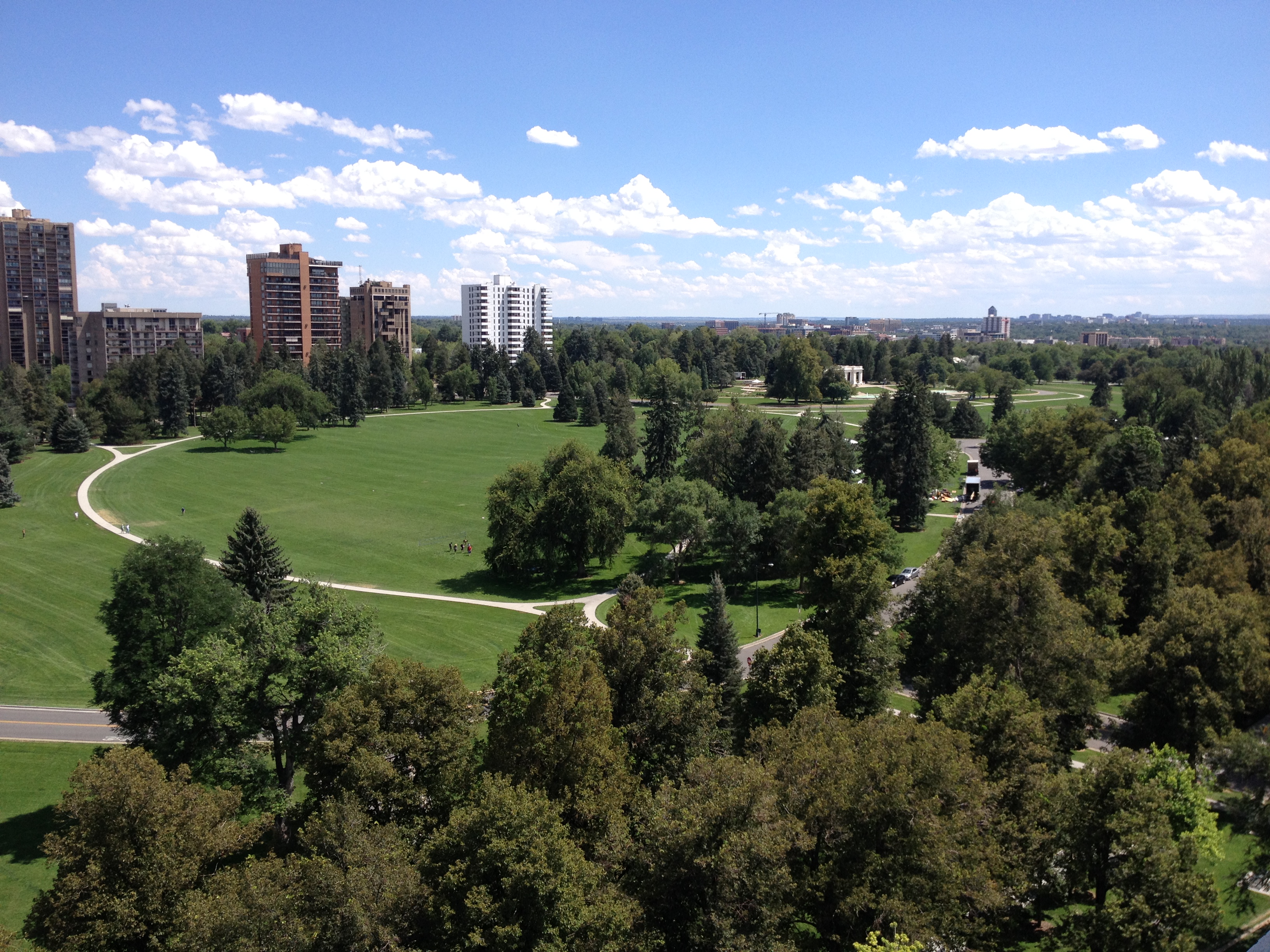
Cheesman Park is a manicured Denver greenspace with a marble pavilion and a Front Range view. It's also a former cemetery, and somewhere between 2,000 and 5,000 bodies are still in the ground under the lawn. People report a singing woman and children who vanish.
Cheesman Park in Denver is a manicured lawn with a marble pavilion and one of the best views of the Front Range in the city. Somewhere between 2,000 and 5,000 bodies, depending on the source, are still in the ground underneath it. People walking the park report cold spots, children who appear and vanish, and a woman who sings and isn't there when you look.
The reason is one undertaker and a contract that paid by the box, not the body.
The land opened in 1858 as Denver's first cemetery, Mount Prospect, and it filled with the poor, the criminal, and the victims of disease while the wealthy were buried elsewhere. In 1890, Congress authorized turning the graveyard into a park. The bodies had to come out first.
In 1893 the city hired an undertaker named E.P. McGovern to dig up the unclaimed dead and move them to another cemetery. It paid him \$1.90 per body and supplied only child-sized coffins. McGovern did the math. He cut the adult corpses apart and packed them into the small boxes, sometimes three boxes to one person, and collected the fee three times over.
When the Denver Republican broke the story on March 19, 1893, it ran the front page under the headline "The Work of Ghouls." The mayor canceled the contract. He never hired anyone to finish the job. The city covered the half-dug graves over and planted grass.
The bodies have not stayed quiet. Irrigation crews digging in the lawn turned up four skeletons in 2010. More remains surfaced at the Denver Botanic Gardens next door in 2008. The park reopened in 1907 and was renamed for Walter Cheesman, a water tycoon who died that year; his widow and daughter donated the neoclassical Colorado marble pavilion in his memory, on the condition the park carry his name.
So the lawn is real, and the view is real, and the marble is real. What's underneath it was dug halfway up by a man who took adults apart to fill three coffins each, and then left in the ground when the city looked away.