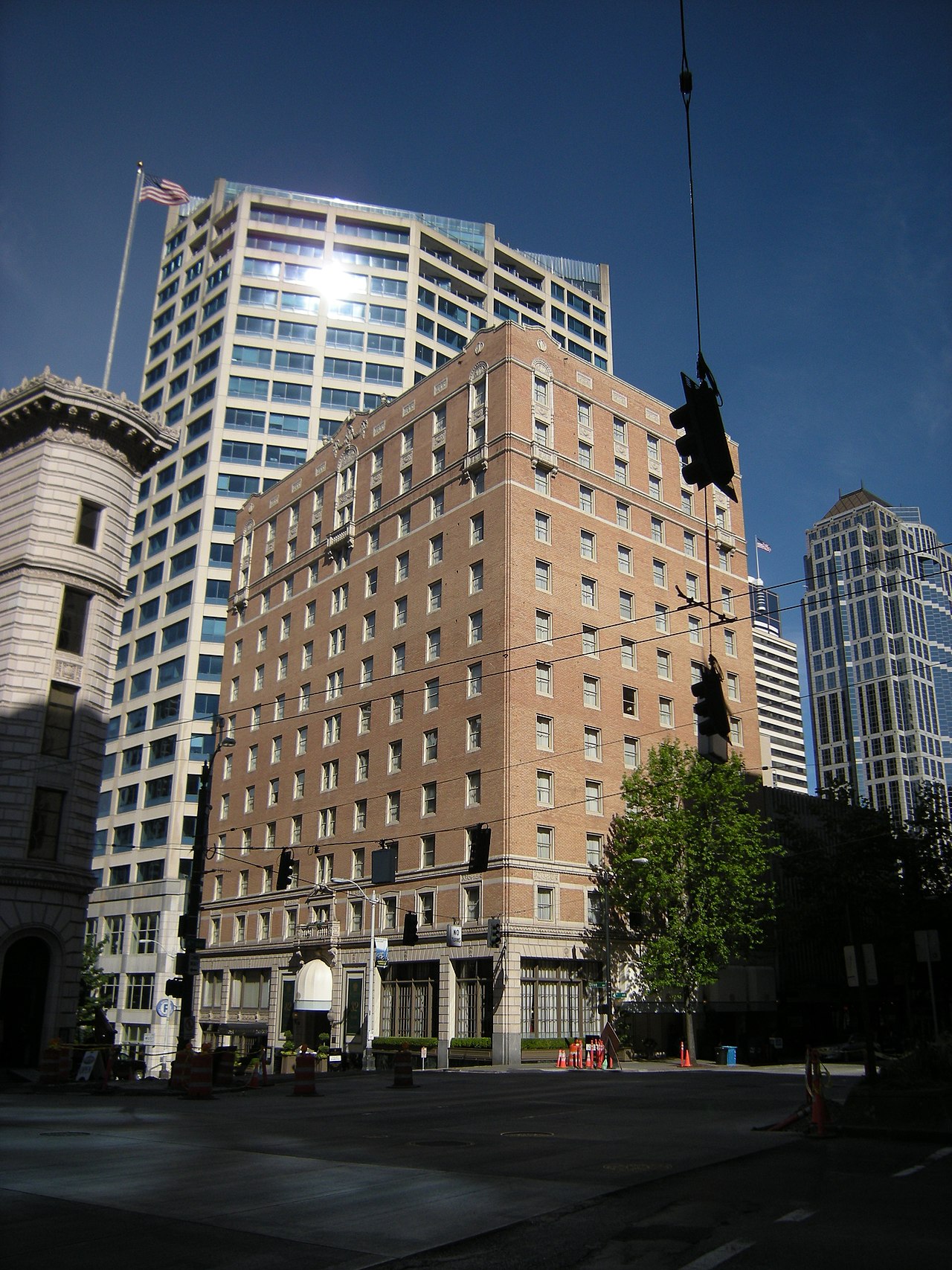
Room 1120 at the Mayflower Park Hotel in downtown Seattle comes with an old man who hangs in the air above the bed and watches guests sleep. He is said to have died in that room, though no source in 12 years of retellings gives him a name.
The Mayflower Park Hotel has stood at Fourth and Olive in downtown Seattle since 1927, and the story its guests keep telling is about Room 1120. A couple staying there woke in the middle of the night to an old man in the air above their bed, watching them sleep.
Nobody can tell you who he was. Every version says the same thin thing: an older man who lived at the hotel back when it was called the Bergonian, and who died in that room. Some tellings make him a long-term guest, others an employee who worked the door. Not one of them gives him a name, a year, or a cause of death. There is no obituary, no death notice, nothing in the Seattle papers that covered the building's opening night in July 1927.
What there is instead is a pattern at the front desk. Guests who book 1120 without knowing its reputation have asked to be moved. "Guests don't always last the night," is how FrightFind puts it. One of them, quoted secondhand and never named, said only, "I feel as if someone is in there with me."
He isn't the only thing in the building. Housekeeping gets a different one, a trickster that leaves the guests alone and goes after the people working. The story staff tell is about a janitor mopping a hallway late at night who turned to dunk his mop and found the bucket gone. He located it minutes later, on another floor. The Seattle Times' own city guide files the hotel among Seattle's most famous haunted hotels and calls the thing more prankster than poltergeist.
Then there's the floor. The earliest telling of any of this, from 2014, quotes past employees placing the spirit in "apartment 1120 on the sixth floor." Room 1120 is on the eleventh, the southwest corner above Fourth Avenue and Olive Way. Nobody has ever explained where the sixth floor came from, and the retellings since have just split the difference, scattering the old man and the trickster across both floors depending on who is writing.
The hotel itself says nothing. Its history page walks you through the 1927 opening, the goldfish fountain in the lobby, the orchestra playing the mosaic ballroom until midnight, the two-dollar rooms and the cigar shop, and never mentions a ghost at all.
In July 2026 the room got a second life. A TikTok creator posted a clip location-tagged to the hotel, captioned only "he draws the line at GHOSTS," and 23 minutes later a follow-up saying a W hotel had taken them in. Neither video names a room. Five days later a different Seattle creator posted the one that did: the Mayflower Park, Room 1120, an elderly man who lived there and "just... never checked out." That identification is hers. Neither the couple nor the hotel has ever confirmed it.