At Lithia Park in Ashland, Oregon, visitors keep seeing a girl in an 1800s dress crying at the edge of the duck pond, gone before anyone reaches her. The legend says she was murdered there in the late 1800s, and she still appears first as a blue light over the water.
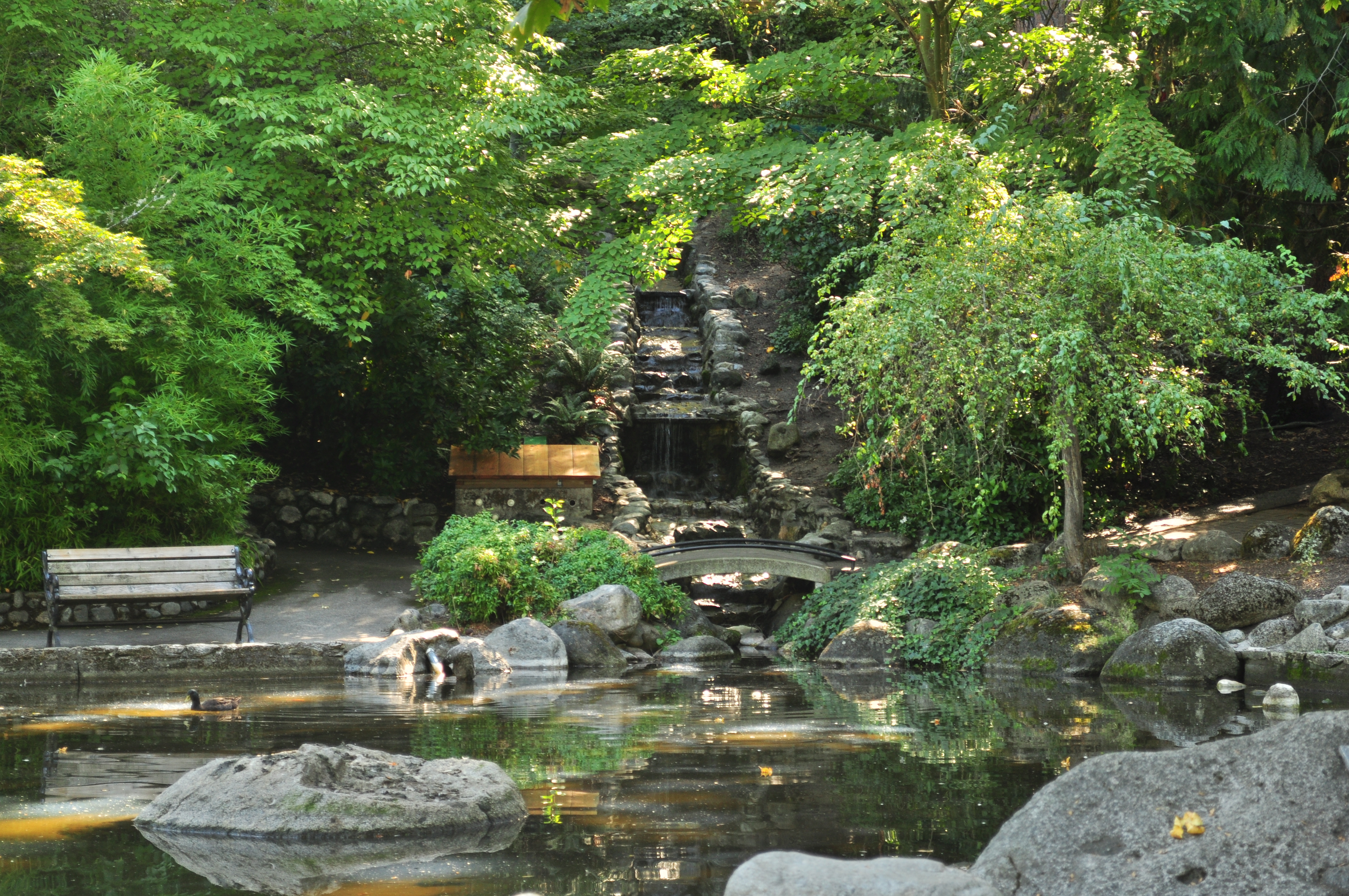
At Lithia Park in Ashland, Oregon, the figure people keep seeing sits at the edge of the duck pond. She's a young girl in an 1800s dress, down at the water in the lower park, and she's crying, calling out for help. By the time anyone gets close enough to reach her, she's gone. Visitors have told it the same way for more than a century.
The story goes that she was assaulted and murdered near the pond sometime in the late 1800s, before the park was ever built. No record of the crime exists. Nobody knows her name. The grief is the only part that lasts, and it shows up first as a light: a blue glow that forms over the center of the pond at night, hovers there for half a minute, flickers, and goes out like a flame somebody blew on.
"A girl was raped and murdered here at this park in the 1800s," reads one ghost-directory listing for the place. "Her spirit is believed to linger, causing an eerie blue light to appear, flicker, and disappear while over the duck pond." For decades the people reporting her have been college students, walking down to the bandshell after dark and finding her already there.
None of which fits the park's daylight self. Lithia Park is 93 acres of forest and creek, designed by John McLaren, the Scottish landscape architect behind San Francisco's Golden Gate Park, and the only park in Oregon he ever drew. It was dedicated over a July weekend in 1916 and added to the National Register in 1982. Its name comes from the lithia water running beneath it, a spring so rich in lithium that Ashland's boosters once dreamed of turning the town into a healing spa.
She isn't the only one said to walk it. There's a logger, killed when a tree came down on him, who whistles a tune through the woods that breaks off mid-note before a figure vanishes into the trees. There's a boy with a strange face who lived nearby in the 1920s and disappeared. People report footsteps on empty trails, shadows circling parked cars, orbs in their photographs. By night the canyon goes dark and the creek fog rises, and the Oregon Shakespeare Festival crowds that fill the park by day are nowhere.
But the others are scenery. The girl is the one every account comes back to. A park built around water people came to drink for their health, named and dedicated and listed and loved, and at the bottom of it, by the pond, a child nobody can name still sitting at the edge, asking the people who pass for help.