Iverson's Pits, on Oak Ridge in Gettysburg, is the oldest reputedly haunted site on the whole battlefield. Hundreds of North Carolinians were buried where they fell, and farm workers later refused to work the ground at dusk.
At Iverson's Pits, a stretch of Oak Ridge in Gettysburg, Pennsylvania, the men who farmed the land after the war would not work the field at dusk. They said ghosts rose from the furrows in the mist. It is the oldest reputedly haunted site on the entire Gettysburg battlefield, and the haunting began almost as soon as the dead were in the ground.
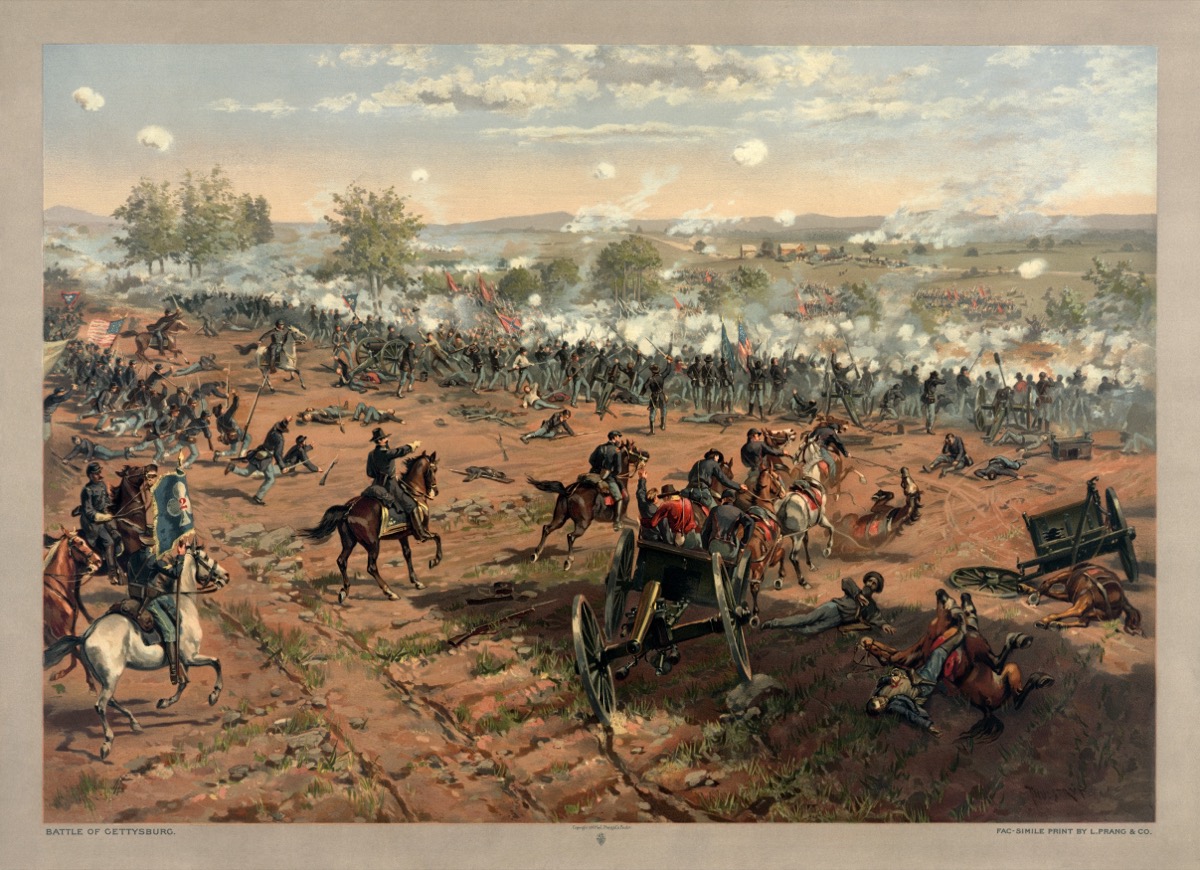
There were a great many dead. On the afternoon of July 1, 1863, Brigadier General Alfred Iverson sent his North Carolina brigade across an open field toward the ridge without scouting ahead or sending out skirmishers. Henry Baxter's Union brigade lay flat behind a stone wall on the far side, holding fire until the Confederates were within less than a hundred yards. Then they rose and fired a single volley. Of roughly 1,400 men, more than 800 fell in about ten minutes. Iverson himself stayed in the rear, and when he saw his line go down he first took the white handkerchiefs among them for a disgraceful surrender.
A Confederate artilleryman rode across the field afterward. "There were within a few feet of us by actual count 79 North Carolinians laying dead in a straight line," he wrote, the feet of every one of them aligned, "killed by one volley of musketry." Iverson said much the same in his own report, describing his men dead "on a line as straight as a dress parade."
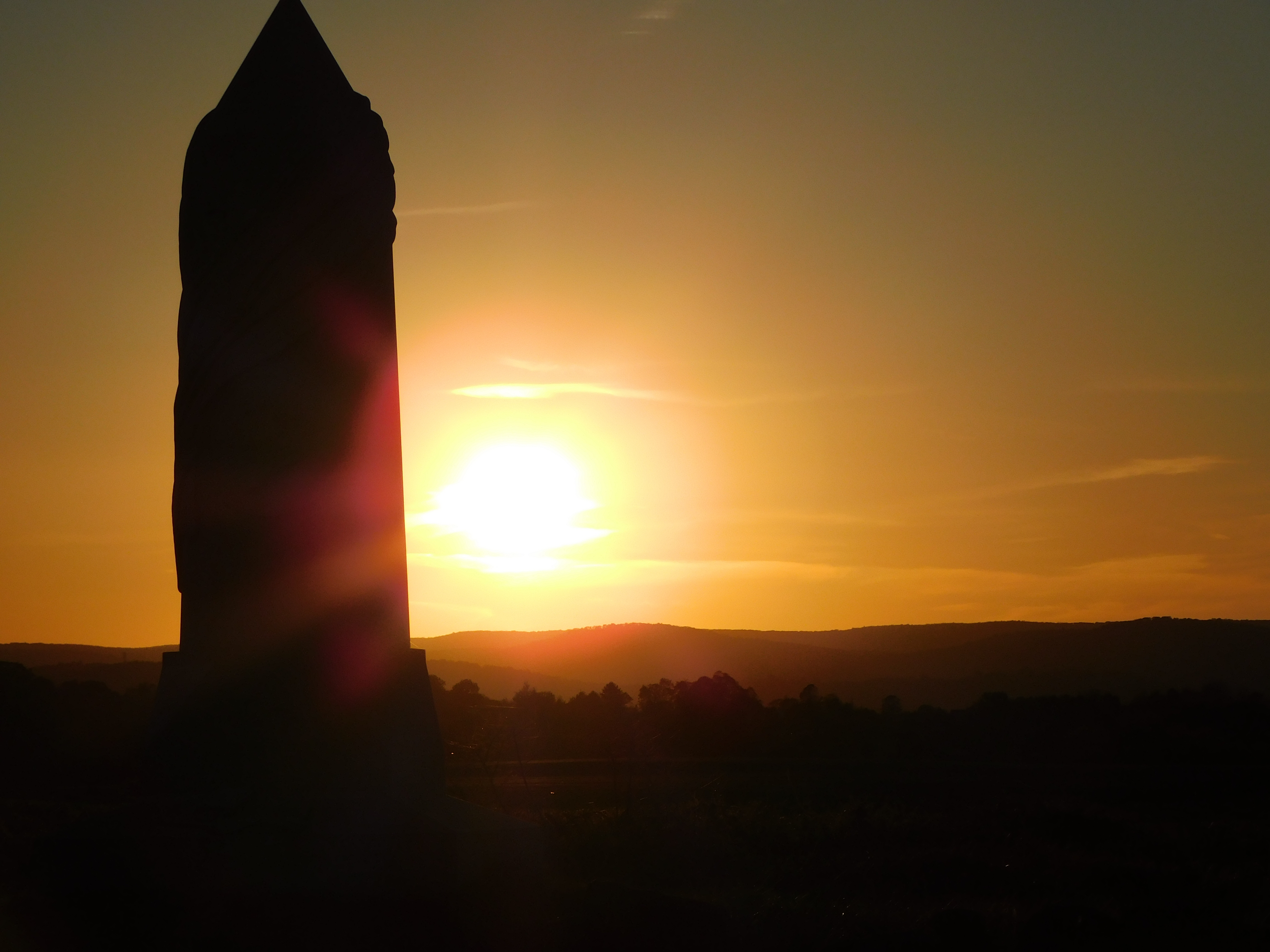
They were buried where they lay, in shallow trenches cut into the ridge. As the soil settled, the trenches sank into long furrows, and locals began calling the place Iverson's Pits. The remains were dug up in 1873 and carried back to North Carolina, though people held that not all of them were ever recovered. A single monument from the 88th Pennsylvania still marks where the burial trenches were cut.
Iverson did not pay for it on the ridge. Lee removed him from the Army of Northern Virginia that October and sent him to Georgia, where his cavalry captured a Union general the following summer. He lived to 1911 and died in Atlanta, an old man in his bed, while the field where his brigade fell kept its dead long after the dead were gone.
Visitors still report wisps of white light over the ground in moonlight, hazy soldiers among the trees, the sense of being watched. On September 5, 2000, a man named David said he saw a figure about 20 feet off, in a full-brimmed hat with a rifle held at port-arms. "His color was mostly black," he reported, "but a grayish-blue seemed to come and go as he moved."