The Fireside Restaurant and Lounge has sat across from Rosehill Cemetery in Chicago since 1904, back when its customers were mourners. Staff say a man who broke his neck on the narrow basement stairs still walks them, trailing a cold draft.
At the Fireside Restaurant and Lounge in Chicago, the staff say a man still walks the basement stairs. They're narrow, the way old service stairs are. He was an employee, they say, who lost his footing on them, broke his neck at the bottom, and wasn't found for a couple of days. People who work there report a cold draft on those steps now, and a heavy kind of sadness that comes with it.
No record names him. The fall, the broken neck, the body left for days: none of it ever reached a coroner's report, and the staff will tell you that themselves. What's documented is the building, and where it sits.
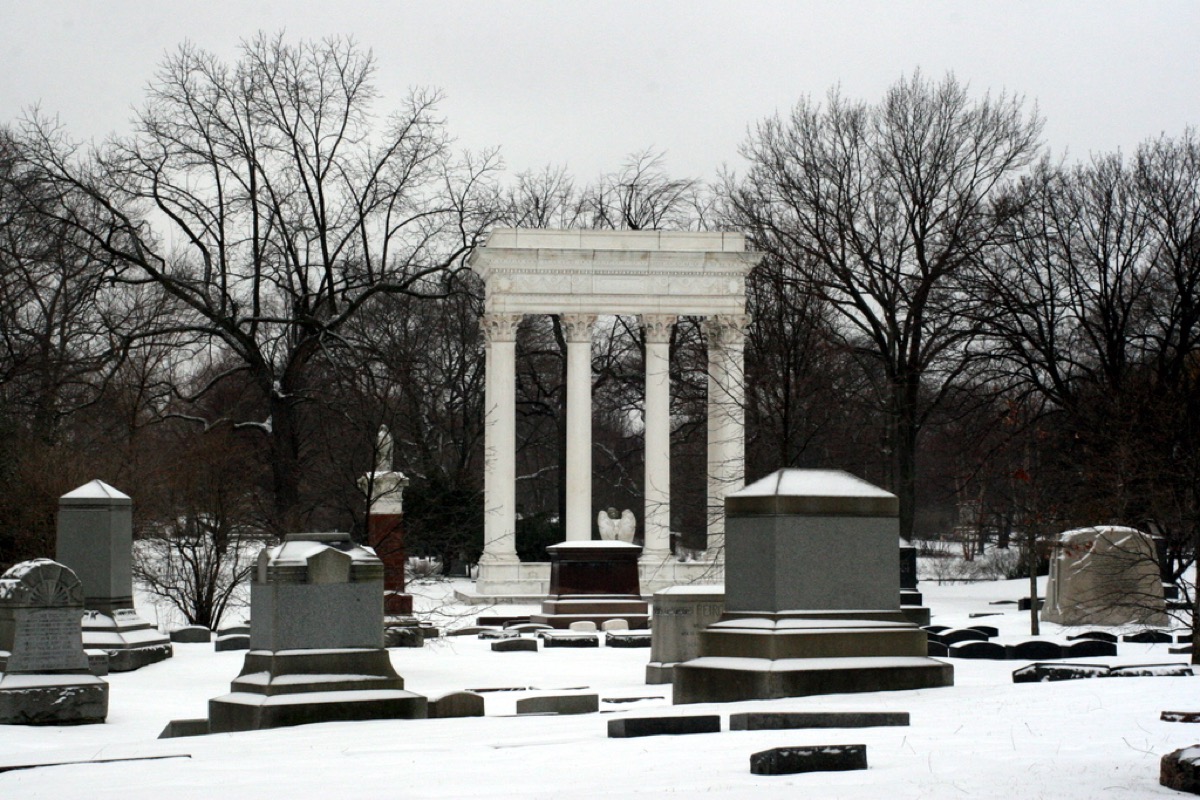
The Fireside opened in 1904, directly across the street from Rosehill Cemetery. It's poured drinks ever since, which makes it one of Chicago's oldest taverns still running. But for most of that history, its customers were mourners. Before cars, burying someone at Rosehill took the better part of a day, so families crossed the road for a midday meal. DNAinfo describes the place opening as "a saloon, eatery and temporary resting place for those going to visit their deceased loved ones." The second floor had separate overnight rooms for grieving men and women.
So the haunting has two halves. There's the man on the stairs, who belongs to the building. And there's everything that's said to drift in from across the road. Local coverage calls the Fireside a "ghost magnet" for spirits from the cemetery, and the cemetery is the largest in Chicago. The Fireside's own about page doesn't argue with any of it, telling visitors that patrons report "eerie sensations, unexplained shadows, and mysterious whispers."
Some accounts add a woman in a white gown, seated at the piano as if she's about to play. No one there has named her either.
A tavern that spent its first decades feeding the people who came to bury someone. The mourners stopped coming a long time ago. The staff say the dead didn't.