At Eugene Pioneer Cemetery, beside the University of Oregon, the dead clean headstones and play bagpipes. A phantom piper thins to nothing as you approach, women in white tend the graves, and a marble Union soldier is said to step off his pedestal at night to stand watch.
Students cutting across Eugene Pioneer Cemetery after dark, on the southern edge of the University of Oregon campus, say they hear bagpipes. A man in full Scottish regalia is standing among the headstones, playing, and the nearer they get the thinner he grows, until he dissolves behind the trees. The music sometimes drifts onto campus with no living piper anywhere to be found.
He keeps odd company. People report women in white moving between the graves, bending to clean the headstones and tend the plots, not mourning, not wronged, just keeping the place up.
That gentleness is the whole strangeness of the cemetery. Daniel Wojcik, a folklore professor at the university, calls its spirits the "good dead," or perhaps the "happy dead": "a community of kindly spirits who animate the locale with their bagpipes and headstone cleaning," he says, not "vengeful or malevolent phantoms — the 'evil dead.'" Where most American hauntings run on grief and revenge, this one runs on people doing chores.
The cemetery's centerpiece is a 25-foot marble Union soldier, paid for by veteran John Covell's estate and set above the Grand Army of the Republic plot, where dozens of Union men are buried. Students say he steps down off his pedestal at night to keep watch over them; some report only "flashes of marble moving" in the dark.
There's a real, scarred statue behind that one. In December 2001, vandals decapitated him. A new head was carved from blue marble out of the same Vermont quarry as the original, and the soldier was set back on his feet in February 2003 — whole again, watching again.
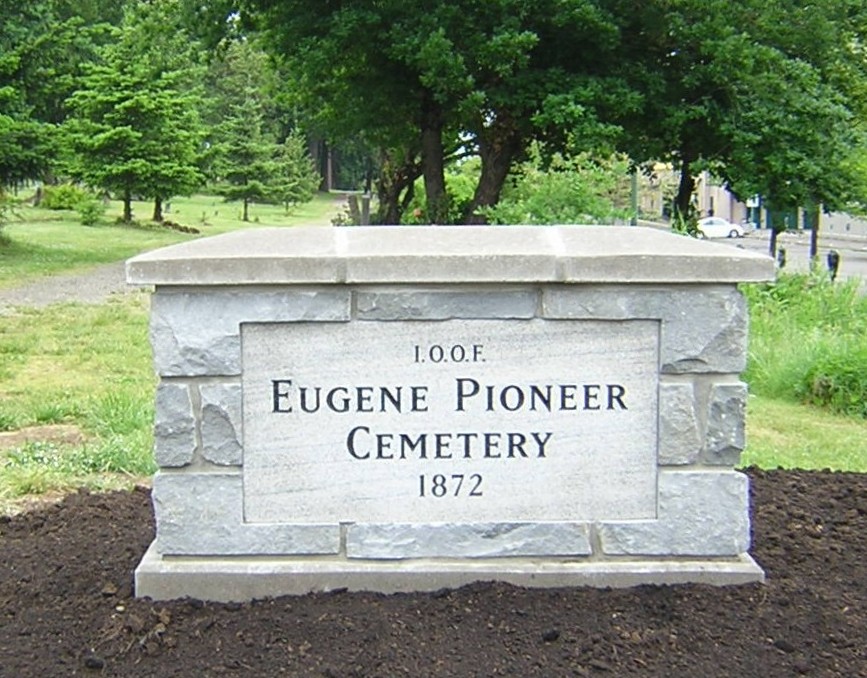
The cemetery itself goes back to 1872, when the Odd Fellows laid it out, and more than 4,000 people rest across its 16 acres. None of that explains the piper. No source ties him to any buried man, and no one has worked out why a Scottish bagpiper haunts an Oregon pioneer cemetery at all. He simply plays, and thins, and goes.
Campus tradition holds that at midnight, one night each year, every statue here wakes at once: stepping down, wandering the rows, talking among themselves, helping the living where they can. No source names the night. The rule students pass around is simpler — when the church bell across the street tolls ten, you gather at the gates and watch the marble. They go hoping the kind dead will show.