A maintenance worker cleaning Elkmont's Appalachian Clubhouse the day after a family reunion saw an elderly man in old-fashioned clothes look up and disappear. A photo the organizer left behind matched him exactly: her great-grandfather, drowned in Jakes Creek in 1914.
Bill had the Appalachian Clubhouse at Elkmont to himself the morning after a family reunion, cleaning up the mess a crowd leaves behind, when he noticed he wasn't alone. An elderly man in old-fashioned clothes stood in the historic section of the room. Bill started toward him. The man looked up, met his eyes, and was gone. Rattled, he went around opening every door in the building, hoping someone else would walk in.
Someone did. The woman who had organized the reunion came back for something she'd forgotten, and Bill described what he'd seen. She listened, then went and found an old photograph from the gathering. The face in it matched the man Bill had watched vanish: same features, same clothes. She said he was her great-grandfather, a pharmacist who drowned in Jakes Creek in 1914 and was buried in what he'd worn.
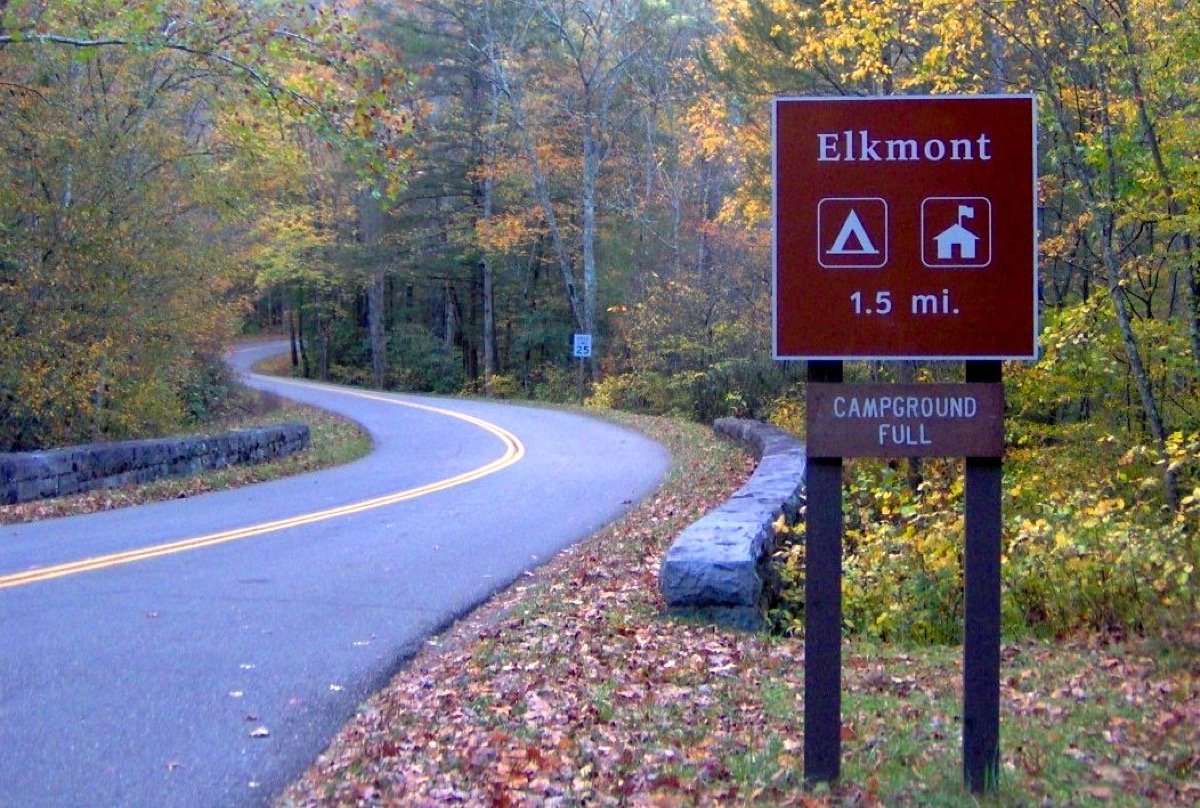
The drowned pharmacist is the best-known ghost at Elkmont, a resort ghost town the federal government spent decades quietly emptying. The Little River Lumber Company built it in 1908 as a logging camp in the Smokies. When the timber ran out, wealthy Knoxville families turned the valley into East Tennessee's most fashionable summer address, with cottages and a hotel and a private club. Then the national park bought the land, displaced some 5,665 residents through eminent domain, and let the lifetime leases lapse one by one. The last weren't renewed after 1992. What's left is preserved cabins, lone stone chimneys standing in empty meadows, and the cleared footprint where the Wonderland Hotel used to overlook the valley.
There is one death here you can date to the day. On June 30, 1909, a logging train wrecked on the Little River Railroad near Elkmont. The crew had been racing to a party on an overloaded train, the rails wet from rain, and it went down the grade and killed two men: engineer Gordon "Daddy" Bryson and brakeman Charlie Jenkins. Bryson got a folk song, "Daddy Bryson's Last Ride." Jenkins got nothing. The newspaper that covered the wreck couldn't even learn his name, calling him only "another member of logging train crew whose name could not be learned."
The other reports are softer, passed hand to hand. A young woman in period dress is said to appear on the Little River Trail. Around the razed Wonderland site, people describe misty figures, phantom laughter, and the clink of glasses.
Which is the strange part of Bill's old man. The clubhouse he was cleaning burned down and was rebuilt in 1934, twenty years after the pharmacist drowned. Whatever he saw in the historic section was standing in a room that hadn't existed when the man was alive.