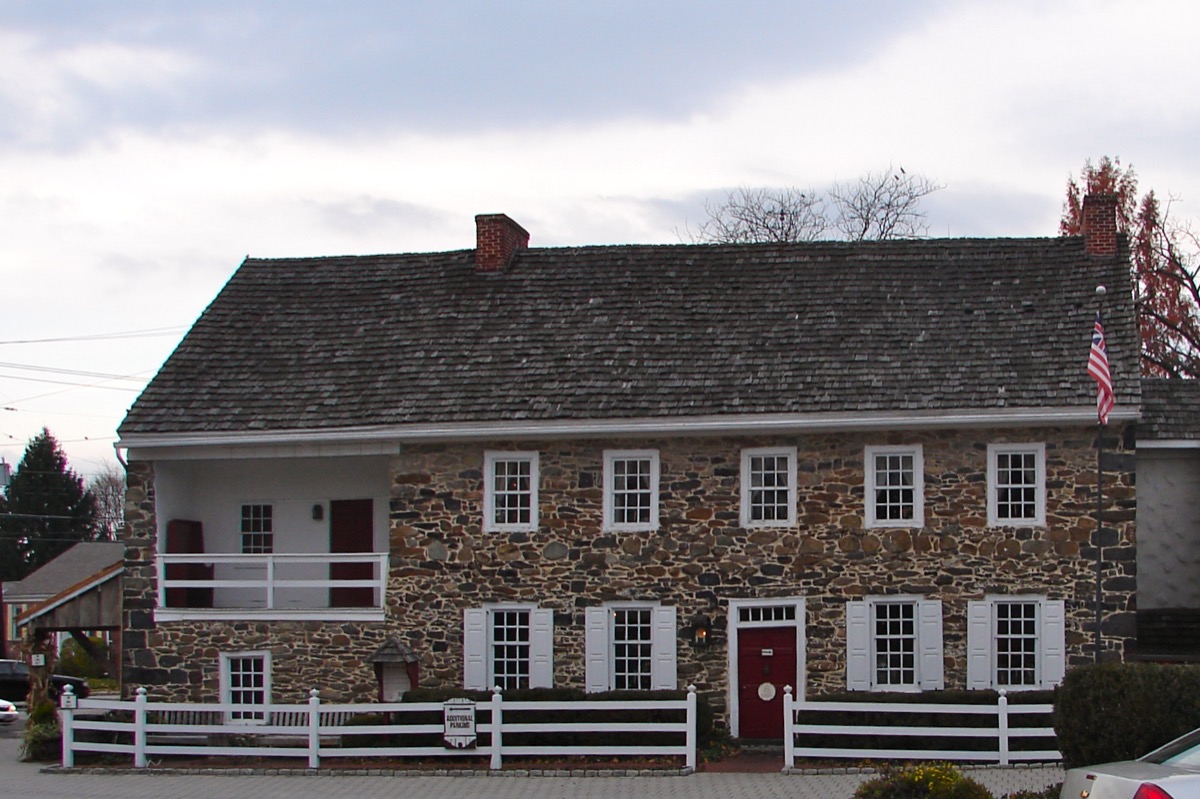
The Dobbin House Tavern is the oldest building in Gettysburg, a candlelit colonial restaurant today. Staff say a wounded soldier moans near the basement stairs, a woman in blue drifts the upstairs rooms, and blood keeps reappearing on the floorboards.
At the Dobbin House Tavern in Gettysburg, Pennsylvania, the staff don't like going down to the basement alone after dark. People who do report cold spots near the stairs, sudden nausea, the smell of antiseptic, and the moaning of a wounded soldier. Upstairs, after the restaurant has closed, others say they hear children: laughter, whispers, running footsteps, marbles rolling across the floor.
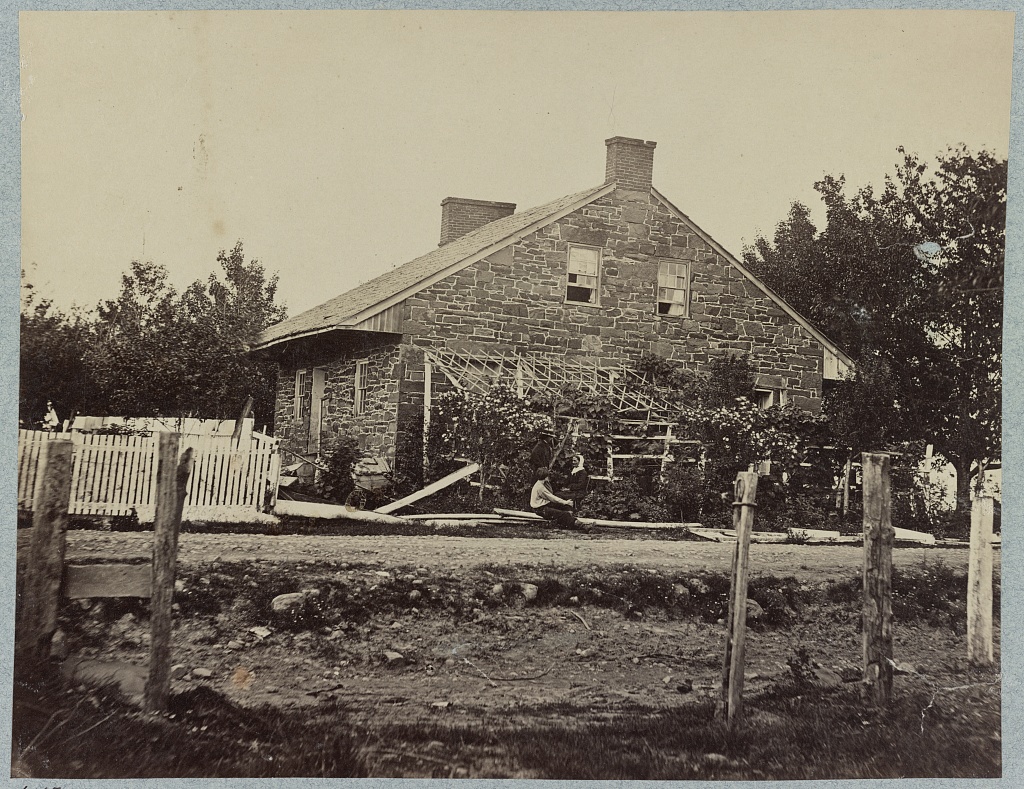
The building is the oldest standing structure in Gettysburg, a 2½-story stone house seven bays across, with a brick chimney at each end. Reverend Alexander Dobbin, a Presbyterian minister, built it in 1776 and ran a classical school in it for roughly twenty years, an academy described as among the earliest of its kind west of the Susquehanna River. He's the one credited with the children, who would have studied here, and with one more sighting: Dobbin himself, seen around the house smoking a cigar, content. He had ten children with his first wife and raised nine more after he remarried, so the house was never short of them.
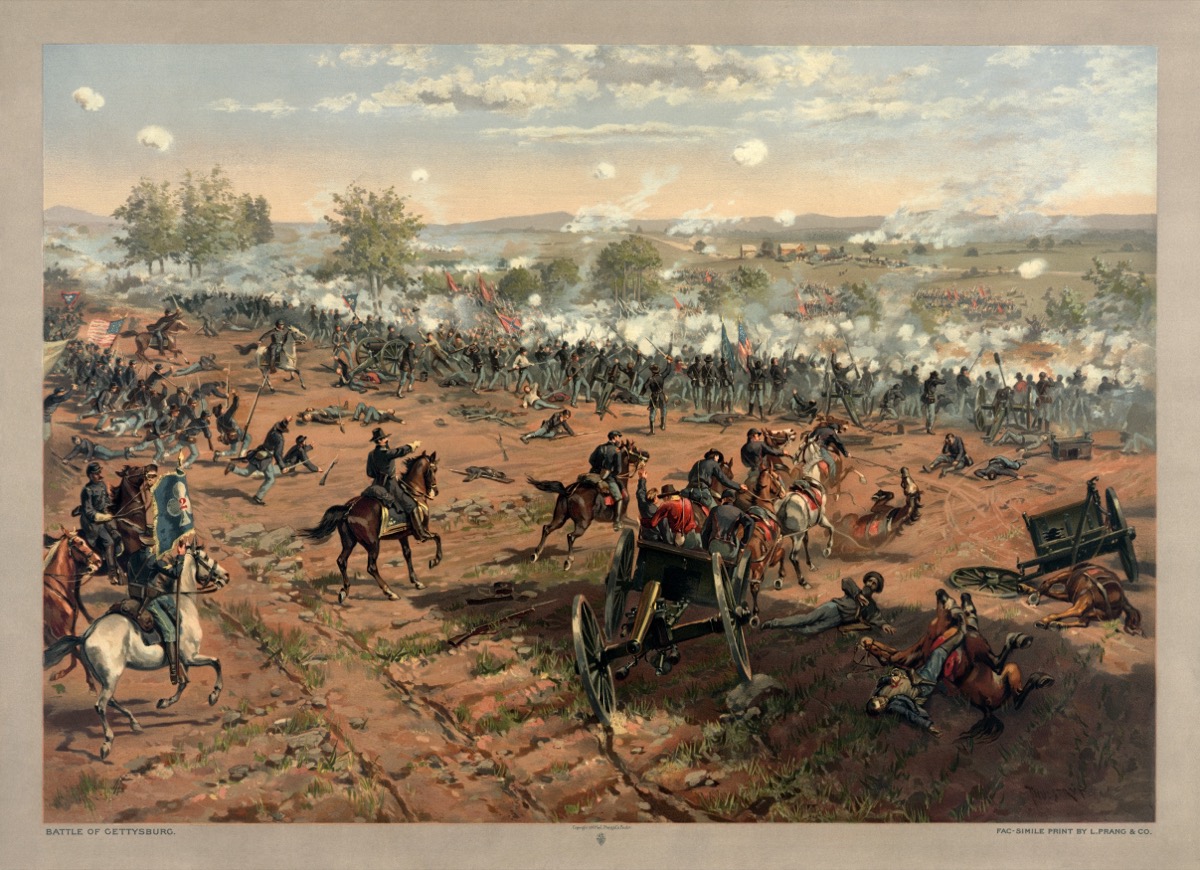
But the soldier and the woman come from what happened later. During the Battle of Gettysburg in July 1863, the stone house was turned into a field hospital, taking wounded from both the Union and Confederate armies into every room. Guests and employees have reported blood stains that keep reappearing on the original floorboards, a remnant of that month. The woman is the most commonly seen of all of them: a figure in a blue gown, gliding silently through the upstairs rooms. Accounts split on who she was, a Civil War nurse or a grieving mother.
There's an older secret in the house, too. On the upper floor, what looks like an ordinary cupboard opens onto a crawl space barely three feet high. The Dobbin House may have been a first stop on the Underground Railroad north of the Mason-Dixon line, and the hidden space, which National Geographic once documented, is said to have sheltered runaway slaves. The venue's own history credits Dobbin's abolitionist son Matthew with building it into the house in the mid-1800s, though Wikipedia notes the Underground Railroad claim has never been substantiated.
None of the sightings trace back to a named witness or a formal investigation. They come from staff and visitors, retold by the ghost-tour companies that work the town. What's documented is the house itself: two hundred and fifty years old, still serving dinner by candlelight over a cellar nobody wants to enter alone.