Inside the Dahlonega Gold Museum in Georgia, a small model stamp press sometimes starts hammering away in an empty room with no one near it. Staff blame a tall figure in a hooded robe they've named Tommy, seen at night on the old courthouse balcony.
The Dahlonega Gold Museum in Dahlonega, Georgia keeps one exhibit that won't stay quiet. It's a small model of a stamp press — a miniature of the ore-crushing machines that once pounded gold out of the local rock — and the story goes that it turns itself on. No one near it, no timer, no hand on the switch. The little mechanism just starts hammering away in an empty room, loud enough that staff have to walk over and shut it off.
Staff call the culprit Tommy.
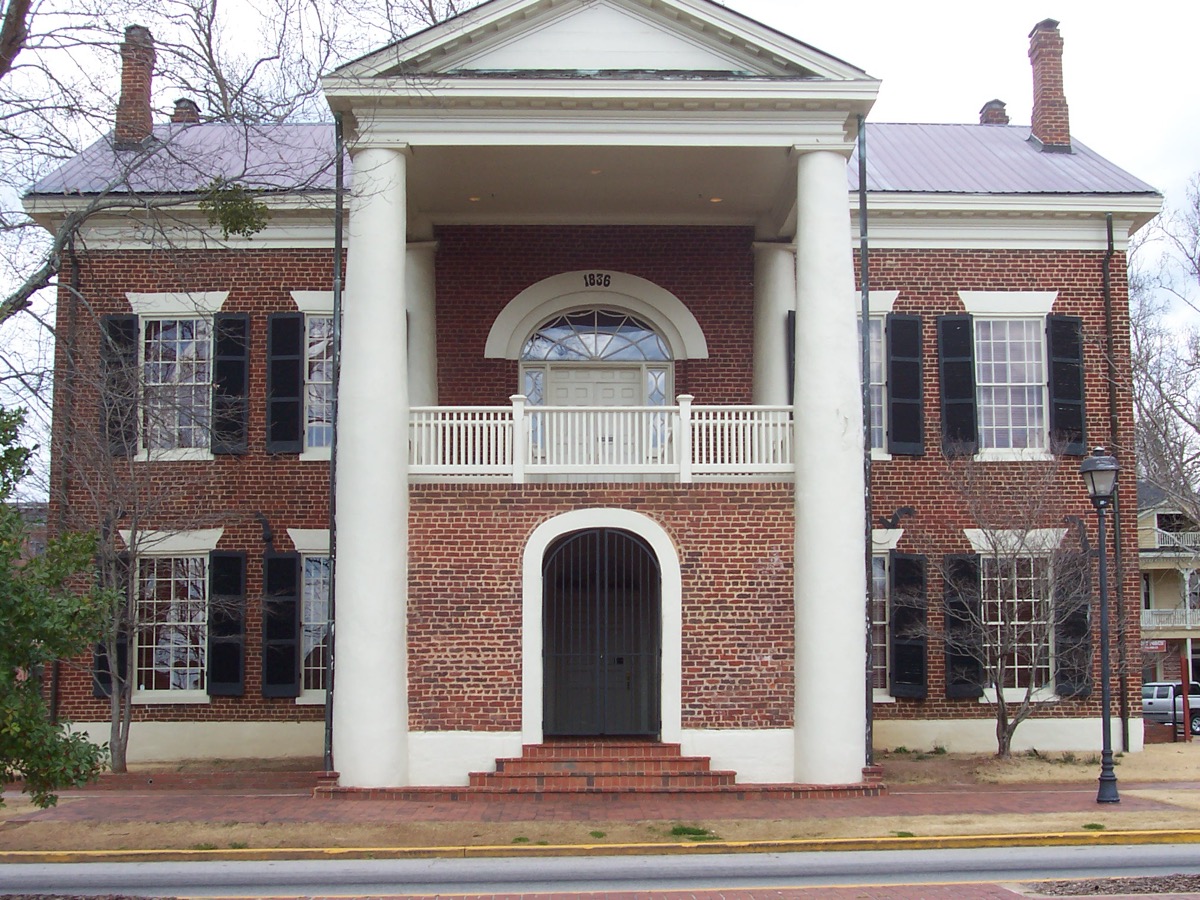
Tommy is a tall figure in a hooded robe, and the people who work there blame him for more than the stamp press — for knocking inside the walls, and for showing up where he shouldn't. He keeps to the balcony. People crossing the public square below have looked up at night and seen him in the courthouse windows, and out on the open balcony above the entrance, watching the square.
Who Tommy was, no one can say. No name, no death, no date — staff simply gave the recurring figure a name and went back to work.
The building he haunts is the oldest surviving county courthouse in Georgia, finished in 1836, and it owes its whole existence to gold. The bricks were made from local clay dug out of the valley during the rush that built the town, and they still hold trace flecks of gold from the soil — the courthouse is, in a literal sense, partly made of the thing everyone came digging for. Gold was found here in 1828, two decades before California, and for the next century residents brought their disputes to this room: debts owed, pigs stolen, trespasses on gold claims.
The haunting and the building are the same story. Gold pulled 15,000 prospectors into these hills, raised a courthouse out of gold-flecked brick — and left something behind that still starts the press pounding in an empty room.