The Culbertson Mansion in New Albany, Indiana keeps a famous ghost named Dr. Webb. Two volunteers invented him for a haunted attraction in the early 2000s, and the fiction got loose. The hauntings nobody made up are quieter.
The Culbertson Mansion in New Albany, Indiana has a resident ghost named Dr. Webb, a doctor who murdered people in the house. Ghost-tour sites will tell you about him. He never existed.
Two volunteers made him up in the early 2000s, as the villain for the haunted attraction the mansion runs every October in its carriage house. The character escaped the script. Tour sites picked him up as a real historical murderer, and now Dr. Webb floats around the internet as a verified haunting of a man who was never born, never practiced, and never killed anyone in any record of the place. The carriage house has run that attraction since 1985, and it has chased enough people with chainsaws to raise more than a million dollars toward restoring the mansion.
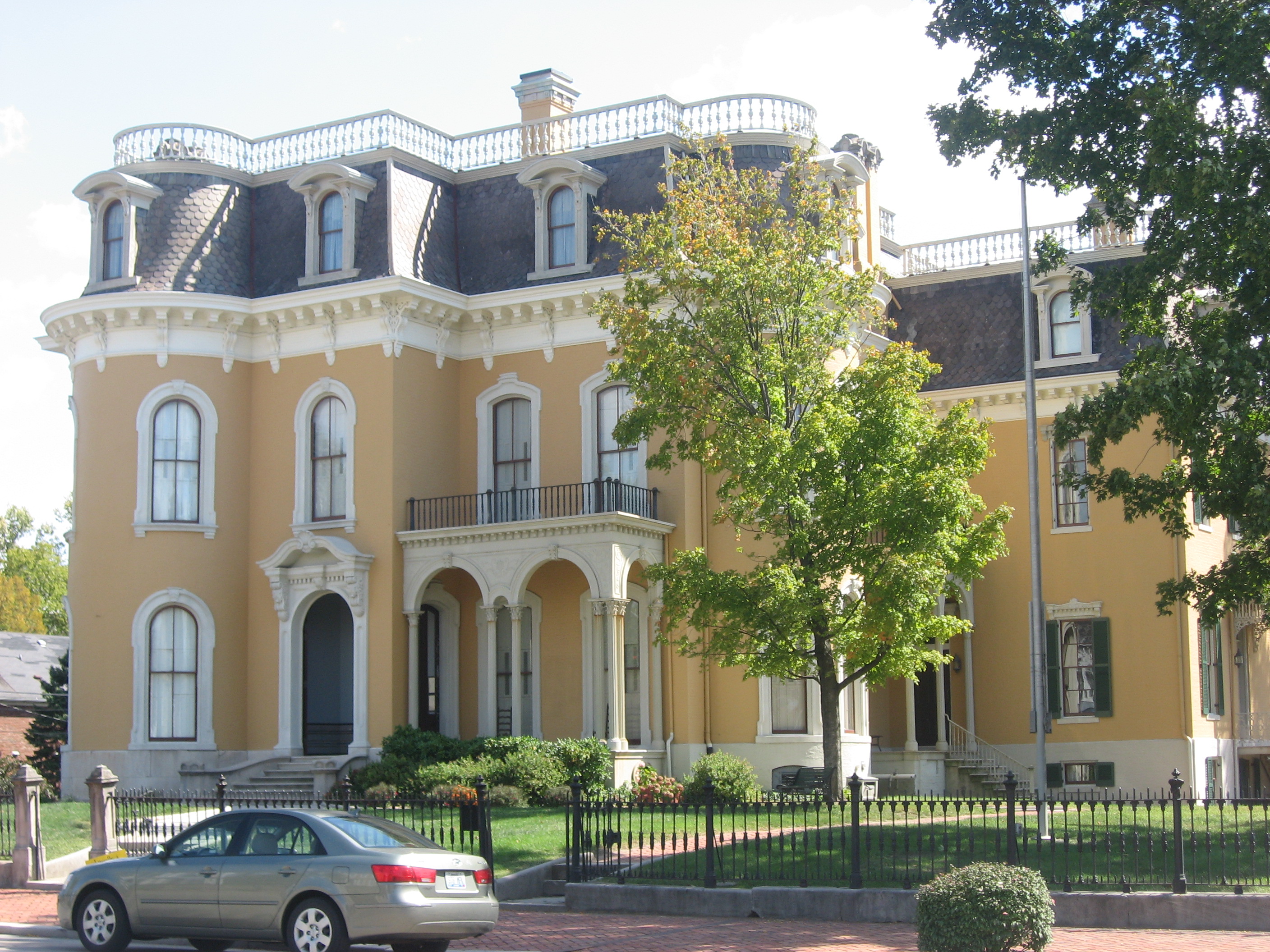
The mansion is real enough. William S. Culbertson, then the richest man in Indiana, finished building it in 1869: a 25-room French Second Empire house with hand-painted ceilings, a carved rosewood staircase, and a tin roof shipped over from Scotland. He was widowed twice, married a third time at 70, and died in 1892.
The hauntings nobody invented are smaller, and they don't need a doctor. Staff have kept a written file of unexplained occurrences since 1977. The one that recurs is a smell: cigar smoke, sudden and strong, in rooms where nobody smokes and nobody has in decades. They attribute it to Frank Semple, the son-in-law who married Culbertson's daughter Anna and lived in the house. It turns up most often on the second floor.
The carriage house, the one with the made-up doctor, has its own quieter trouble. Staff and volunteers report electrical problems out there, figures crossing between rooms, sounds after hours, and items that go missing. Several volunteers have refused to work in the building at all, on the strength of things that happened to them inside it. Whatever they're describing, it isn't Dr. Webb.
And there's the officer. Years back, one responded to a nighttime alarm and walked the building with the curator. Afterward he asked, words to the effect of, "Are you going to get her? Are we going to leave her in there?" He'd seen a woman inside. Told the two of them were the only people in the place, he left. He never answered another call to the address.
The mansion's most famous ghost is the one somebody wrote on purpose. The officer who walked out is the one nobody can explain.