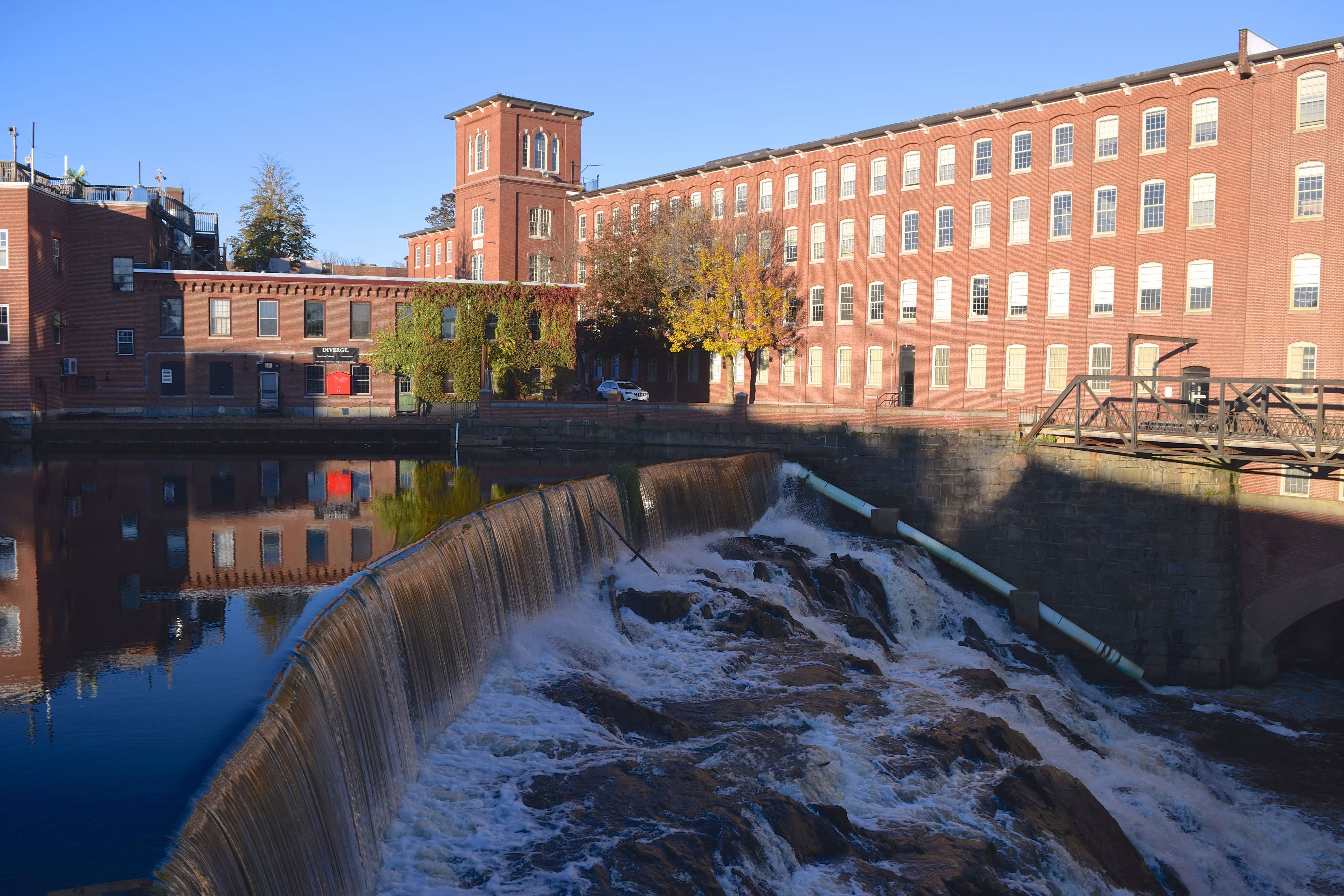
A janitor at the Cocheco Mills in Dover, New Hampshire heard laughter and slamming doors for years and never flinched. "You mean my girls," he told the manager. The old cotton mill burned in 1907 with its sprinklers off, and four never made it out.
When the maintenance manager at the Cocheco Mills in Dover, New Hampshire asked the building's janitor whether he'd ever heard anything strange after hours, the janitor didn't even pause. "You mean my girls," he said, and smiled. He'd been listening to them for years: laughter from the empty floors, doors slamming that he knew were already shut.
He had names for them in his head, and the building has a reason to be full of girls.
The plant on the Cocheco River had been spinning cotton since 1815, and by the end of the century it was enormous. Roughly 2,000 people worked it, 130,000 spindles and 2,800 looms going at once, most of them women at the looms, six days a week for an average of 53 cents a day. Then on the bitter-cold morning of January 26, 1907, fire broke out on one of the upper floors of Mill No. 1. The sprinkler system had been shut off for repairs. The flames went where they wanted.
There was one fire escape for the whole building. People came down through smoke and dark, and some jumped from the upper windows. Firefighters from Dover and Portsmouth fought it for about 36 hours in cold near 30 below, where the water froze in the hoses almost as fast as it sprayed, while thousands of onlookers poured in from the surrounding towns to watch it burn. Four people died inside. The official Dover report notes that three of them had already gotten out safely at the first alarm, were seen in the yard or the street, and went back in, "presumably for their clothing." Haunted retellings put the toll at six; the city's own record says four.
The mill that stands now was raised in 1908, directly over the footprint of the one that burned. It holds offices and apartments today, and the people who work it late keep reporting the same things. Disembodied voices in the two stone stairwell towers. Machinery starting and stopping on floors that have had no machinery in decades, the racket building until one loud machine drowns out the rest. Strange lights in the upper windows when the place is dark and empty. The manager who covered the janitor's shift says he was cleaning a third-floor restroom alone around 3 a.m. when he heard a giggle, two distinct children's voices, close by.
The janitor never called it a haunting. He called it the girls, and went back to work.