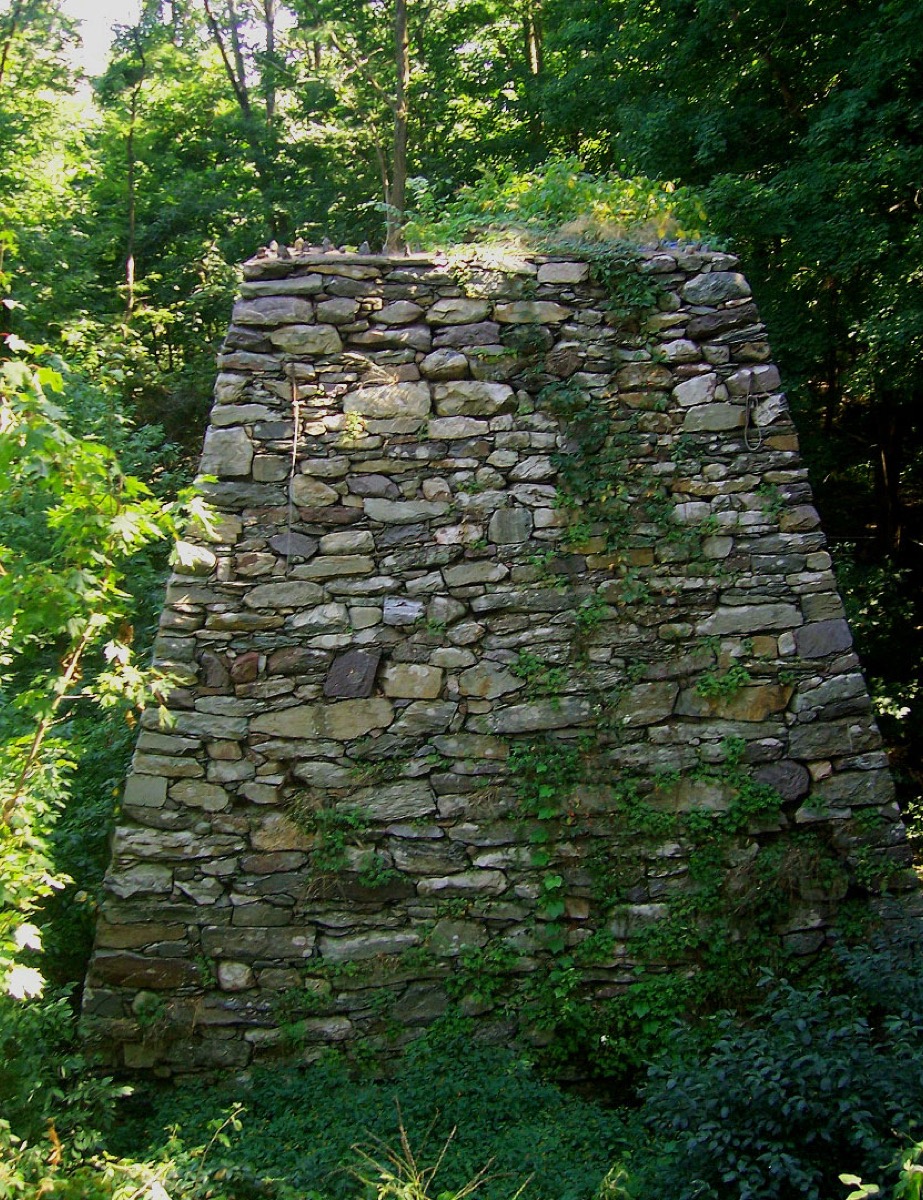
Off Clinton Road in West Milford, New Jersey, a 40-foot stone tower stands alone in the woods, blackened inside. Generations of local kids called it the Druid Temple and swore anyone who looked in on the ritual would be cursed. It is, in fact, an iron furnace.
The Clinton Furnace sits east of Clinton Road in West Milford, New Jersey, a 40-foot pyramid of dressed stone standing alone in the second-growth forest. It is scorched black inside, with a dark opening at its base, and for generations the local kids called it the Druid Temple.
The legend, as Weird NJ readers told it, was that local Druids practiced their rituals at the conical stone tower, and "horrible things might come to pass for any intruder who looked too closely or came at the wrong time." So you didn't look too closely. You didn't go at the wrong time. Whatever the right time was, you stayed clear of it.
Here is what the tower actually is.
In 1826, a man named William Jackson of Rockaway began building an iron smelter on the site to melt down locally mined ore. He built a whole community around it — a sawmill, a gristmill, a schoolhouse that doubled as a church, worker housing — and a water wheel run off Clinton Brook that worked the bellows to keep the fire hot. The furnace was 29 feet square at the base, tapering toward the top, dirt-lined, with three openings cut into its foot. The nearby deposits were too sulphurous to use, so the ore was carted in from five mines scattered across the region, a round trip that ran about three days.
It was fired for the first time on September 17, 1833, and the first pig iron was cast that October. Then it was fired only a handful more times before the money and the local wood supply ran out, and by 1837 the whole operation was abandoned. A forge ran on the site for a while after that, until 1852, and then the land was never worked again. The forest grew back over the stack.
The Clinton Furnace is the last surviving structure of the iron town once called Clinton. The sawmill, the gristmill, the houses — all of it has visually disappeared, leaving only foundations. The stack was added to the National Register of Historic Places in 1976. The land belongs to Newark now, part of its watershed, and the water department has fenced the furnace off to keep people out.
So the curse was real, in a way. The thing in the woods really was built to hold fire, and people really did stand at its base and feed it. Forget what a charcoal blast furnace was for, and a scorched stone tower in the trees reads as something you'd have to invent a story to explain. Most people did.