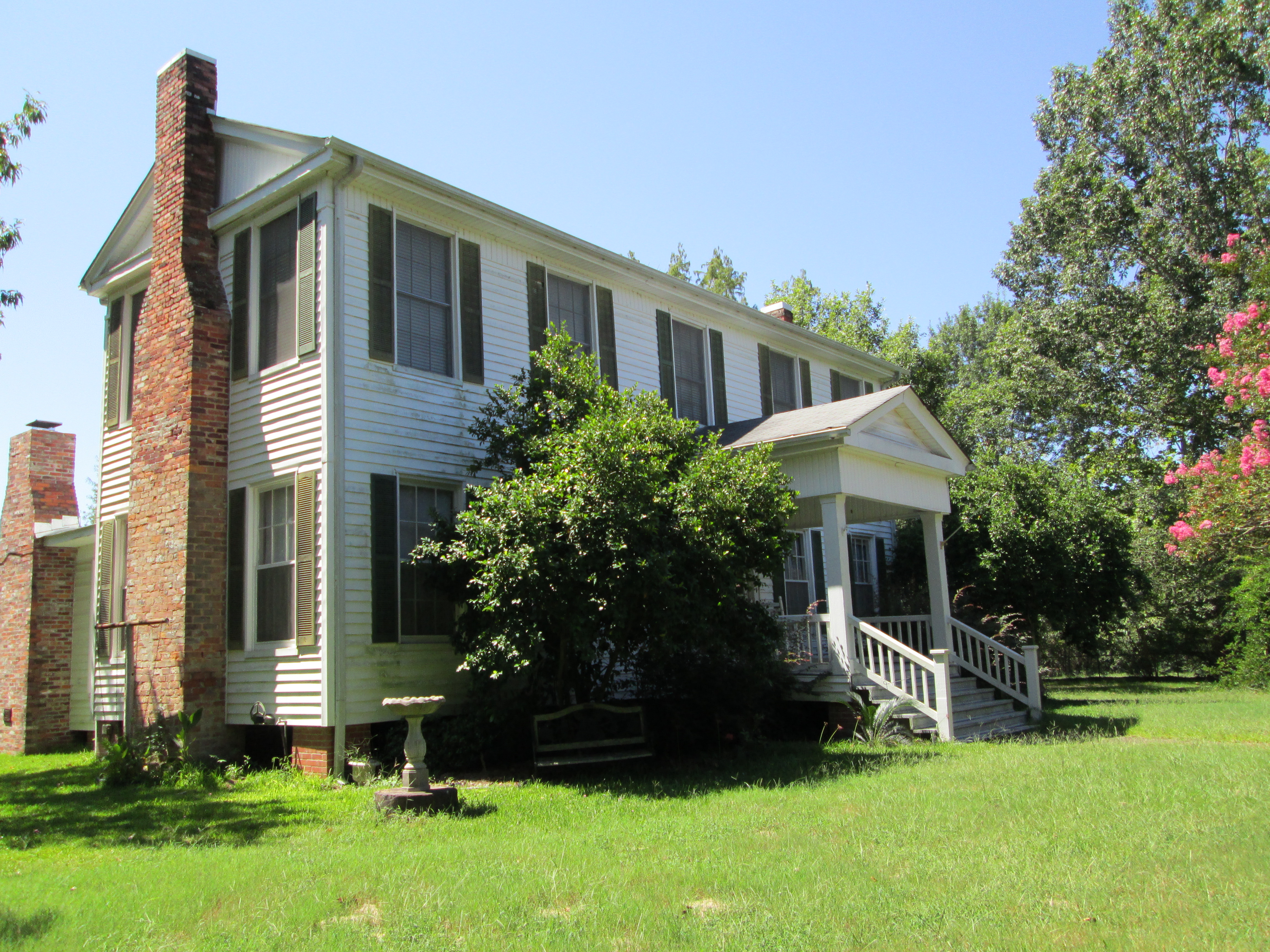
On Sligo Road south of Haughton, Louisiana, a state marker says Dr. Abel Skannal kept a coffin in the attic of Oakland Plantation. Two families, generations apart, describe the same haunting in the house he left behind.
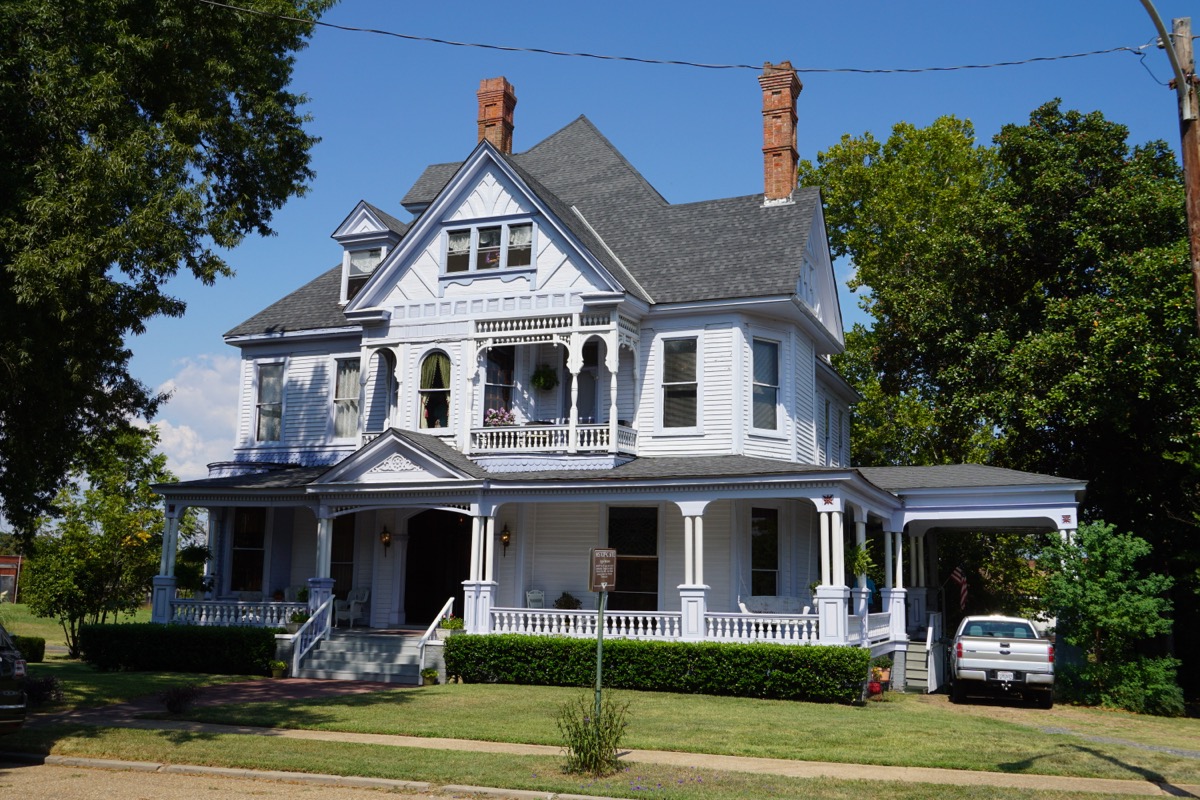
There's a state historical marker on the shoulder of Sligo Road, south of Haughton, Louisiana, and it says something most markers wouldn't admit. "Rumors about ghosts," it reads, "are sustained by the fact that Doc Skannal kept a coffin in the attic of the house." The house is Oakland Plantation, and it still stands behind the marker, a private residence you pass and don't visit.
Dr. Abel Skannal built it in stages through the 1830s and 1840s, and by 1850 it was his. From these rooms he ran five plantations across northwest Louisiana. He was a physician, and by local accounts an eccentric one. The family lost several of their children while they were very young, and they're buried in a small cemetery in the woods nearby, where the doctor lies too. The back of the house was altered in the 1960s, but the face it shows the road has not changed since Skannal built it.
Why he kept the coffin upstairs, the marker doesn't say. Local legend forks into darker versions, told as legend and nothing firmer: that he slept in it, chained at the wrist to one of the people he enslaved, or that he murdered his wife and hid her body there until his own death gave it up. The sources that carry those tales close them the same way, with the same caution: not meant to be taken as fact.
What the families who lived there since describe is smaller and stranger. Melinda McCallon Coyer, who spent nights in the house as a girl, remembers forks and spoons popping off the dinner table as if struck on the ends, glass milk jugs kicked across the front porch while everyone watched, blankets ripped off her in the dark and wadded into a corner. One night a faceless woman stood over her bed. "She wasn't moving, she wasn't saying anything," Coyer said. "She was just looking."
A second family, the Williamses, moved in generations later, and the house went on as before. A cabinet door, then every cabinet door, found standing open one morning. An old rocking chair rocking by itself. A dog sitter photographed what she called a ghost baby and never came back. Their young son said he couldn't sleep for all the people running through his room at night.
Both families, decades apart, noticed the same thing about the thermostat. Set it anywhere, and by morning it has reset to zero. Even in a Louisiana July. The family's own explanation is the worst one: that the doctor is still trying to keep something cold.