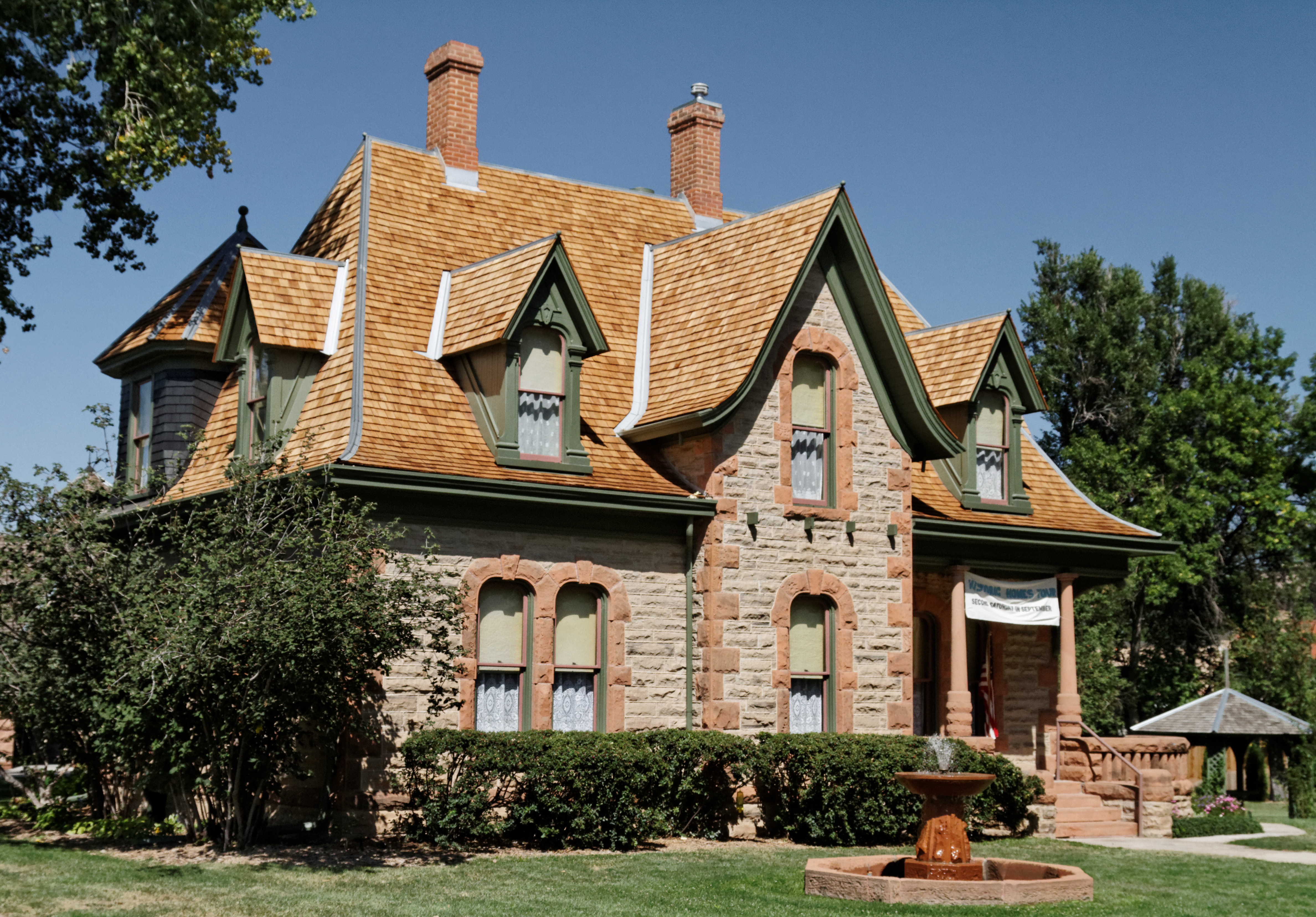
At the 1879 Avery House in Fort Collins, Colorado, visitors say a man drifts the upstairs rooms. The story pins him to William Avery, who died of "gastritis" twelve days before his widow secretly married his business partner.
The Avery House in Fort Collins, Colorado is a tan sandstone Victorian built in 1879, and visitors say a man still walks its upstairs rooms. Local lore gives him a name: William Avery, brother of the man who built the place. Nearly every write-up of haunted Fort Collins includes him.
William died in 1890. The cause on record was gastritis, a stomach disorder, and that might have been the end of it. Then his widow, Mary, slipped off to Hastings, Nebraska, and married her lover, Frank Millington, twelve days after the funeral.
Fort Collins did the math. Mary and Millington were tried in 1891 for feeding William arsenic. By one expert's account, his body held enough to kill fifty people.
Both walked. The reason was a single thread the prosecution couldn't cut: they couldn't prove William hadn't dosed himself. A chemist testified that William's 14-year-old daughter, Pearl, had bought a box of "Rough on Bats," a rat poison about a third arsenic. Pearl denied it. The jury took her at her word, and the two lovers went free. The murdered man had legally become his own possible poisoner.
The Avery family built well. Franklin Avery surveyed the town in 1873, laid out its famously wide streets, and founded the First National Bank. William's estate alone topped $100,000. The house cost $3,000 to put up, with one-foot-thick walls of Bellvue sandstone and a Queen Anne tower added later.
The ghost stories came after it became a museum. Visitors began reporting a male figure moving through the upstairs, the troubled spirit of a child in a bedroom, and strange sensations in the pantry and the parlor. The foundation's director says she's seen nothing, and a longtime docent has said the same. (A separate Avery Building downtown, the old bank, has its own reports of doors opening and silverware sliding, but that's not this house.)
So the man on the upstairs floor, by the verdict that cleared two people of his murder, is supposed to have killed himself.