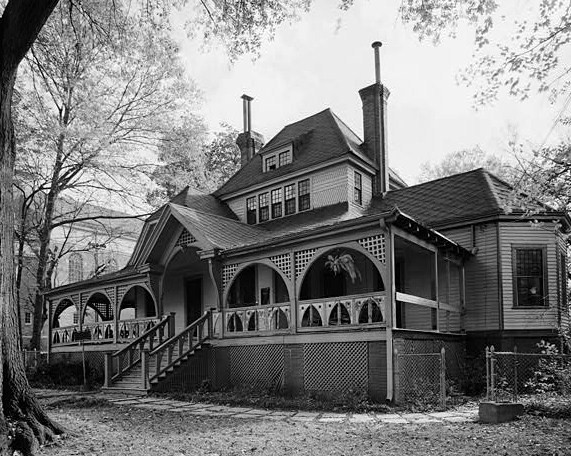
The Wren's Nest in Atlanta is Joel Chandler Harris's old house, now a museum. The director once tried to carry his typewriter off the property and her car died at the line — and wouldn't restart until the typewriter came back inside.
The Wren's Nest in Atlanta's West End is the old house of Joel Chandler Harris, and the museum's director once tried to take his typewriter out the door. Melissa Swindell got it as far as her car. Then the car wouldn't start — and didn't start until she carried the typewriter back inside. She tells it half-joking, unsure what to make of it, like a story she'd rather not have lived.
Harris was an editor at the Atlanta Constitution who, in the books he wrote here, compiled the Uncle Remus tales — Br'er Rabbit, Br'er Fox, the Tar Baby — African American folktales that Harris set down in print but did not originate. He rented the place in 1881, bought it in 1883, and lived here until he died in 1908. The museum today runs a tour that reexamines those stories and the West African roots of the people who first told them, and hosts live performances of the Br'er Rabbit tales in the same rooms.
The ghosts, fittingly, are the house's own. Staff and visitors describe a short, stocky figure resting in Harris's rocking chair, matching Harris himself. Two small boys, maybe three and five, are seen playing on the front staircase — said to be grandsons who died here in infancy, though no record names them. A woman watches from the curtains between the library and parlor; witnesses say she matches a former household worker in a framed photo on the wall, a woman called Chloe whom no document confirms.
In 2019, the Southeastern Institute of Paranormal Research ran a series of ticketed investigations, twenty guests at a time. Their audio caught a banging in the basement that no one had heard while standing there. In the library, the air filled with the scent of burning candle wax. A flashlight clicked on and off on request. And on the recordings, three words came back in a whisper: "That's crazy." "...here?" "Now."