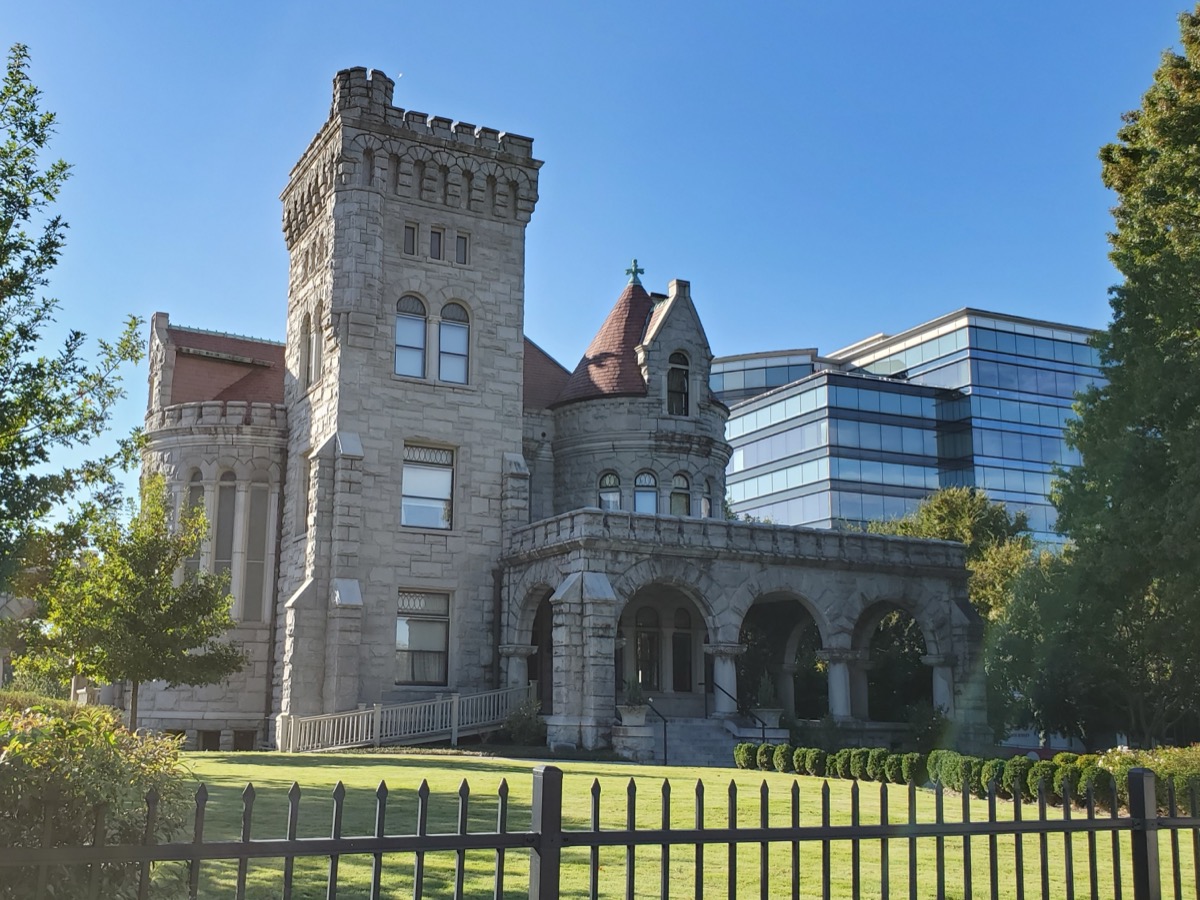
Rhodes Hall is a granite castle on Peachtree Street, and visitors keep reporting an old woman drifting the stairs and a menacing figure in the basement. The strange part: a 1980s Halloween fundraiser may have invented the haunting it can't shake.
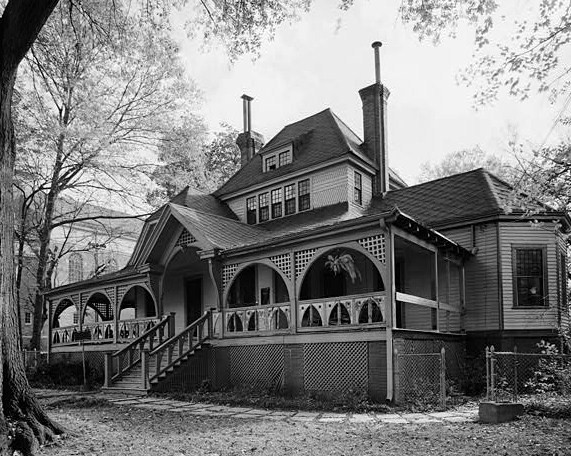
Rhodes Hall sits on Peachtree Street in Atlanta, a granite castle wedged among glass office towers, and people who walk through it keep describing the same two figures. An elderly woman appears on the carved mahogany staircase, presumed to be Amanda Rhodes, who lived and died here. And down in the basement, visitors report a hostile man with no connection anyone can trace to the house's history.
Most who enter say the same thing happens at the front door: a presence that feels openly unwelcoming, the moment they step inside.
Amos Giles Rhodes, the furniture magnate, built the place in 1904 and named it Le Rêve, French for "The Dream." He'd modeled it on castles he and Amanda saw touring the German Rhineland, and he filled it with over 300 light bulbs, electric call buttons, and an early security system, a strikingly modern house for its day. Amanda died in 1927; Amos a year later. Their children deeded it to the State of Georgia, and it spent decades as the state archives before the Georgia Trust moved in.
Above the staircase hang three hand-painted glass panels walking the rise and fall of the Confederacy, from Fort Sumter to Appomattox, studded with medallion portraits of more than a dozen Confederate figures, Nathan Bedford Forrest, a Klan Grand Wizard, among them.
The ghost stories cluster harder than the windows, though, and here's where they get complicated. From 1984 to 1992, the Georgia Trust turned the mansion into a Halloween attraction called the Haunted Castle to raise restoration money. One account frames the whole reputation as a leftover of that stunt, a haunting manufactured for ticket sales.
Except the reports didn't stop when the props came down. Investigators still record EVPs in multiple rooms. The Trust runs October ghost tours into the basement, the spot it calls the most active in the house. "With all old houses, there are tales of hauntings and ghosts," a Trust spokesperson said, "so of course we have our share of those as well." A haunting that may have been invented, and then declined to leave.