Villa Paula

Villa Paula

🏚️ mansion

Miami, Florida · Est. 1926

TLDR

A 1926 Cuban consulate in Little Haiti, a one-legged ghost, a backyard "grave" that turned out to be invented.

The Full Story

The back gate at 5811 N. Miami Avenue killed three of Cliff Ensor's cats. Ensor told that story to reporters in the 1980s, anyway. He'd bought the old Cuban consulate in 1974 when it was falling apart, and by the time the Miami Herald named it the most haunted house in Miami in 1989, he had a full catalog of complaints. A black-haired woman in a long gown, floating down the hallway with only one leg visible. Piano music with no piano player. High heels clacking on the back porch. Dishes flying to the floor. A chandelier that came down off the ceiling. The smell of brewing Cuban coffee and roses in empty rooms. And that gate, which kept slamming shut on windless days.

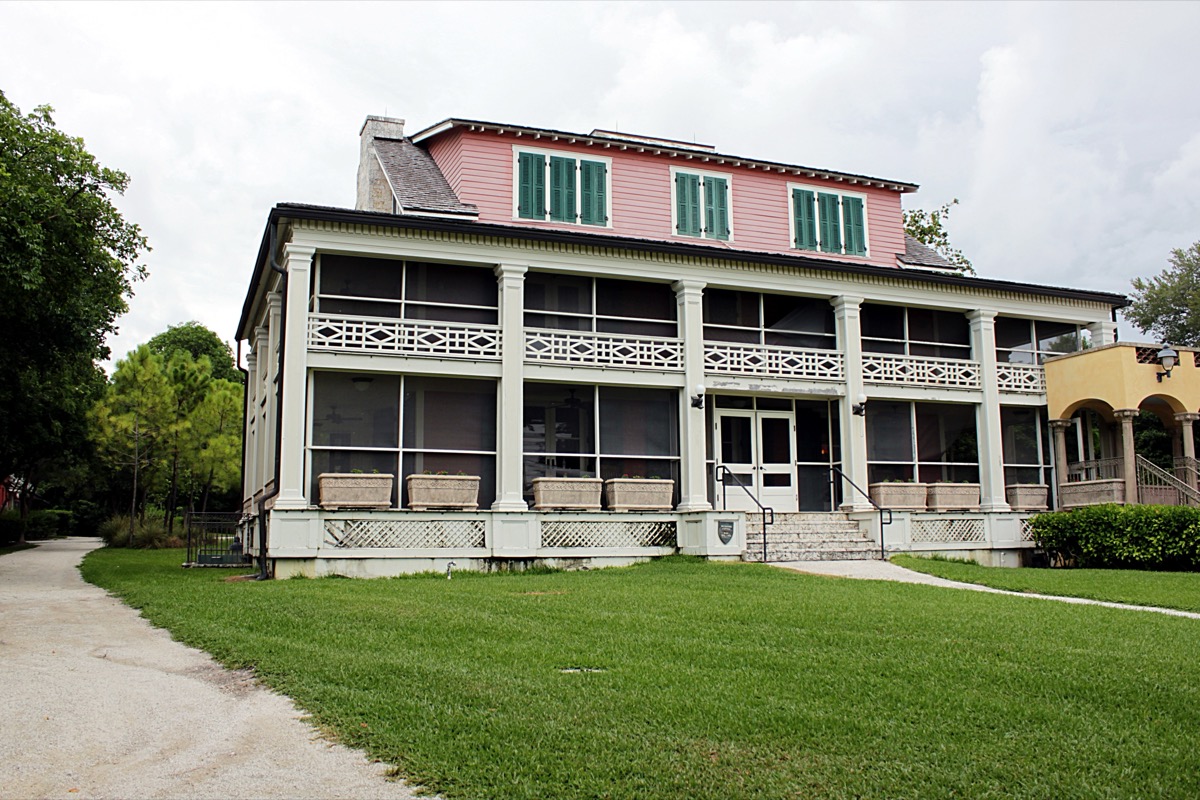
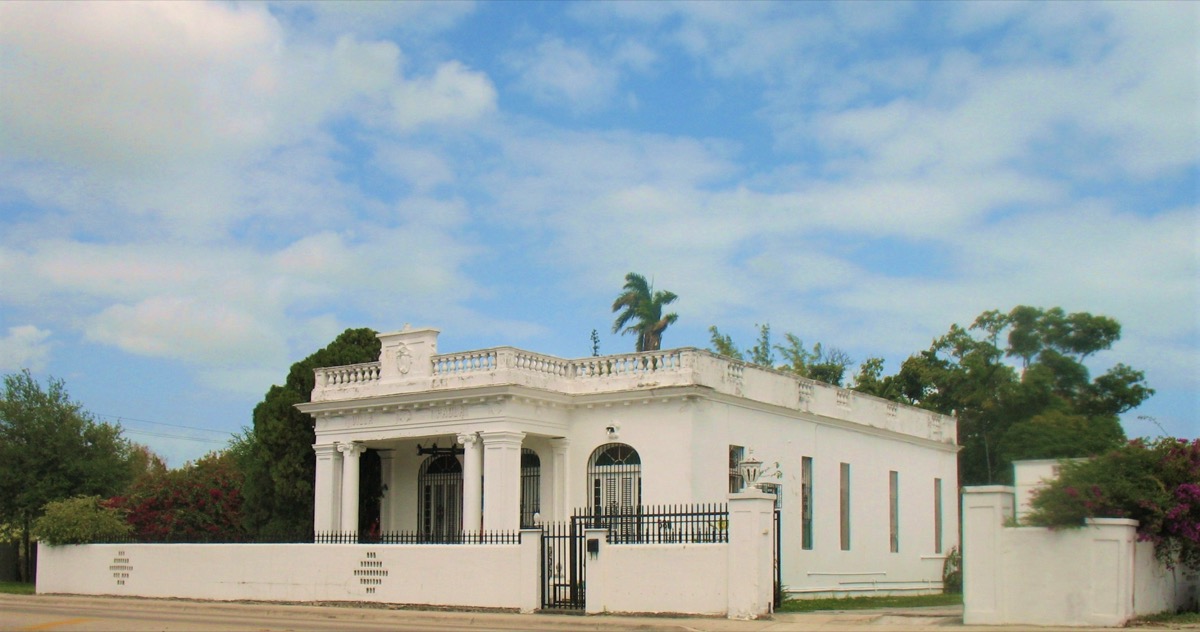
The house itself is real, and unusual. Cuba's government built Villa Paula in 1926 as a consulate and residence for Consul Domingo Milord and his wife Paula. It was meant as a flex. Havana architect Cayetano Freira drew up a neoclassical villa with 18-foot ceilings, ten rooms, hand-painted floor tiles, Tuscan columns, stained-glass windows, and a white-columned front porch. Every material and every workman came in by ship from Cuba, because the point was to show the young, provincial city of Miami what cosmopolitan civilization actually looked like. It is, by Villa Paula's own count, the only known building in Miami still standing that was directly built by the Cuban government.

The Milords didn't get long there. Cuba slid into political and economic chaos, the consulate closed, and they moved out in 1930. Two years later, on August 25, 1932, Paula died at Jackson Memorial Hospital from complications after a leg amputation. She was 61. Domingo went back to Key West and died there in 1937. Both were buried in unmarked graves.

That last part matters, because it's where the legend gets interesting.

For thirty years, ghost tours and paranormal blogs told the story the same way: Paula was secretly buried in the backyard, under a small concrete sarcophagus marked with a turquoise crucifix, half-swallowed by ficus roots. The one-legged ghost was Paula, looking for her body. It's a great story. The amputation lines up. The crucifix is photogenic. The ficus tree adds atmosphere.

It also isn't true. In 2019, Miami New Times pulled the receipts. Woodlawn Cemetery records list Paula in Section 27, grave 1115, in Park West. Her obituaries in the New York Times and the Key West Citizen both reported a cemetery burial. The 1983 Miami Planning Department report on the structure makes no mention of a backyard grave. Dr. Lord Lee-Benner, who lived in the house in the 1940s and 50s, looked at the concrete box and said, "That has to be something new. That was never there." Joe Chirichigno, a more recent resident artist, was blunter. "It's not Paula's grave. It's not even a grave at all." The structure is too small for an adult body and has no removable lid.

So what's going on?

The simplest answer is that the haunting traces back to one man's stories. Cliff Ensor told the original tales in the 1980s. He brought in a psychic medium, Rev. Emma Tandarich, who held séances every two weeks and claimed five separate spirits lived there, including a young woman searching for the grave of an illegitimate baby. Ensor was still telling reporters by phone in 2008, at age 81, that "the house is definitely haunted." Reporter Terence Cantarella, who wrote the most detailed haunting feature on the place that same year, came back in a 2020 author's note and revised himself. Ensor, he wrote, had made similar haunting claims about five other properties he owned. Cantarella called the legend "fiction" and an example of "people's tendency to believe what they want to believe."

Not every account is Ensor's, to be fair. Fernando Garcia, who rented the place in the early 2000s, told Cantarella, "I don't believe in ghosts, but strange things happen in that house." A windowpane fell, a 40-pound chunk of plaster crashed down where he'd been sitting moments earlier, and his cat disappeared. An anonymous groundskeeper around 2008 said, "Stuff's always moving around in here." But other people who actually lived in the house contradict the haunting outright. Lee-Benner, the 1940s-50s resident, said he never saw a ghost. Marc Swedroe, who bought the property in 2003 for $275,000, called it "just very peaceful."

Today the villa houses The Future Perfect, an art and design gallery open by appointment, and operates as an event venue. The official Villa Paula site lists the architecture, the consulate history, the historic designation. It doesn't mention the haunting at all.

That silence is its own kind of answer. The most interesting thing about Villa Paula isn't the one-legged ghost. It's that a beautiful 1926 Cuban consulate, built to make a point about cosmopolitan civilization, ended up famous for a backyard grave that wasn't a grave, told by a man who said the same thing about every house he owned.

Researched from 6 verified sources. How we research.