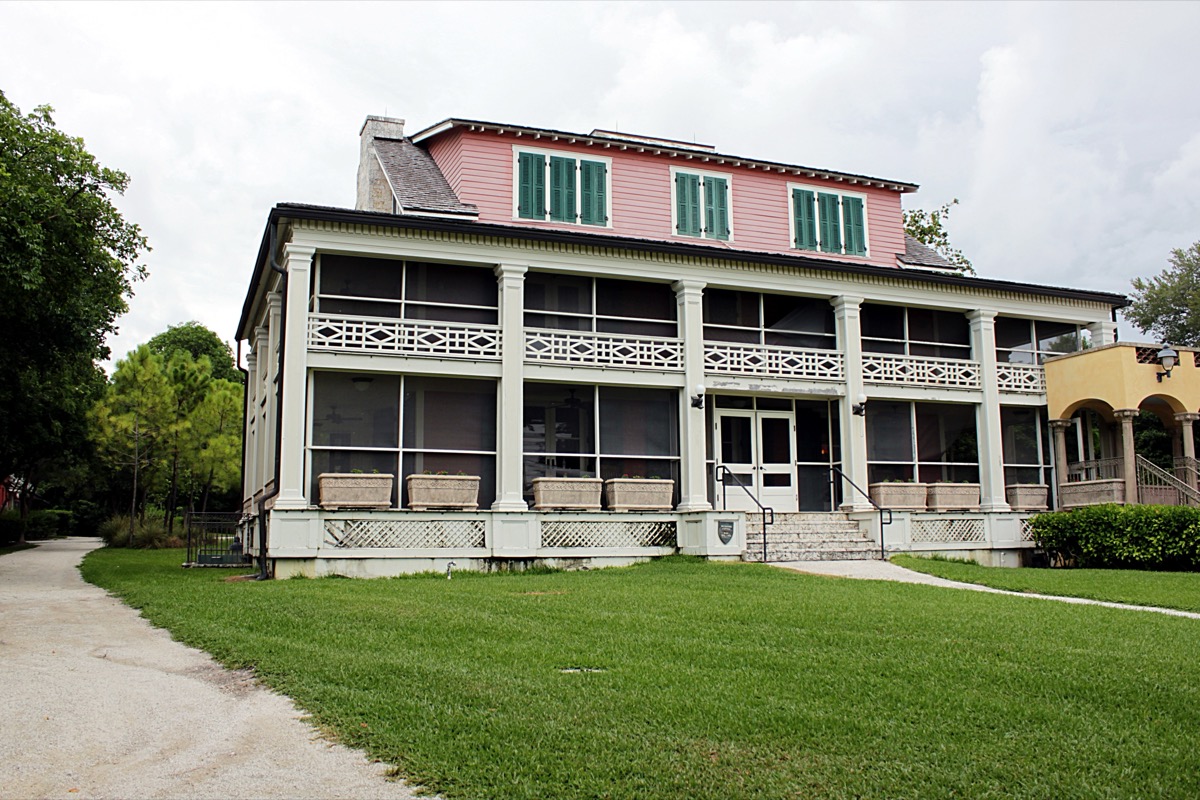
A paranormal team spent two days in the old mansions at the Deering Estate in Miami and came out with 60 recorded voices. One says "Come home." A woman's says "I want some of you." The voices are only the newest layer here.
Around 2009, a team led by investigator Colleen Kelley spent two days walking Charles Deering's old Miami mansions with recorders running. They came out with 60 voices that nobody in the rooms had spoken. NPR ran the story. On the tapes, one says "Come home." Another says "Send me. I'll go." A woman's voice says "I want some of you."
The estate is two houses on Biscayne Bay. The pink-and-green Richmond Cottage went up in 1896 as a pioneer home, then grew by 1900 into the first hotel between Coconut Grove and Key West. Charles Deering, who ran International Harvester, bought it in 1916 and built a stone mansion beside it for his art. The Stone House has 18-inch concrete walls and copper doors. It has no stove at all. Deering had lived through the Great Chicago Fire of 1871, and he was so afraid of flame that all the cooking was done in the cottage and carried over.
He died in the house in 1927, at 75.
But the voices are the new layer. Underneath the lawns, people have been leaving their dead here for a very long time. There's a Tequesta burial mound on the grounds, about 38 feet across, holding twelve to eighteen people laid out like the spokes of a wheel, under an oak that's been growing 400 to 600 years. And there's a sinkhole. In 1979, people looking for wood found fossil horse teeth in it. When it was excavated, it gave up thousands of bones — mammoths, dire wolves, saber-toothed cats, jaguars — and, mixed in with the animals, the remains of at least five humans who died around 10,000 years ago.
The tours still run. In the Stone House study, an investigator says he caught a voice telling him to get out. In the cottage's children's room, a guest reported a little girl, and said she felt her own leg being squeezed.
The voices are only the most recent ones. The ground here has been collecting them for ten thousand years.