Students at St. Cloud State University in Minnesota tell of a 19th-century soldier in old uniform pacing the halls of the Miller Learning Resources Center. In 1999, construction at that exact site turned up 16 coffins from the city's first cemetery.
At the James W. Miller Learning Resources Center on the St. Cloud State University campus in Minnesota, students tell of a soldier. He wears an old 19th-century military uniform, and they say he paces the long hallways of the library at night. Most campus ghosts go no further than that. This one has a reason the building feels wrong.
In 1999, construction crews working on the site dug up 16 coffins. The university traced them to St. Cloud's first Protestant cemetery, which had taken in the dead from 1856 to 1864, before Minnesota was even a state. Crews recovered the remains of as many as ten adults and six children, along with 6,153 objects pulled from the disturbed ground. "That could make this the site of one of Minnesota's first cemeteries," one archaeology graduate student said, "dating back to before Minnesota was a territory." The library, in other words, was raised over a burial ground that everyone had forgotten was there. The soldier in the hallways is folklore. The graves under him are not.
The university opened in 1869 as the Third State Normal School, a teacher-training college that grew up along the Mississippi River. The campus has collected more than one ghost across the century and a half since, and the library isn't even the oldest of them.
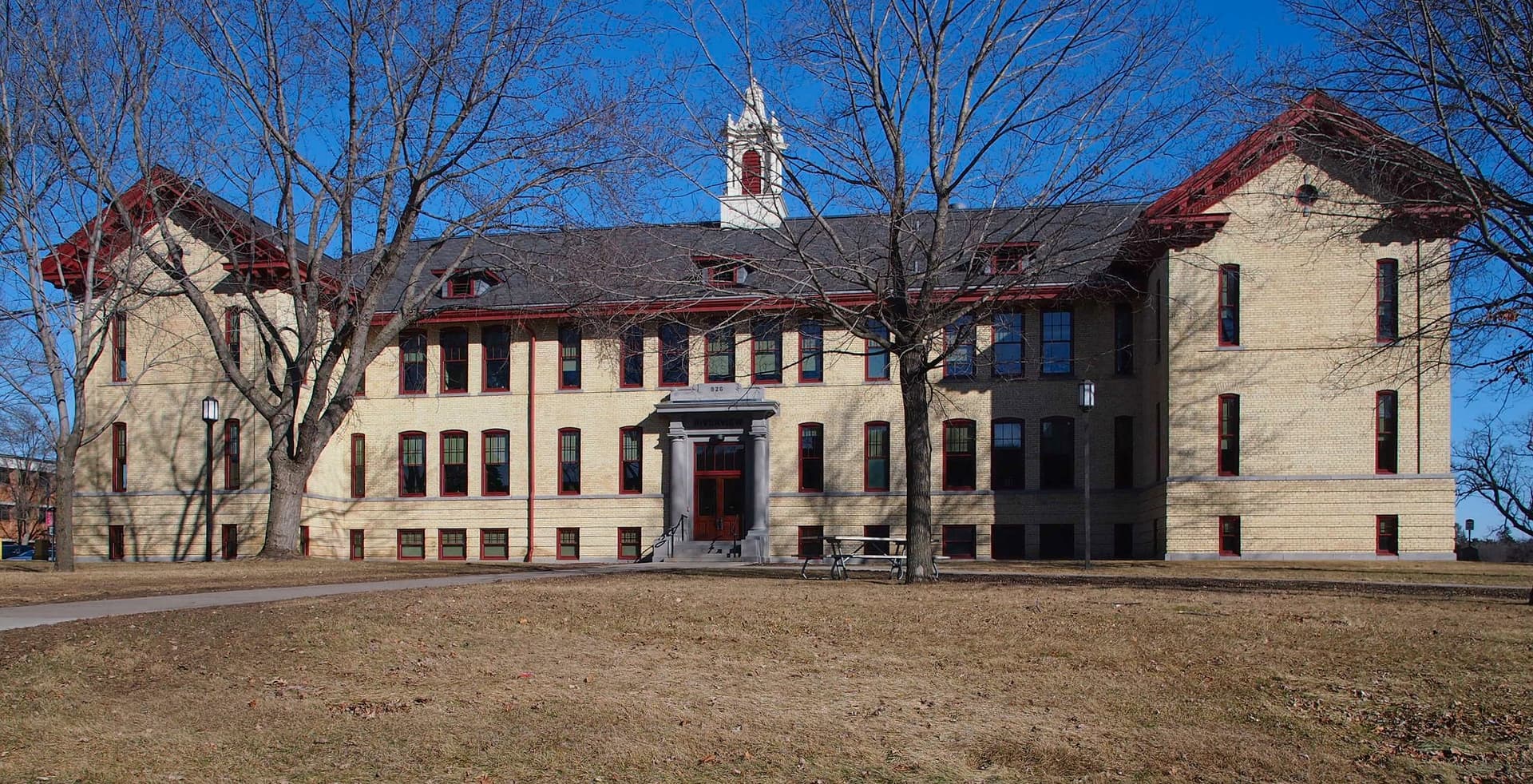
Riverview Hall, built in 1913 as the "Model School" where student teachers practiced their lessons on local children, is the only building on campus listed on the National Register of Historic Places. Accounts there describe a woman walking the empty corridors, her high heels click-clicking across the floor, and a child bouncing a ball down the halls. A public safety officer is said to have heard the clicking, the bouncing, and children laughing from the basement around 3 a.m.
Shoemaker Hall, a residence hall from 1915, carries the darkest legend: a pregnant student said to have hanged herself in a basement meat locker, blamed for flashing clocks and a figure drifting above the beds. The university's own archivist, Tom Steman, says flatly that the story is urban legend. There's no death on record, no name, no date.
Which is why the library stands apart from the rest. Every other haunting on this campus is a story that someone tells. The one under the Miller Center came up out of the ground, sixteen coffins at a time, and went into a report with a count of the bodies.