Elmwood Cemetery in Shepherdstown holds 285 Confederate veterans, including 114 from the Battle of Antietam, the bloodiest single day in American history. The town's five-man police force was so overwhelmed by unexplained 911 calls that they brought in paranormal investigators, leading to a TV show that boosted local tourism by 311 percent.
Shepherdstown's five-man police department started getting 911 calls they couldn't close. Alarms triggered by motion sensors with nobody there. Dishes crashing off shelves in empty kitchens. Footsteps in vacant rooms. The chief couldn't trace any of it back to a source, so he did something unusual for a cop: he called in ghost hunters. The TV show Ghosts of Shepherdstown premiered in 2016, and by November of that year, local businesses reported a dramatic increase in tourism.
The town earned it. Shepherdstown, West Virginia (population roughly 1,750) sits three miles from the Antietam battlefield, and Elmwood Cemetery holds what that proximity cost. On September 17, 1862, the bloodiest single day in American history played out across the Potomac River in Sharpsburg, Maryland. Over 23,000 soldiers were killed, wounded, or went missing in a single day of combat. Shepherdstown, the nearest town on the Virginia side, became one enormous field hospital.
Three days later, on September 20, 1862, the Battle of Shepherdstown (also called the Battle of Boteler's Ford) added more casualties as Confederate forces retreated across the river. Those who died from their wounds in Shepherdstown's improvised hospitals were buried in Elmwood Cemetery.
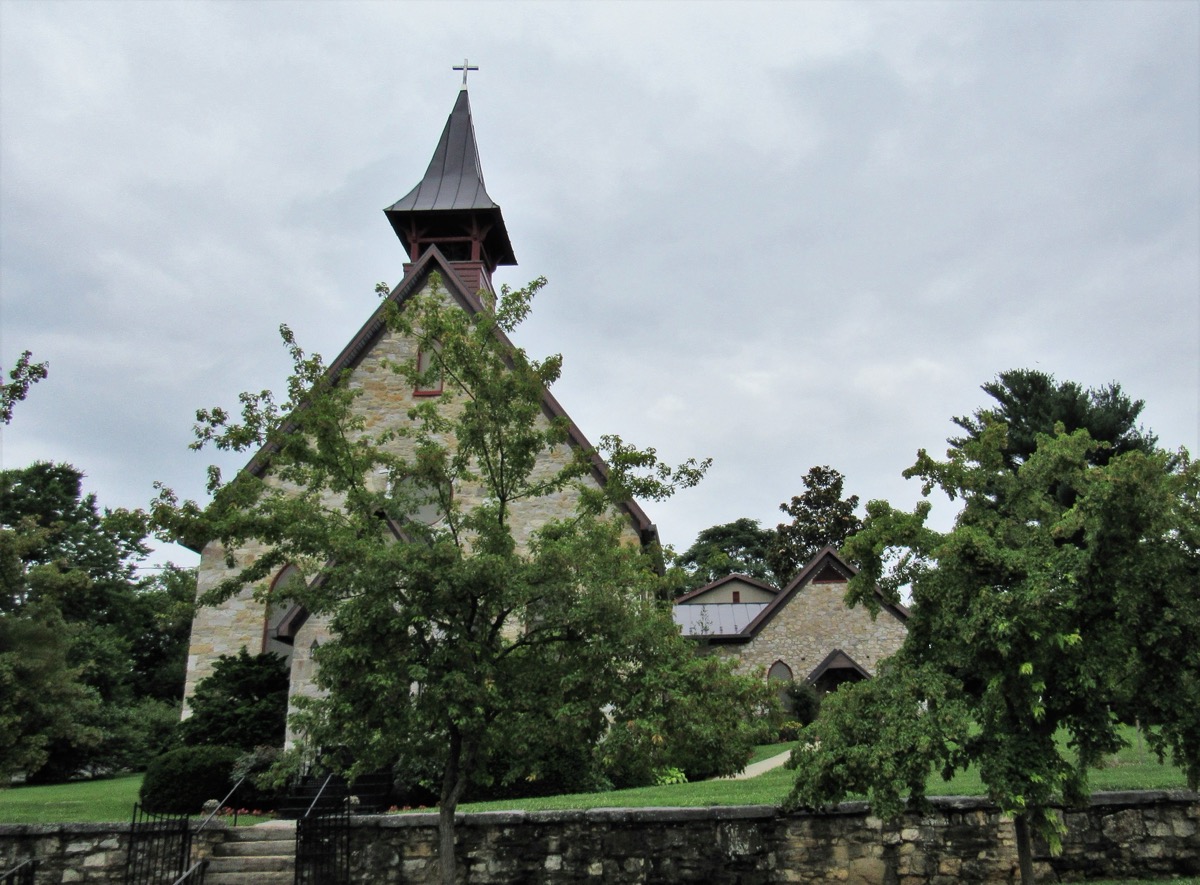
The cemetery's origins predate the war by decades. Abraham Shepherd, the town's founder, donated one acre to the Presbyterian Church in 1780. The Methodist Church added half an acre in 1833. But it was the war that transformed Elmwood from a quiet churchyard into a mass burial ground. In 1867, the Southern Soldiers' Memorial Association organized to acquire proper burial space for the Confederate dead. They purchased an adjacent lot in 1868 and chartered the cemetery in 1869. A granite monument to the Confederate dead went up in 1879.
Today, Elmwood holds approximately 280 Confederate veterans, including 114 who died at or after Antietam. They came from Virginia, North Carolina, South Carolina, Georgia, Alabama, Mississippi, Louisiana, and Florida. Many remain unidentified. Among the named dead is Henry Kyd Douglas, born in Shepherdstown in 1838, who served as the youngest staff officer to General Stonewall Jackson. Confederate Congressman Alexander R. Boteler, a friend and patron of Jackson, is also buried here.
The Spirit of Elmwood tour walks visitors through the oldest section, covering ten graves with stories that connect the names on the stones to the town they lived in. It's more history than ghost hunt, which is the right approach for a place like this.
Visitors who come later, after dark, report something different. The atmosphere near the Confederate section carries a weight that people consistently describe as deep, oppressive sadness. Not fear. Sadness. The kind that feels external, like it's rising from the ground rather than coming from your own head.
Shepherdstown's paranormal reputation extends well beyond Elmwood. Shepherd University, which opened in 1871, has accumulated over 200 reports of ghost sightings since its founding. The Wizard Clip incident of 1794, considered the first documented poltergeist case in American history, happened in nearby Middleway: an invisible force with phantom scissors cut clothing, curtains, and boots into crescent shapes at Adam Livingston's farm until a Catholic priest intervened. The Historic Shepherdstown Museum features a lady in white, Civil War soldiers, and a headless woman among its resident spirits.
All of that context matters for Elmwood. This isn't a cemetery that exists in isolation. It's the burial ground at the center of what may be the most concentrated paranormal hotspot in West Virginia, in a town where even the police ran out of explanations.