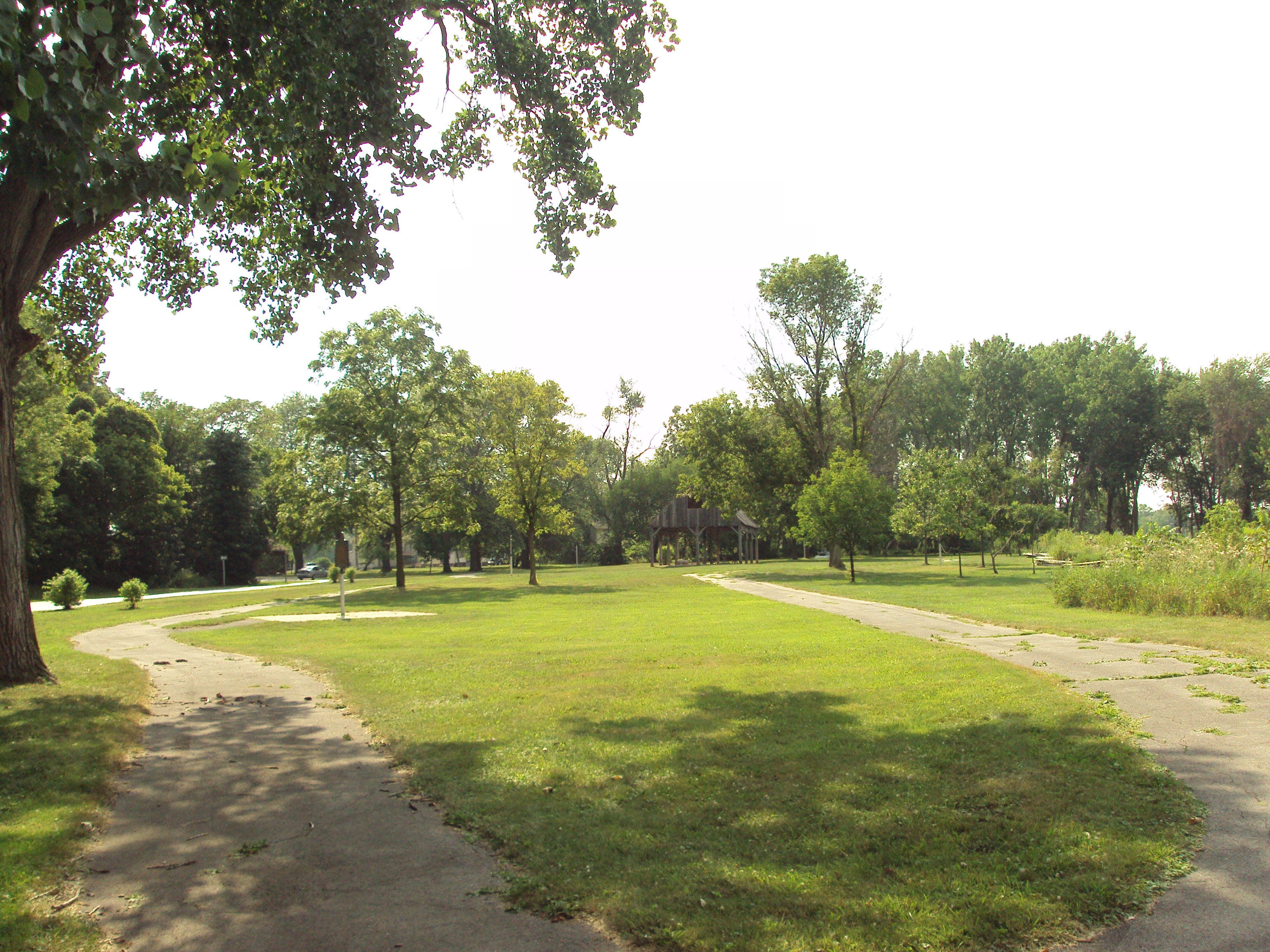
The River Raisin National Battlefield in Monroe, Michigan is a quiet, windswept field today. People who come here report soldiers in 1813 uniforms crossing the road and disappearing, and a girl in a white dress wandering the grass — on the ground of the War of 1812's worst American defeat.
The River Raisin National Battlefield Park in Monroe, Michigan is a flat, open field along the river today, with long sightlines and a stiff wind off the water. People who walk it report soldiers. Figures in 1813-era uniforms, crossing the road and then not being there, photographed in doorways and out in the grass. There's no single famous ghost here, no name everyone agrees on. The haunting is diffuse, spread across the whole field, the way the dead were.
What happened on this ground explains why.
In January 1813 the settlement was called Frenchtown, and General James Winchester's command — roughly a thousand men, most of them Kentuckians — was camped along the river. The first clash, on January 18, went the Americans' way. Four days later the British and Canadian troops came back with a far larger force of Native American allies, and on January 22 the second battle destroyed Winchester's army. Of those thousand men, only about 33 escaped death or capture. It was the most lopsided American defeat of the entire War of 1812, and it accounted for an estimated 15 percent of all American combat deaths in the war.
The worst part came the next morning. The British withdrew, and the wounded American prisoners left behind — too injured to march — were killed where they lay. Scores of them. The atrocity gave the rest of the war its rallying cry: "Remember the Raisin," a line that ran a generation ahead of "Remember the Alamo."
Two centuries later, the killing ground is a National Park Service site with free admission and a visitor center. It's one of only four national battlefield parks in the country, and the only one for the War of 1812 — a 200-year-old fight on a park that didn't open until 2010. The rangers tell the documented military history, not the orbs.
But the town around it keeps its own count. By one tally, Monroe logs more reported ghost sightings than any other city in Michigan — 49, ahead of every other town in the state. A local investigator named Richard Ellison described standing on the field and losing his own surroundings to something else: "I could hear screaming and loud chant-like noises, but my vision was a blur. It was like watching something while being underwater."
The other figure people keep describing is a girl in a flowing white dress, wandering the grass. No one knows who she is or when she was first seen. The story is only that she seems to be searching for someone, possibly a love lost in the battle.
And every October, the National Park Service itself runs a program at the park. It's called "Historical Hauntings of Monroe."