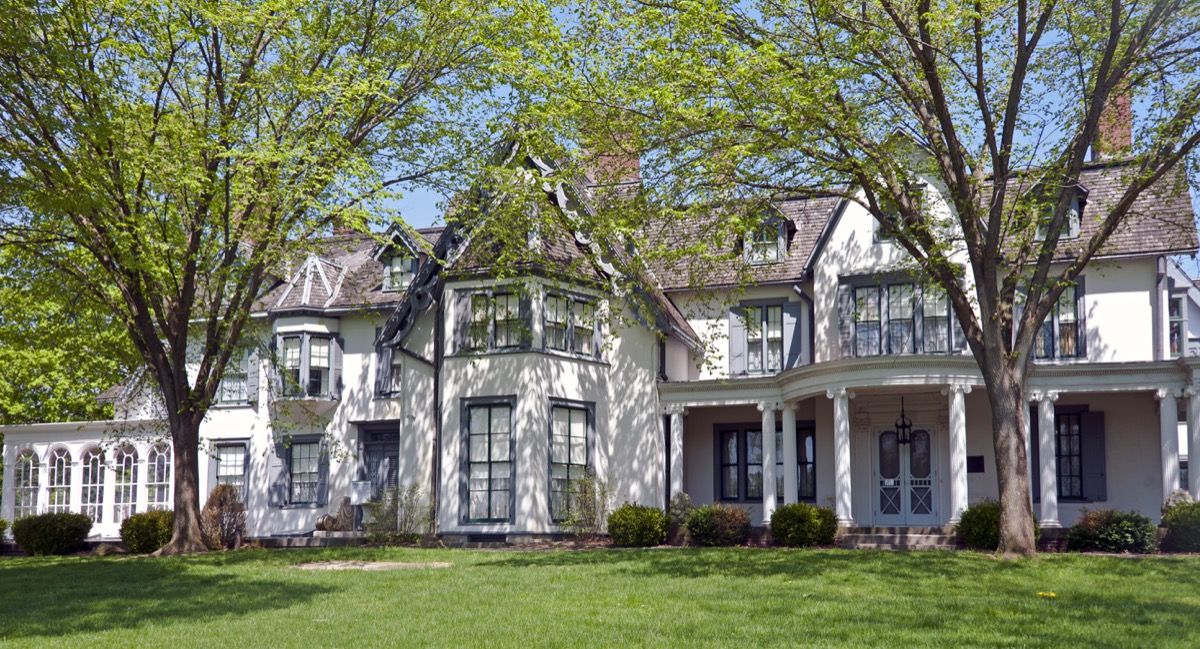
At dusk behind Ringwood Manor in northern New Jersey, people have reported a man sitting cross-legged on the slab of his own grave, a lantern in his hand, gazing across the pond. They say it's Robert Erskine, the mapmaker who drew the routes Washington's army marched.
Behind Ringwood Manor in northern New Jersey, past the pond, there's a flat stone slab in an old cemetery, and the story is that the man buried under it doesn't stay there. At dusk, witnesses have reported him sitting cross-legged on top of his own grave, a lantern in his hand, gazing out across the water. People have told it that way since the early 1800s.
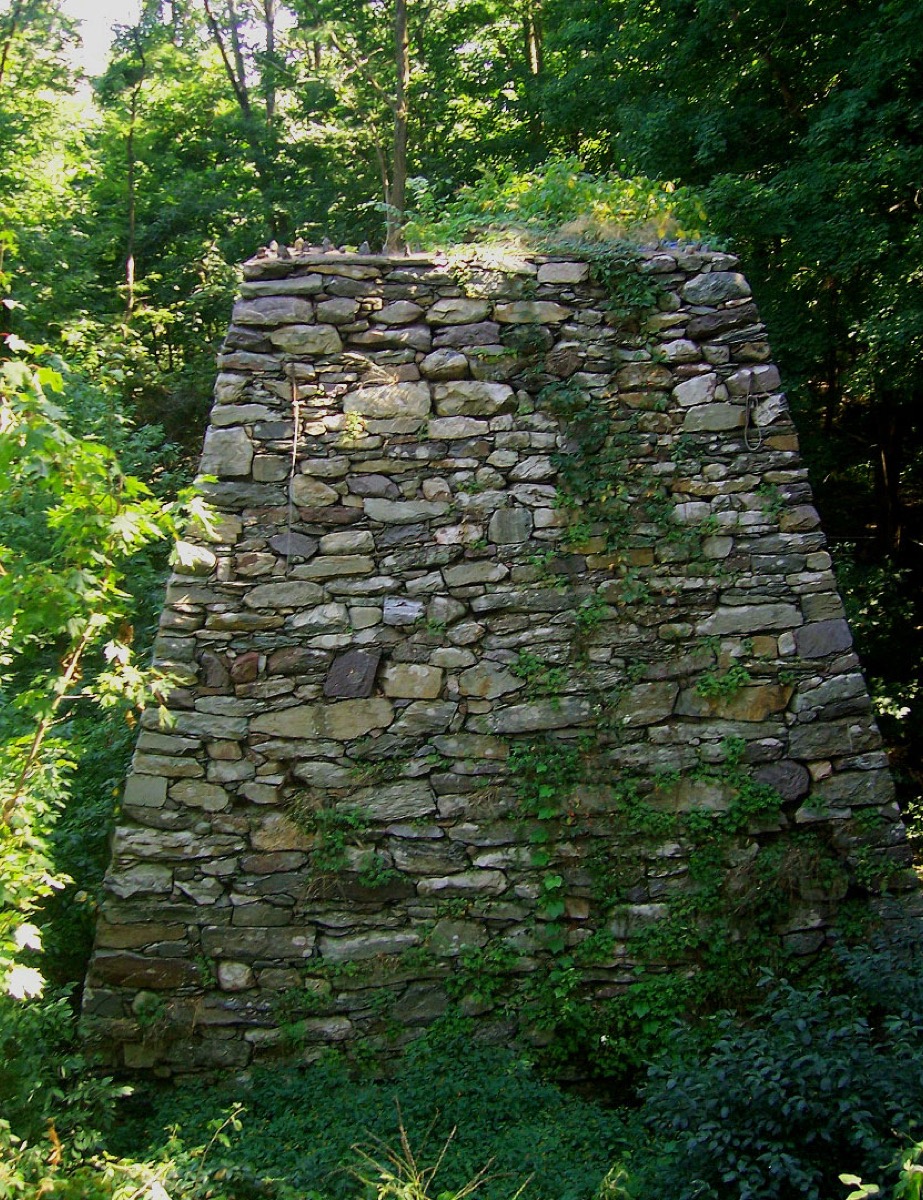
His name was Robert Erskine. He was a Scottish engineer hired to run the ironworks here, in the magnetite-rich Ramapo Mountains, where the forges fed the Continental Army and turned out the links for the great iron chain strung across the Hudson. Washington noticed him and, in July 1777, made him Geographer and Surveyor-General of the army. Erskine drew more than 200 maps, the routes the troops marched on. He died at Ringwood on October 2, 1780, of a fever caught on a mapping expedition. He was 45.
That same day, up the Hudson at Tappan, Major John André was hanged for the Benedict Arnold plot. Tradition holds Washington wasn't at the hanging because he was at Erskine's bedside instead. They buried Erskine behind the pond, and his clerk lies beside him, in a cemetery that holds 150 or more iron workers, pioneers, and Revolutionary soldiers. Edward Ringwood Hewitt later recorded that Washington planted an oak by the grave "until it was killed by lightning."
Some accounts add a floating blue light that rises near the slab and follows you over the little bridge out of the cemetery, hanging at the water's edge before it winks out.
He isn't the only one buried here who's said to have stayed. French soldiers who served with Rochambeau lie somewhere on the grounds in an unmarked grave, the spot showing only as a shallow depression in the grass, and after dark people say they hear voices speaking French along the shore of the pond.
Erskine is the oldest of the manor's ghosts, but the house keeps one indoors too. On the second floor there is a small bedroom where, the story goes, a housemaid was beaten to death. People in that part of the house report footsteps, the sound of heavy things dropping, and soft crying, and they find the door ajar and the bed rumpled.
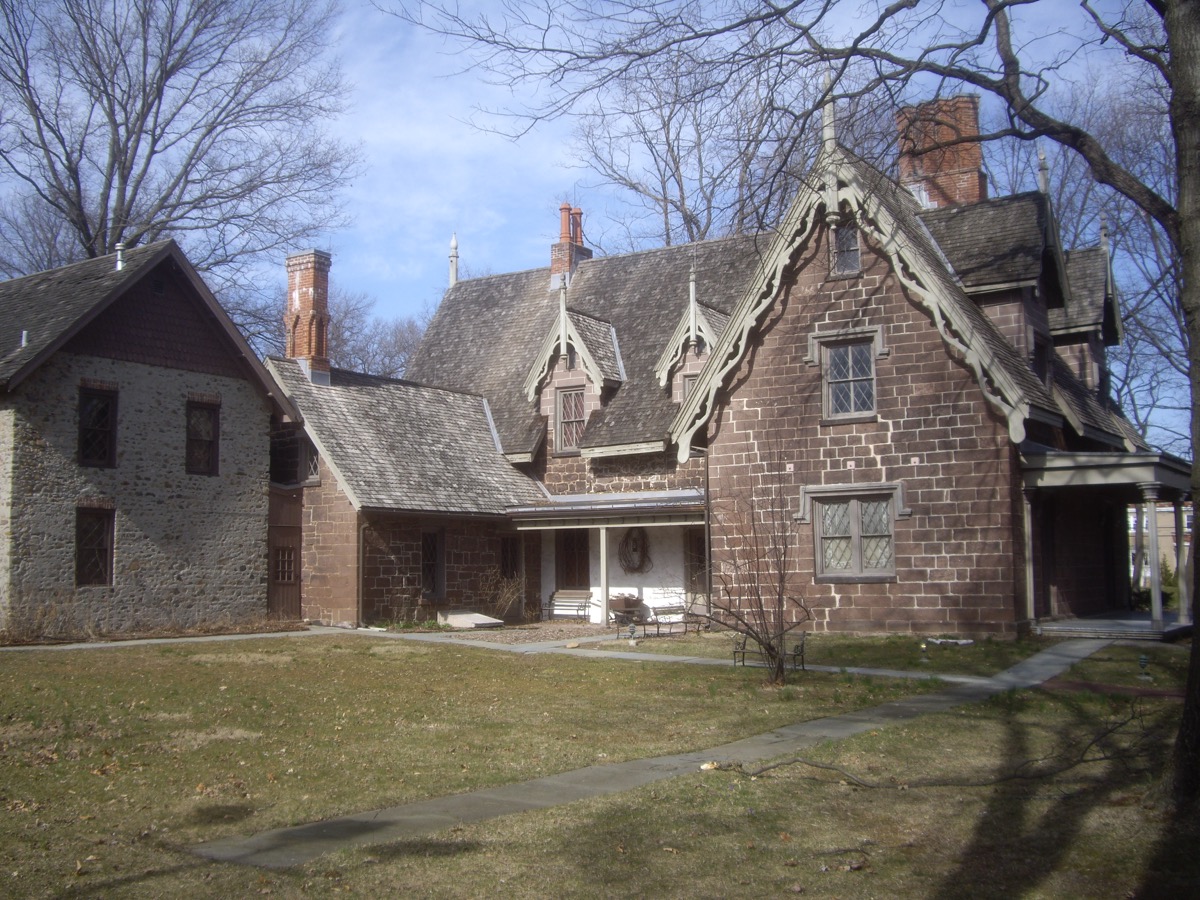
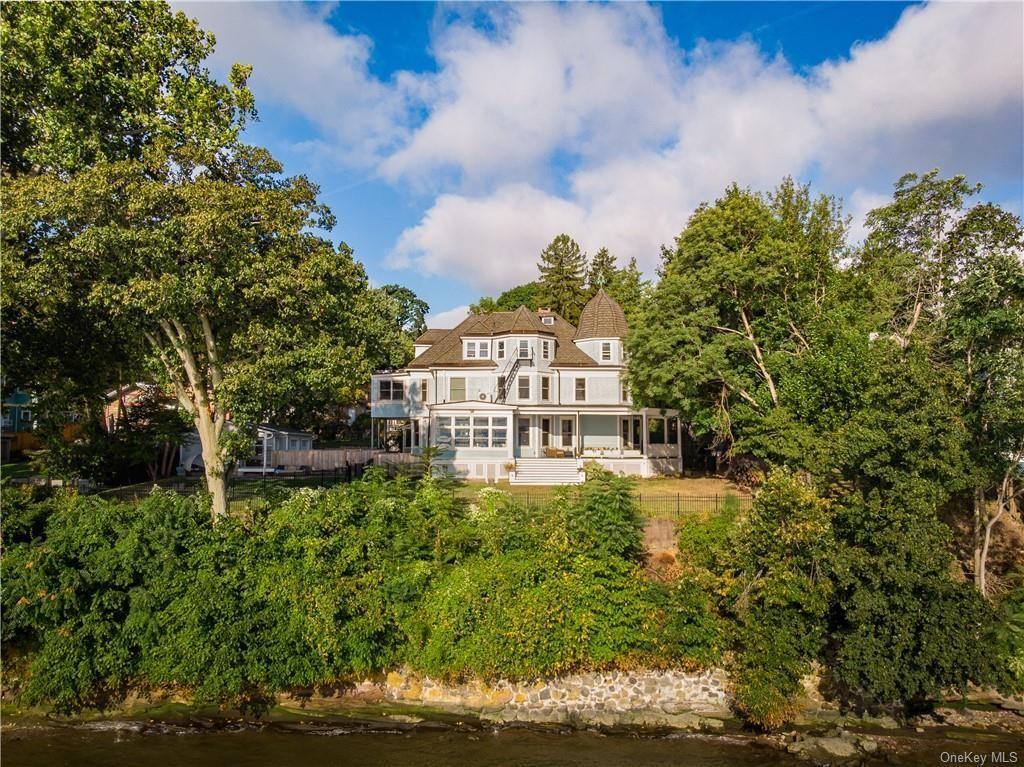
The house grew from a ten-room Federal cottage into the 51-room Victorian estate that stands today, and in 1938 the Hewitt family gave it to New Jersey. It's a state-park museum now, open most of the year. The mapmaker who charted where an army should go is the one who never moved on from a single stone slab behind the pond.