The Randolph County Asylum in Winchester, Indiana keeps the preserved bedroom of a kitchen worker named Doris, full of the porcelain dolls she loved. Between investigations, when no one is touching them, the dolls are said to turn their heads and shift in their seats.
The Randolph County Asylum in Winchester, Indiana keeps a dead woman's dolls on display. They belonged to a kitchen worker named Doris, who spent her later years as a resident here and is said to have loved porcelain dolls in life. Her bedroom has been preserved with a collection of them, and between investigations, when nobody is touching them, the dolls are reported to move on their own. Heads turn. Figures shift in their seats. The kitchen where Doris worked has the same reputation, with utensils and small objects ending up where no one left them. The lead story here isn't a scream in a corridor. It's a cook who allegedly keeps tidying.
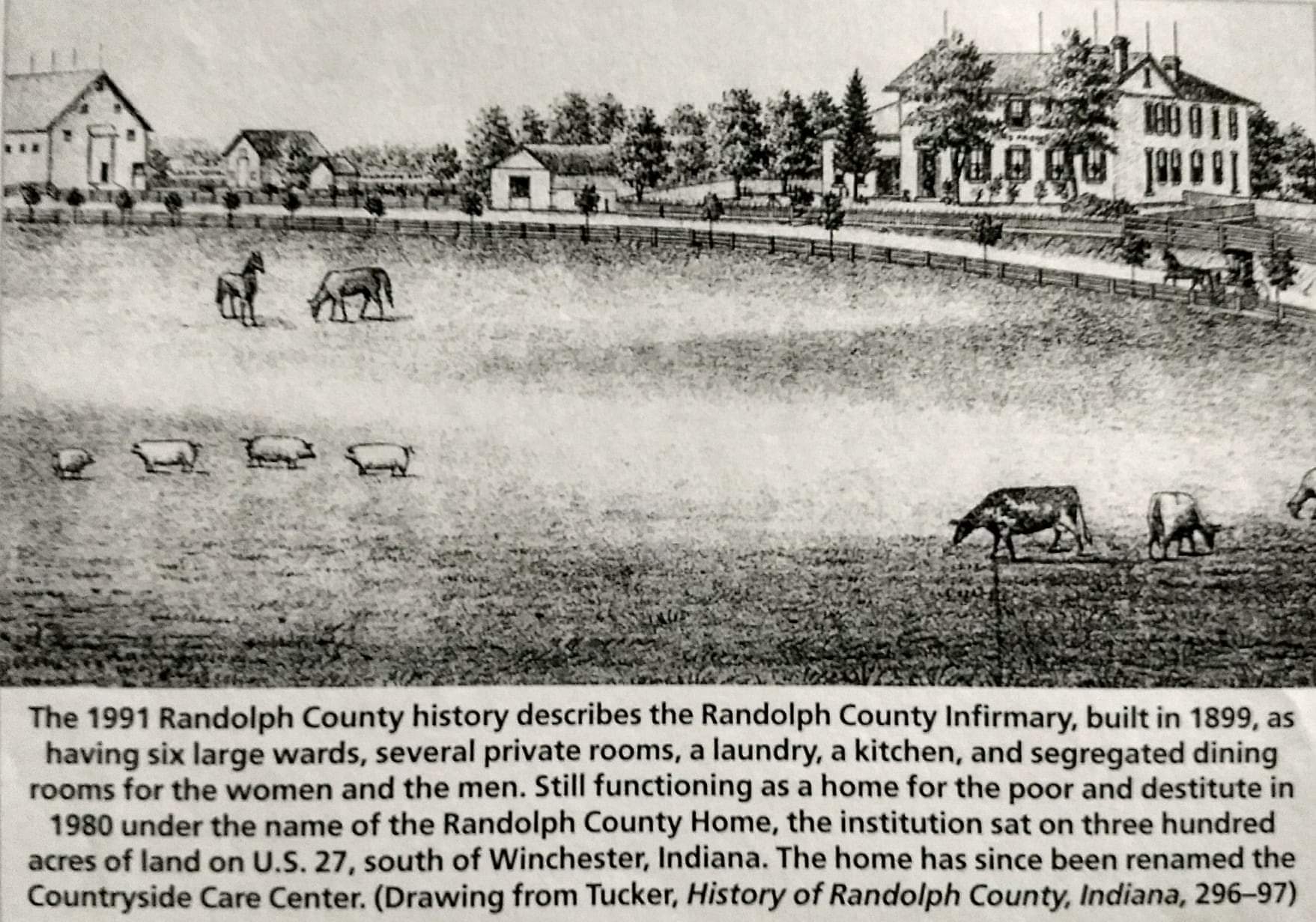
The four-story red brick building went up in 1899, the third structure on grounds that began as a county poor farm. The first was a wooden building that burned in the 1850s. The institution took in the people the county had no other place for: the elderly, orphans, single mothers, the mentally and physically disabled, anyone unable to work. They are said to have called the cook Doris in most accounts, Mary in at least one.
The attic is the most-cited room in the building, and the reason is in plain sight. A former solitary room up there still holds a prison cage, used as a drunk tank and later for residents who couldn't be settled, set beside the wooden bins where the farm once dried its corn. Down on the first floor, near the old holding cell, people report doors slamming and feet shuffling across empty rooms, and a woman in a white dress at the stairwell.
A cemetery on the grounds holds the unmarked graves of unclaimed residents, at least 50 of them by common count, the dead logged from tuberculosis, accidents, old age, and suicide. The total who died on-site is contested: by some listings around 200, by the operators' own count closer to 500. No county record was ever located to settle it. When the new owners arrived, they talked about bringing in ground-penetrating radar just to find out who was actually buried out there.
The building ceased operating as a county facility around 2008, after a long decline that left only about five residents in its final stretch. It carried a different name at nearly every stage of that life: poor farm, then infirmary, then county home, then the Countryside Care Center. Three men bought it in 2016 and reopened it for ghost hunters. "You never realize how big the ghost-hunting community is," co-owner Adam Kimmell said.
That June, the Ghost Research Society ran a night inside. On the stairwell, a recorder caught a raspy voice telling them to leave. "Alright, get out," it said. Near a wheelchair on another floor, a second one answered a question nobody remembers asking. "Leave me alone."