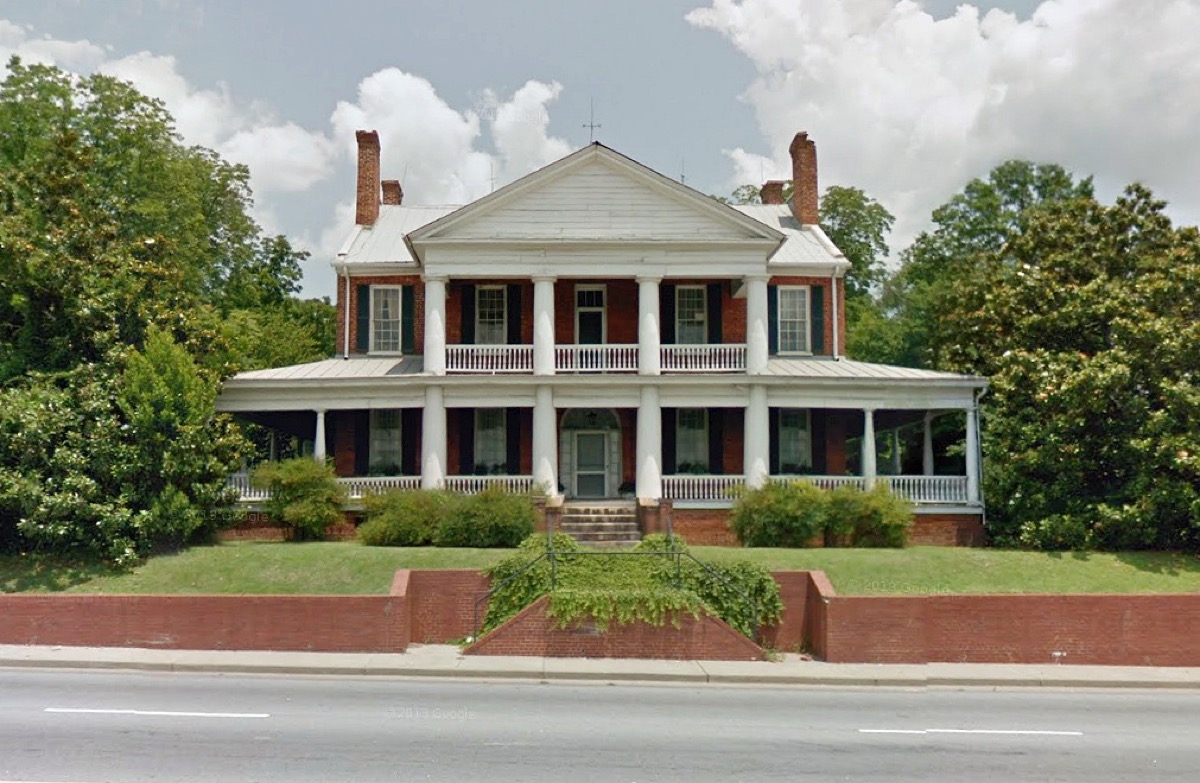
In a corner of the cemetery at Foster's Tavern in Spartanburg, South Carolina stands a blank, uncarved stone. It's said to mark a traveler who checked in, hanged himself upstairs, and left no name — the same night his horse vanished from a locked stable and was never found.
Foster's Tavern in Spartanburg, South Carolina keeps a grave nobody can read. In a corner of the tavern's cemetery stands a stone with nothing carved on it — no name, no dates, blank. The story goes that it belongs to a traveler who checked in one night, climbed the stairs, and hanged himself in one of the upstairs rooms. Nobody ever learned who he was.
The same night he died, his horse vanished. The animal had been shut in a stable that was locked, and by morning it was simply gone — no broken latch, no tracks, nothing. It was never found. So the man in the ground has no name, and the horse that carried him there was never seen again.
The tavern is old enough to have swallowed a story like that. Anthony Foster began building it around 1801, and it took roughly seven years to finish. It's believed to be the oldest brick house in Spartanburg, its walls 18 to 36 inches thick, and it sat where the old Pinckneyville and Georgia roads crossed, a stagecoach stop on a well-traveled route. John C. Calhoun kept a second-floor corner room here, one other guests are said to have given up when he arrived. Bishop Francis Asbury noted a stop at Foster's in his 1810 diary. It was the sort of place where a stranger could check in, sign nothing, and never be missed.
The legend of the hanged traveler traces to the writer Gary Poole and has passed through local ghost-lore ever since. No newspaper carries it, nobody recorded the man's name, and the vanished horse left no trace behind — there's only the blank stone and the story told over it.
People who've been inside report the same handful of things. Footsteps on the stairs, over rooms they know are empty. Voices. And, most often, hoofbeats — not down on the road, but overhead, crossing the roof, as if a horse were somewhere it could never be.
One woman remembers it from childhood. She was waiting outside the school across the street, she says, when a horse-drawn stagecoach rolled out of the tavern's front door and down its steps, a man on the box dressed like Abraham Lincoln, who tipped his hat to the children before guiding the horses onto the road.
The house is a private residence now, with tours held now and then. The blank stone is still there in the cemetery, its face left smooth. It was set for a man whose name no one at Foster's Tavern was ever able to write down.