A marble angel stands over an 11-year-old's grave at the Old Stone Presbyterian Church in Lewisburg, West Virginia, and legend says kissing it kills you within a year. Two of her cousins did. Inside the 1796 sanctuary, once a battlefield hospital, wounded soldiers are heard at night.
The marble angel over Maud Montague Mathews' grave at the Old Stone Presbyterian Church in Lewisburg, West Virginia, is life-size and beautifully cut, and the rule in town is that anyone who kisses it will be dead inside a year.
Maud was 11 years and 7 months old when she died on the evening of May 30, 1888. Pneumonia, by most accounts. The Greenbrier Independent called her "an unusually bright and attractive child - the sunbeam of a happy home." Her parents, the Lewisburg lawyer Alexander Mathews and his wife Laura, buried three daughters in fourteen years: an infant in 1875 who lived fifteen days, Maud in 1888, and 10-year-old Florence in November 1889. Florence lies directly beside her sister, and her name is cut into the angel's base as well. Sherri Brake's HashtagWV account is the one source for the inscription there, which it gives as "Love hath a lien nor time nor death can sever. Our own are ours forever and ever."
The legend arrives with two of Maud's cousins, girls of about 14, twins in most tellings. Each of them kissed the statue on the cheek in her memory. Within the year both were dead. One caught influenza and died of fluid in the lungs. The other was in a carriage accident that broke her ribs, and the ribs punctured her lungs.
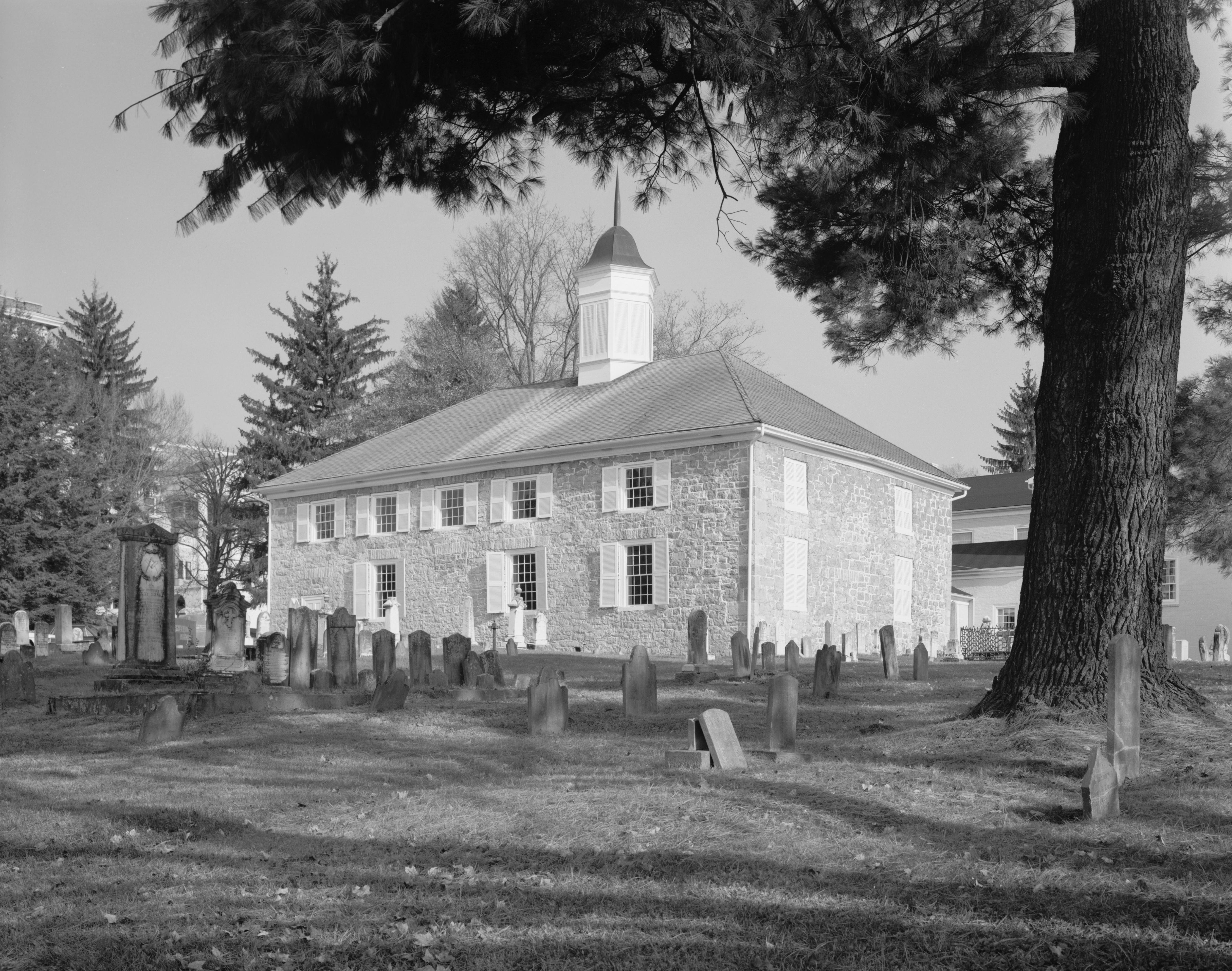
That marble is not the only thing people report on this lot. The sanctuary behind it went up in 1796, its limestone walls 22 inches thick by the reckoning of e-WV, the state encyclopedia, and it is billed as the oldest church building in continuous use west of the Alleghenies. For a stretch in the 1860s it was not a church at all. The Battle of Lewisburg was fought in the town on May 23, 1862, and afterward the Confederate dead were laid out inside the sanctuary, the pews pulled out to make room for cots. A sniper killed one of the Union wounded on his way back to camp, and as punishment the Union commander refused the dead any service. They went into a trench along the church's south wall, dumped in without ceremony.
West Virginia's own tourism department says that on some nights you can hear the screams of injured soldiers coming from inside the building. The one detailed account, a 2013 post on a Civil War forum, adds that people who investigate find the sanctuary empty, and that a soldier has been seen sitting in a pew in broad daylight, gone the moment anyone walks toward him.
Lewisburg's newspaper, the Mountain Messenger, has no patience for the angel. "No history confirms this tale," it wrote. Nobody has ever produced the cousins' names or a death record for either girl. What the paper does document is the damage belief has done to the marble: candle wax melted down its folds, lipstick left on the cheeks. In 2017 a local couple ringed the Mathews plot in Victorian iron to keep people off it.