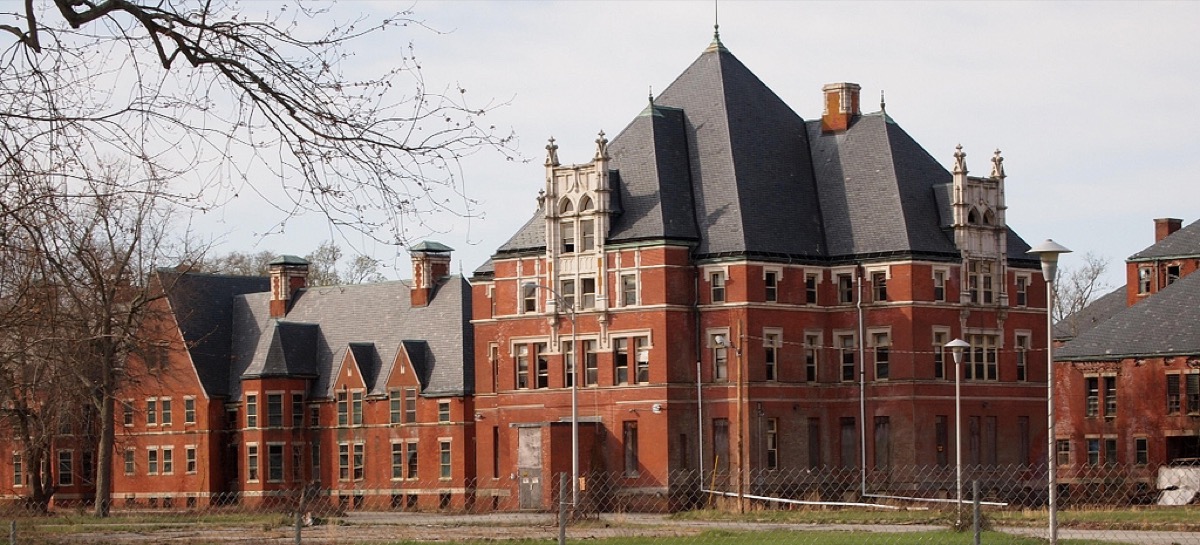
Norwich State Hospital in Preston, Connecticut is where the state sent people to be sterilized — most of its program ran through these wards. The buildings are gone now, but the tunnels they were caved in over still hold the worst of it.
At Norwich State Hospital, on the Norwich–Preston line in Connecticut, explorers kept coming back to the same building. The Salmon Building was the maximum-security ward — barred windows, steel cell doors — and it's the spot the ghost stories settle on: shadow figures in the corridors, footsteps, doors slamming shut on their own.
The hospital opened in 1904 with 95 patients. What it became is the part people don't say out loud. In 1909 Connecticut passed a sterilization law, the second state in the country to do it, and the law named Norwich. The University of Vermont's eugenics records put it plainly: "All eugenical sterilizations in Connecticut occurring before the end of 1920 took place at this institution; most sterilizations also took place here up to 1925." Across the program's life the state sterilized roughly 557 to 559 people. About 92% were women. Connecticut was the only state that, for decades, required removing the ovaries rather than the simpler surgery.
The eugenics record is the floor everything else sits on. In the 1940s the wards used electroconvulsive therapy and prefrontal lobotomies; the operating-room logbooks from the Lippitt Building survive. The campus grew to more than 30 buildings on roughly 900 acres, holding more than 3,000 patients at its mid-1950s peak. A tunnel network ran underneath, built for utilities but used to move patients between wards out of public view.
The deaths are on record too. In 1914 a patient named Edward Arvine hanged himself with torn bedclothes. In 1934 a man about to be committed shot and killed the sheriff who came for him, then killed himself.
In 2010, Ghost Hunters filmed in the tunnels and the wards. Their headline piece of evidence was video of a door opening on its own near two investigators, "as if something was entering the room with them."
When demolition started in 2011, the crews did something deliberate. Before they touched the buildings, they caved the tunnels in.